Currently, there are no drop-in lead-free alternatives available in the industries.
But their
solidus temperature is no higher than 250° C., which can not satisfy the 260° C. requirement for reflow resistance.
Zn-based alloys, including eutectic Zn—Al, Zn—Al—Mg, and Zn—Al—Cu, have
melting temperature above 330° C. However, the high affinity of Zn, Al, and Mg to
oxygen causes
extremely poor wetting on various metallization surface finishes.
However, problems arise when the semi-
solid solder is compressed inside an encapsulated
package and forces the semi-
solid solder to flow out.
The existence of the IMC layer and its intensive growth during the subsequent reflow and operation also causes reliability concerns.
However, extremely high cost restricts its application within the fields where cost overcomes reliability considerations.
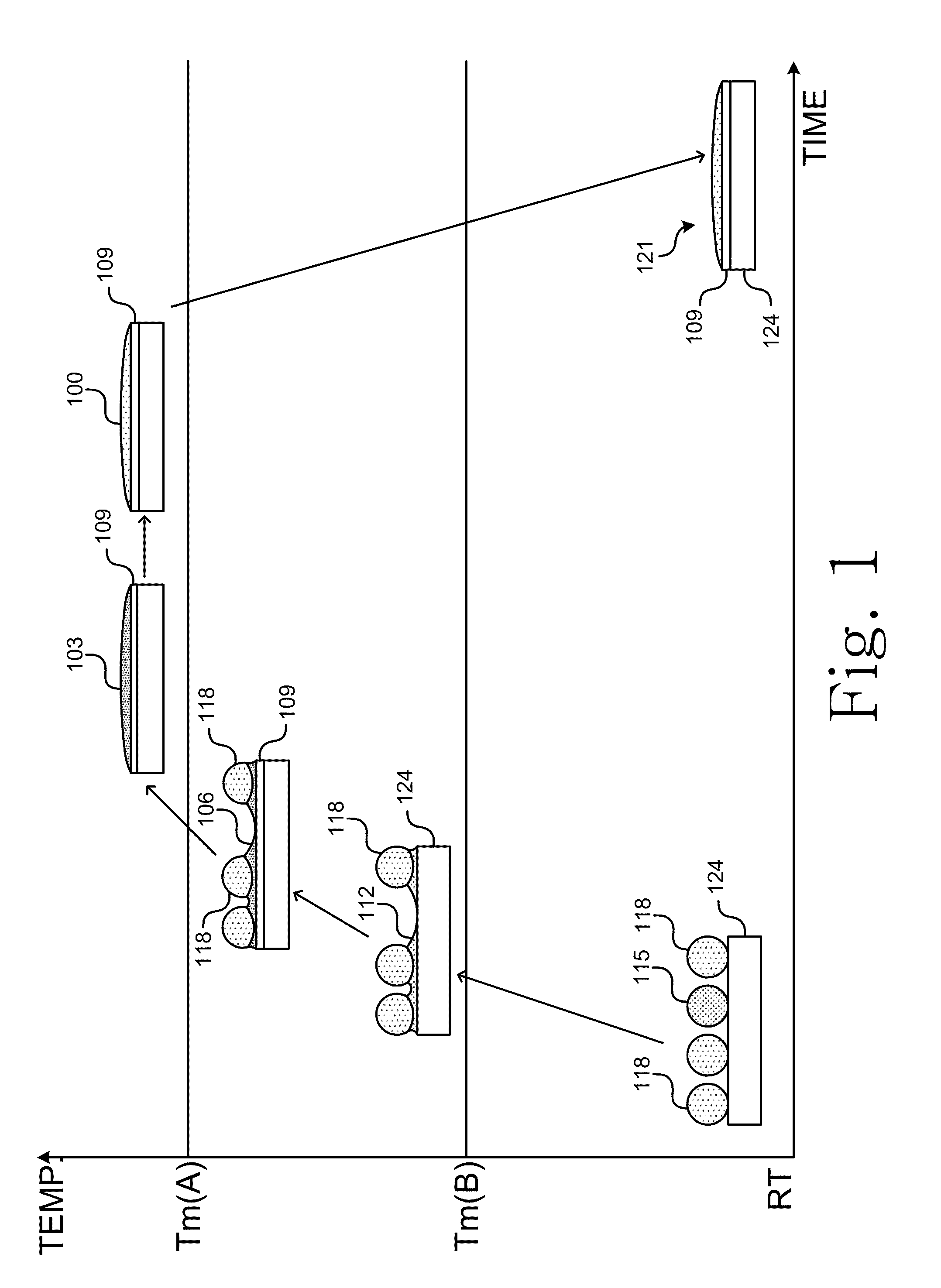
However, there are a few major concerns: (1) poor
wetting on various surface finishes and (2) the associated weak bonding interface originating from the poor
wetting.
The
melting temperature requirement for high melting lead-free solders makes Sn—Sb and Zn—Sn solders unsuitable.
The extremely high cost of Au rich solders limits their acceptance by the industry.
However, their poor wetting, due to high affinity to
oxygen (in the Zn—Al solder
system) or due to poor reaction
chemistry between the solder and the substrate metallization (in the Bi—Ag solder
system or even some lead-containing solders such as the Pb—Cu and Pb—Ag systems), makes these high melting solders hard to use in the industry because of the weak
bonding strength resulting from the poor wetting.
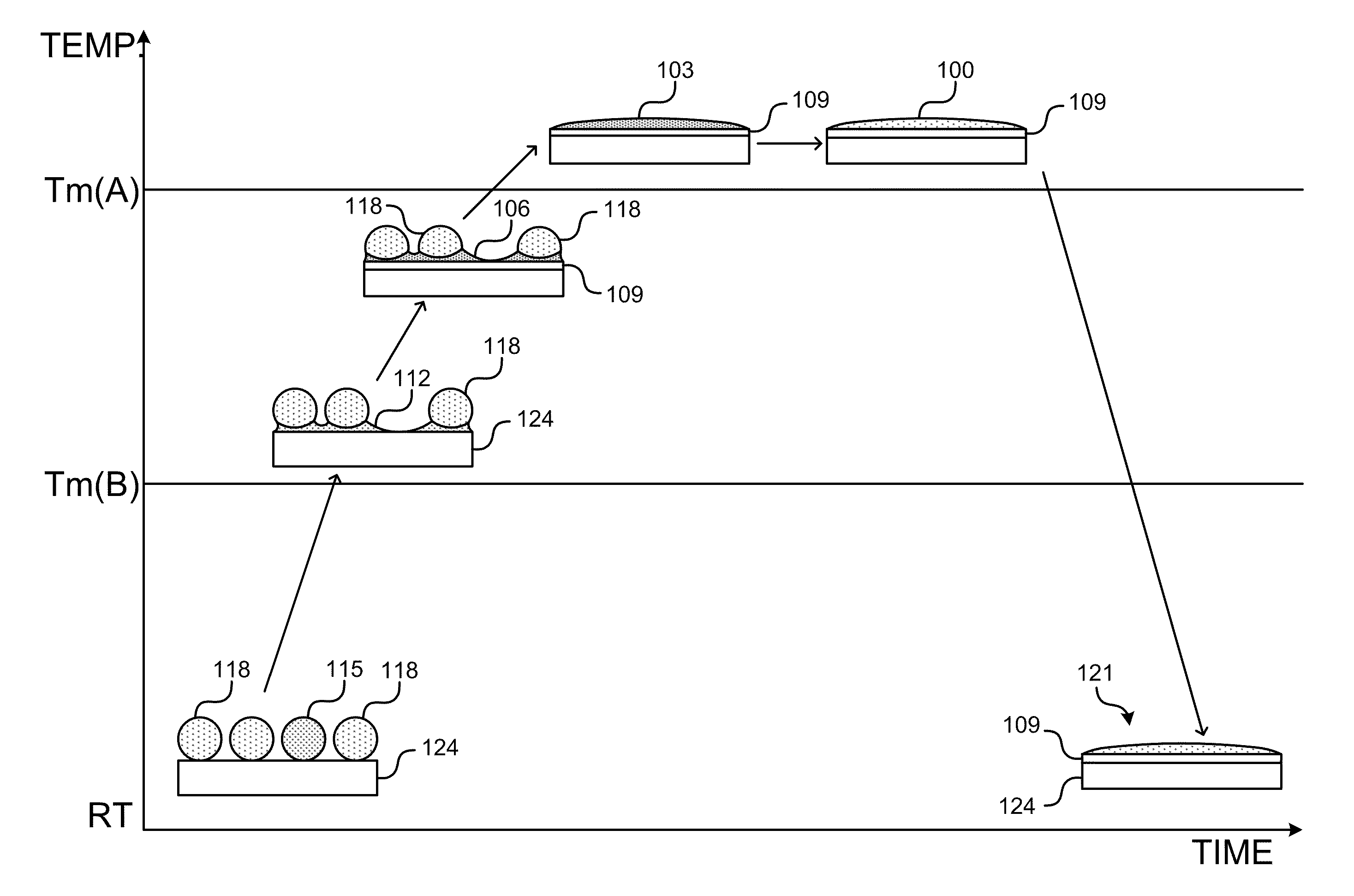
As described above, the poor wetting of a solder originates from (1) poor reaction
chemistry or (2) the oxidation of the solder.
For example, the poor wetting of Bi-based solder on different metallization surfaces results mainly from the poor reaction
chemistry between Bi and the substrate materials (i.e. Cu) or the oxidation of Bi during reflow.
However, this
doping will not change the reaction chemistry between Bi and the metallization
surface finish of the substrate.
Bi and Ni will form IMC layer between a Bi / Ni interface, but the brittle IMCs (Bi3Ni or BiNi) weaken the joint strength because cracks always grow along either the interface between Bi3Ni and the solder matrix or the interface between BiNi and the Ni substrate.
Accordingly, the reaction chemistry between Bi and substrate materials result in the poor wetting and the weak
bonding strength.
However, alloying is normally associated with some unexpected property loss.
However, directly alloying Sn into BiAg (where the Ag is aimed at increasing the thermal / electrical
conductivity) could cause (1) significant decrease in the
melting temperature or (2) the formation of Ag3Sn IMC in the alloy.
This will not improve the reaction chemistry between Sn with substrate metals if there is no enough time for them to be dissolved in the molten solder during reflow.
Thus, alloying elements directly into solder, such as Sn directly into Bi—Ag alloys, reveal minimal improvements.


 Login to View More