
Nanofluidic biosensor and its use for rapid measurement of biomolecular interactions in solution and methods
a biosensor and nano-fluorescence technology, applied in fluorescence/phosphorescence, instruments, laboratory glassware, etc., can solve the problems of large amount of solution, lack of molecular specific contrast, sensitivity and reliability, and high cost of elisa analysis, so as to maximize the detection of interactions, high surface-to-volume ratio, and rapid multiplexing tests
- Summary
- Abstract
- Description
- Claims
- Application Information
AI Technical Summary
Benefits of technology
Problems solved by technology
Method used
Image

Examples
Embodiment Construction
[0021]As used herein, the term “biomolecules” is intended to be a generic term, which includes for example (but not limited to) polyclonal antibodies, monoclonal antibodies, Fab fragments, recombinant antibodies, globular proteins, amino acids, nucleic acids, enzymes, lipid molecules, polysaccharides and virus.
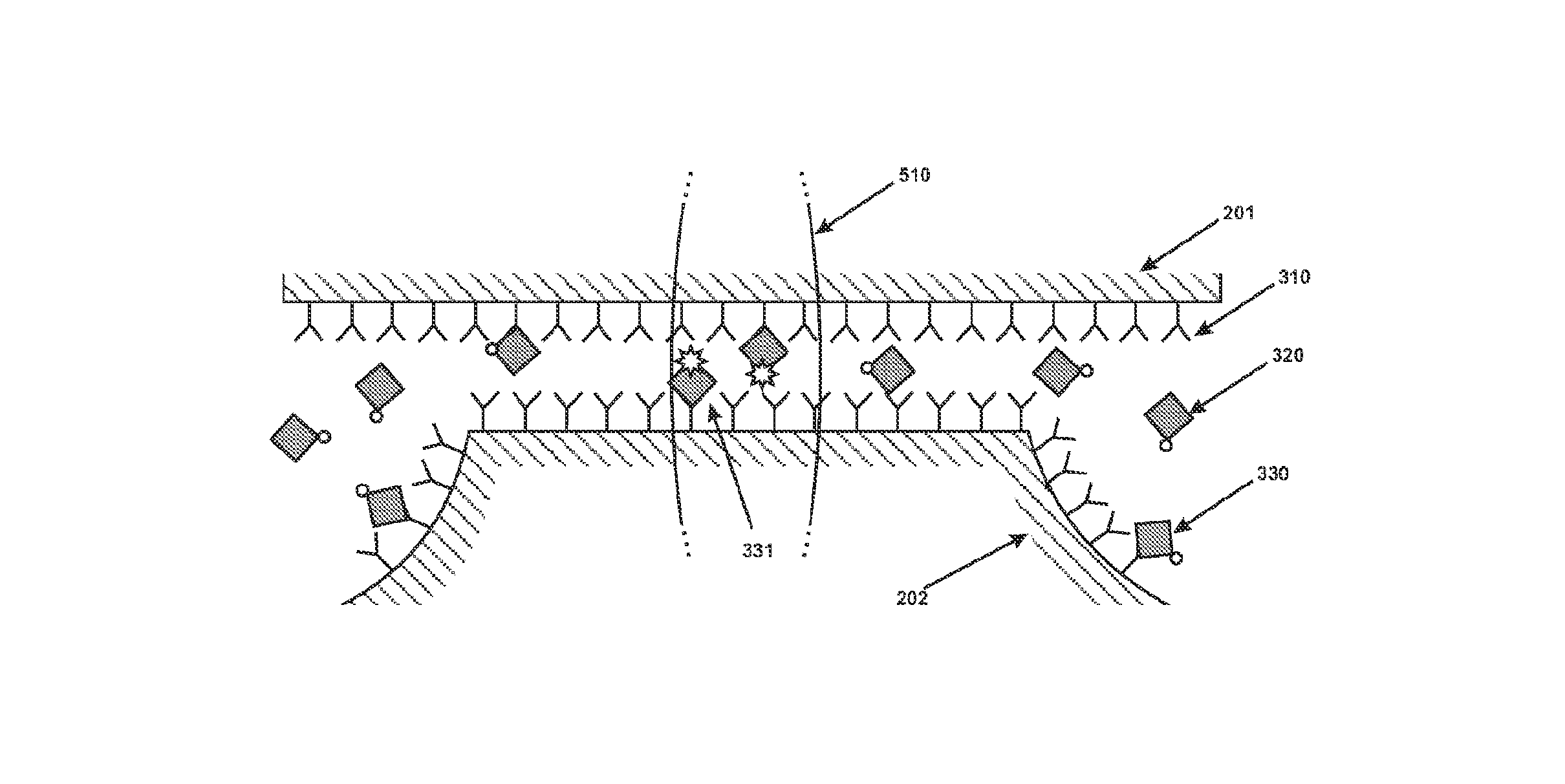
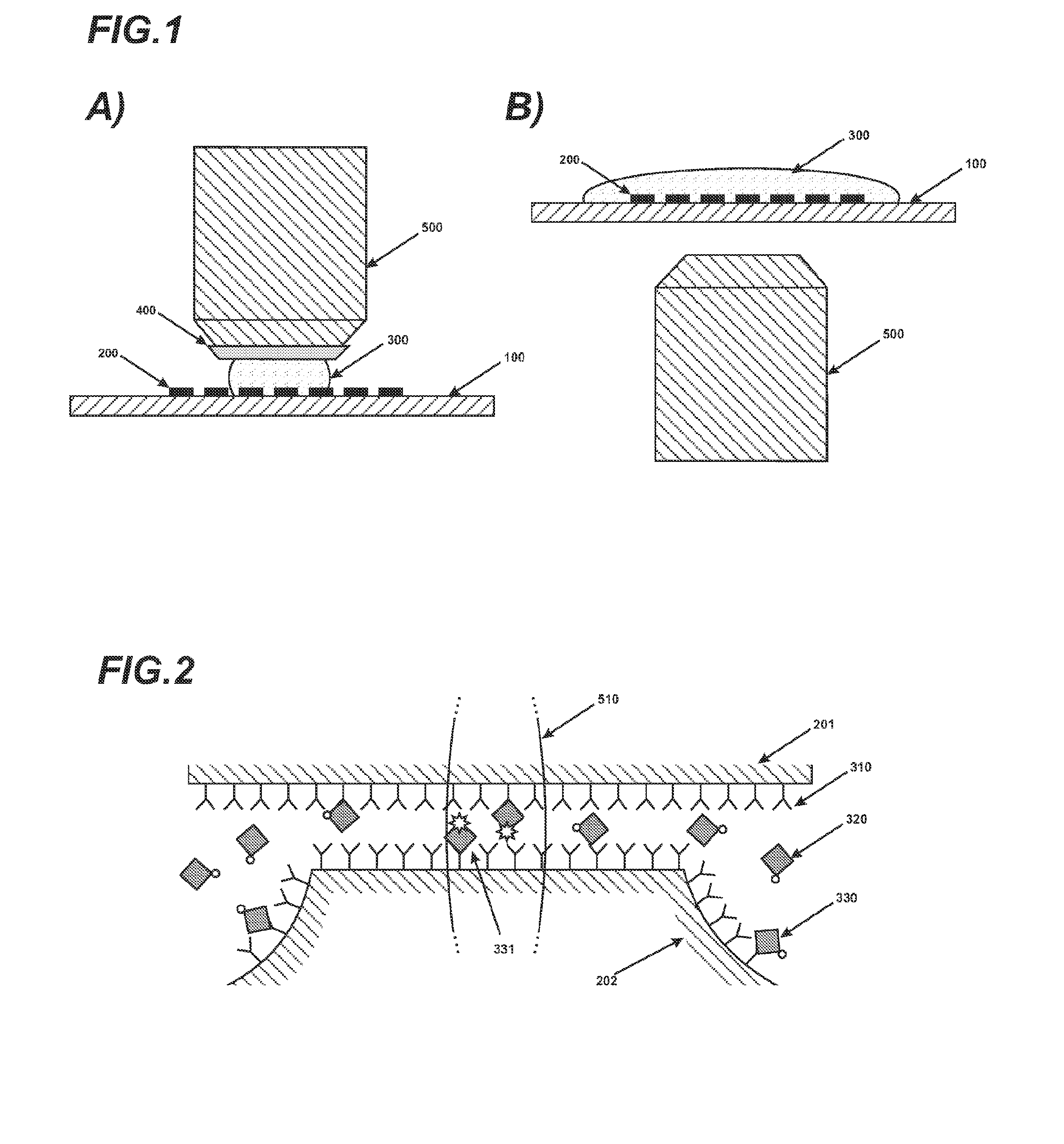
[0022]As used herein, the term “nanoslit” is intended to be a generic term, which means well-defined microfabricated structure with a nanometer-sized height, of which the width and the length are larger. The nanometer-sized height of the nanoslit is defined to be higher than 2 nm because of the size of the smallest proteins to detect, that have to enter into the slit and are in the same order of magnitude. The present invention is limited to nanoslits with a height lower than the micron, because of the range of the detection volume of the optical system that are typically in the same order of magnitude.
[0023]As used herein, the term “nanochannel” is intended to be a generic te...
PUM
 Login to View More
 Abstract
Description
Claims
Application Information
 Login to View More