

Hydrogen and Nitrogen Recovery from Ammonia Purge Gas
- Summary
- Abstract
- Description
- Claims
- Application Information
AI Technical Summary
Benefits of technology
Problems solved by technology
Method used
Image

Examples
Embodiment Construction
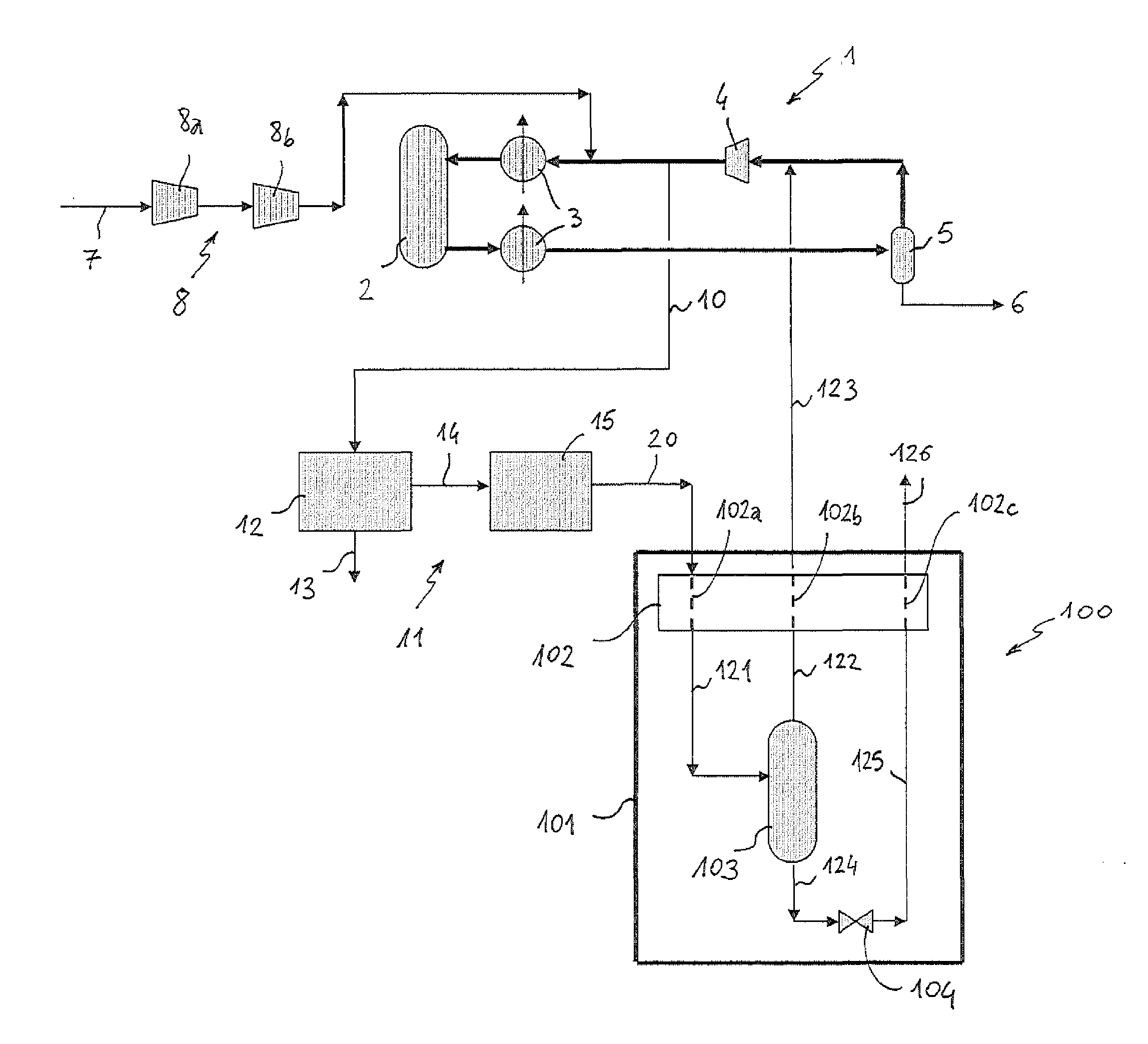
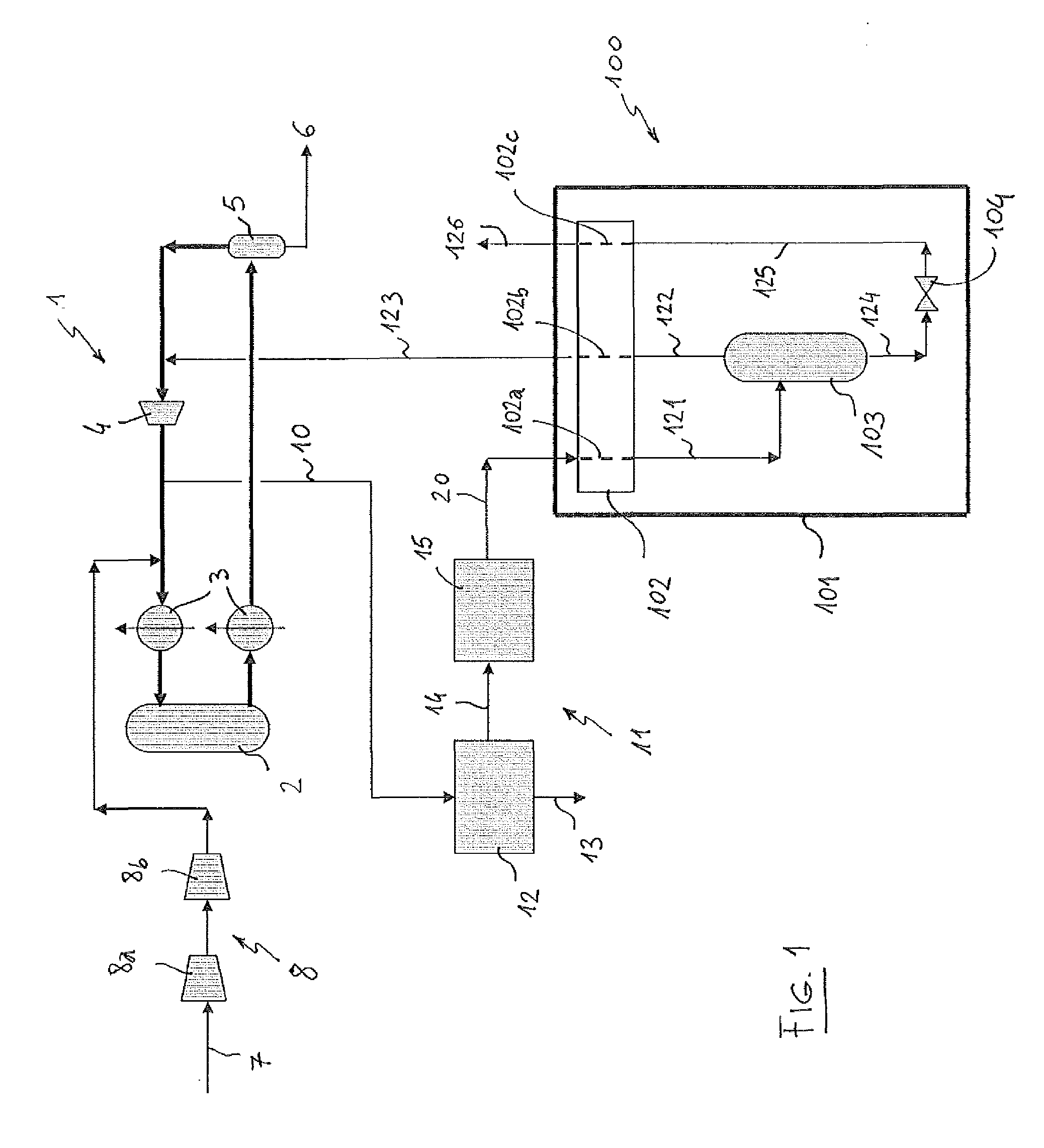
[0051]Referring to the first embodiment of FIG. 1, a plant for synthesis of ammonia from a make up gas containing hydrogen and nitrogen comprises a synthesis loop 1 operating at a loop pressure, which is usually a high pressure such as 150 bar or more. The loop 1 comprises basically a converter 2, heat exchangers 3, a circulator 4 and a separator 5, delivering the ammonia product 6. The loop is fed with make-up gas 7 by means of a main compression unit 8.
[0052]The make-up gas 7 is produced in a front-end section of the plant, for example by reforming a suitable hydrocarbon source, at a pressure significantly lower than the loop pressure of loop 1. The main compression unit 8 raises the pressure of the make up gas delivered by said front-end section to the pressure level of the loop. The compression unit 8 is normally a multi-stage unit, in the figure two stages 8a and 8b are shown. The circulator 4 overcomes the pressure losses along the loop 1 itself, including the pressure losses ...
PUM
 Login to View More
 Abstract
Description
Claims
Application Information
 Login to View More