Apparatus and method for purification of agricultural animal waste

US6039874AInactive Publication Date: 2000-03-21AGRIMOND USA CORP

Patent Information

Authority / Receiving Office
US · United States
Current Assignee / Owner
AGRIMOND USA CORP
Publication Date
2000-03-21
Estimated Expiration
Not applicable · inactive patent

Smart Images

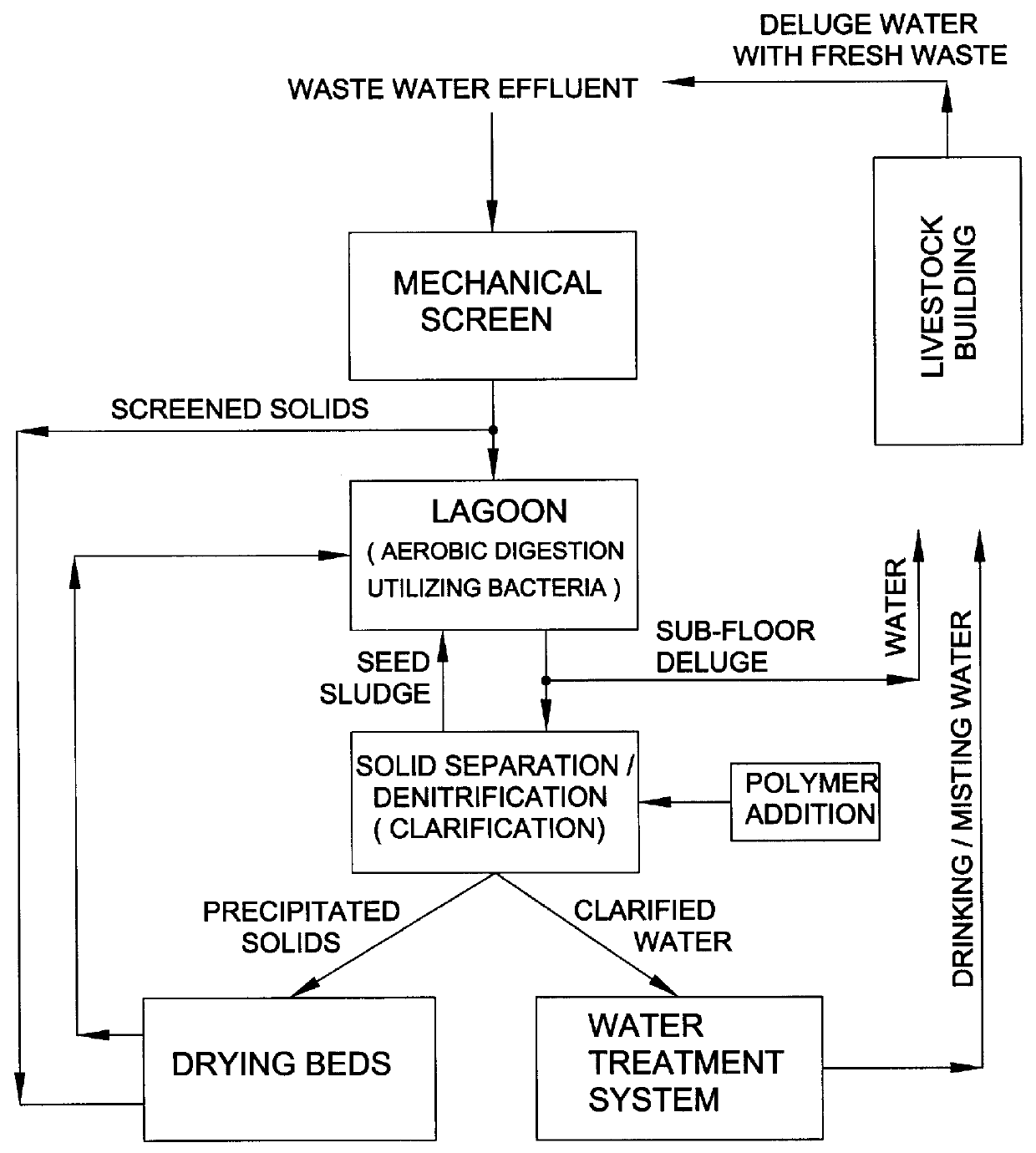
  • Figure 1
    Figure 1
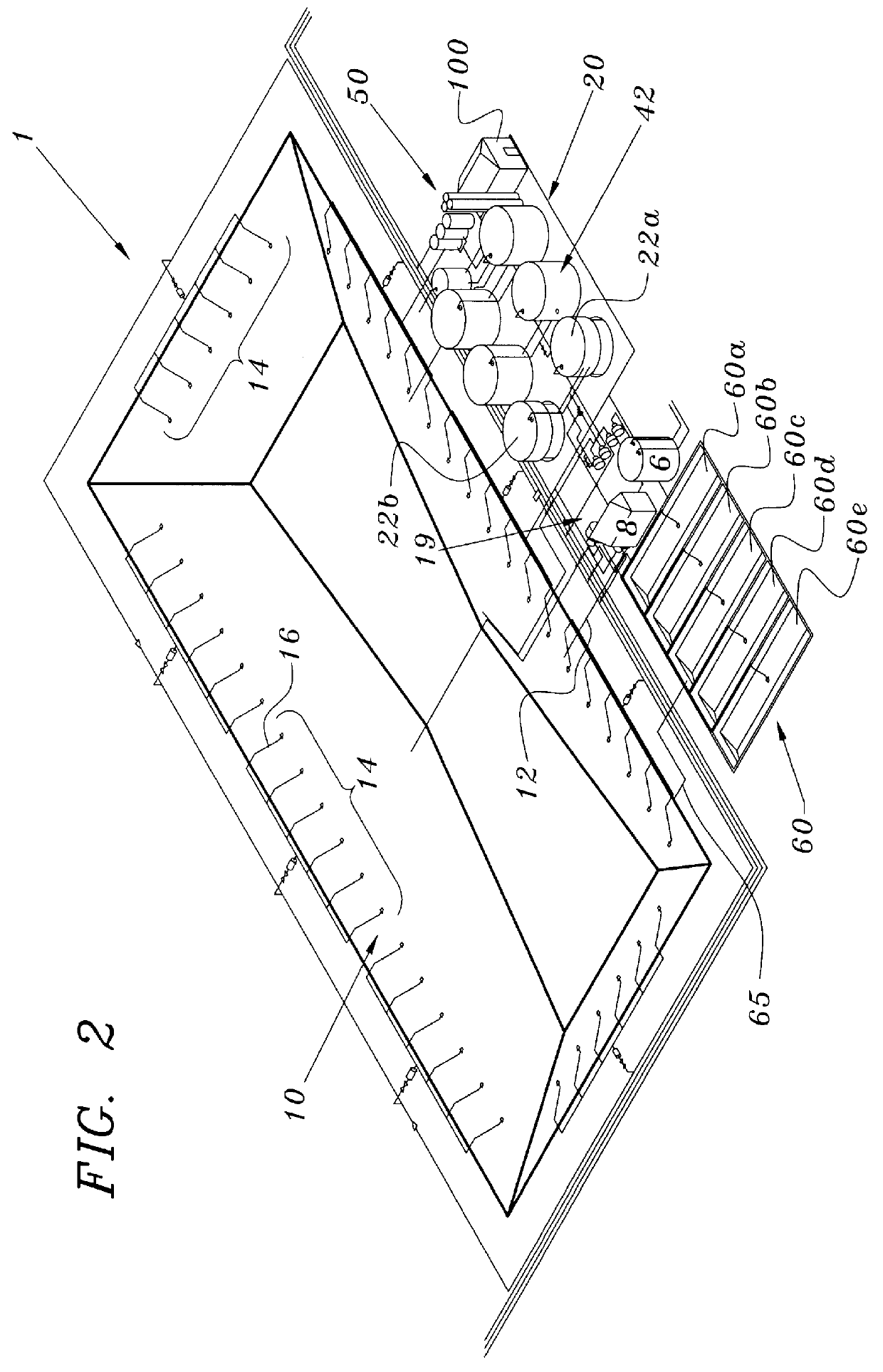
  • Figure 2
    Figure 2
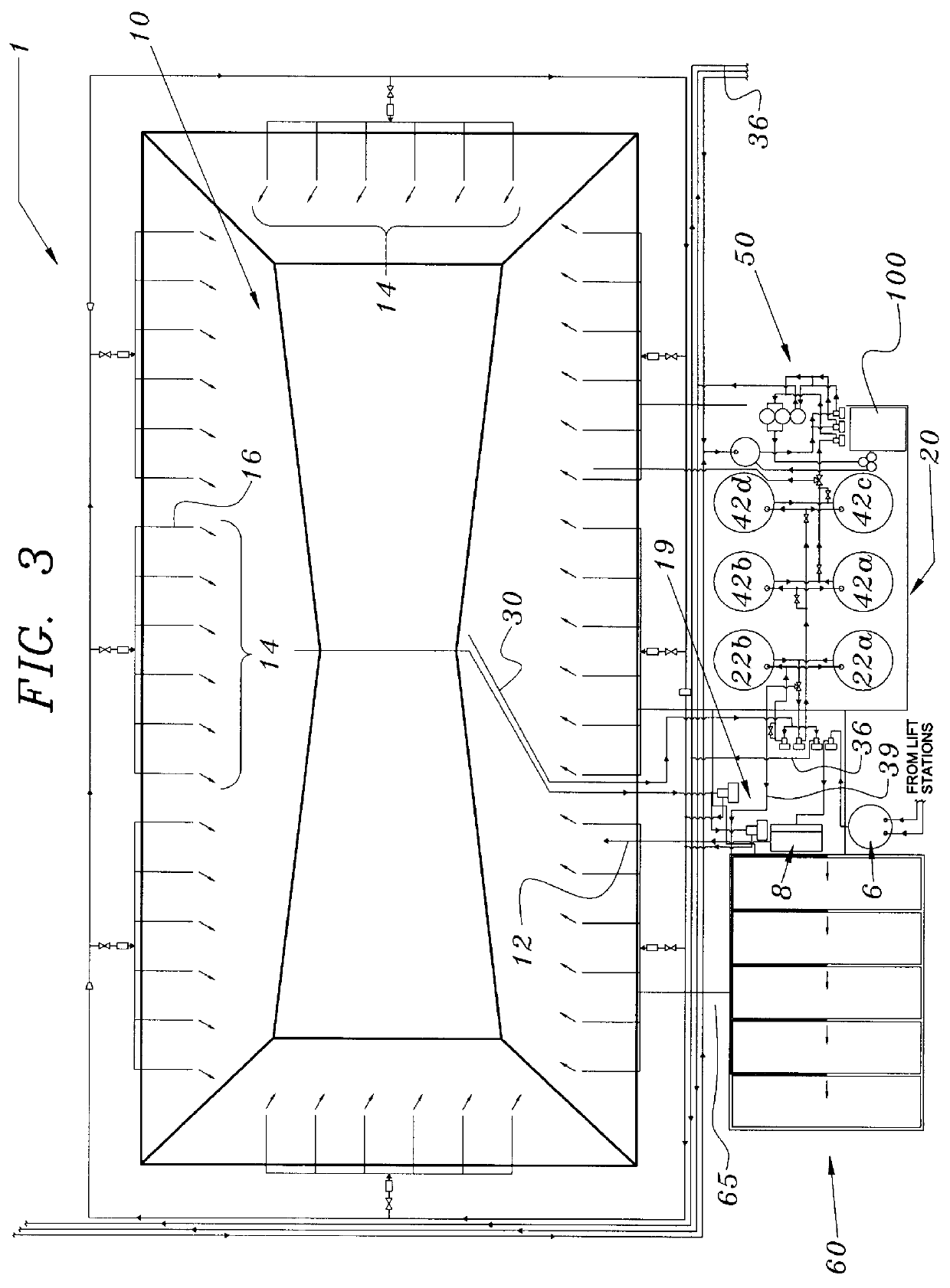
  • Figure 3
    Figure 3
Patent Text Reader

Abstract

An apparatus and method for treating and reusing the wastewater discharged from agricultural animal farms. The apparatus and method of the present invention is designed to be a zero discharge system in which no wastewater will be discharged or spray irrigated. The wastewater effluent is first passed through a mechanical screen were bulk solids are separated and partially de-watered. The screened effluent is then directed to a primary plastic-lined earthen lagoon where it undergoes aerobic digestion utilizing specially selected bacteria. After treatment in the primary lagoon, the wastewater effluent is used to wash the floors of the hog houses or undergoes a purification phase including solids separation / denitrification, filtration and sterilization. The solids separation / denitrification phase (clarification) preferably takes place in an anoxic environment in preferably above-ground tanks where suspended solids removal will occur as well as denitrification for nitrate reduction. The clarification process may be facilitated through use of polymer addition. The majority of solids will be sent to a plurality of drying beds for de-watering and subsequent removal.
Need to check novelty before this filing date? Find Prior Art

Description

1. Field of the InventionThe present invention relates to an apparatus and method for the purification of agricultural animal waste and, more particularly, to a system for treatment of manure and wastewater and the reuse of wastewater produced and as a byproduct of agricultural facilities.2. Description of the Background ArtOver the past decades there has been a shift from smaller localized family farms toward larger integrated confinement agricultural operations. Specifically, large agricultural operations may utilize confinement barns to house a large number of livestock such as swine, poultry or dairy cows. Using the swine industry as an example, often numerous hog-confinement operations are grouped in close proximity forming "mega-farms" which may house tens of thousands of hogs. While these larger agricultural operations have numerous advantages, attendant with these larger facilities are pollution problems relating to the handling and treatment of manure and wastewater (herein...

Claims

the structure of the environmentally friendly knitted fabric provided by the present invention; figure 2 Flow chart of the yarn wrapping machine for environmentally friendly knitted fabrics and storage devices; image 3 Is the parameter map of the yarn covering machine
Login to View More