
Method for enhancing proliferation or differentiation of a cell using ob protein
a technology of ob protein and wsx, which is applied in the field of wsx receptors, can solve the problems of reducing the biochemical characterization of these receptors and increasing lineage restrictions
- Summary
- Abstract
- Description
- Claims
- Application Information
AI Technical Summary
Benefits of technology
Problems solved by technology
Method used
Image

Examples
example 1
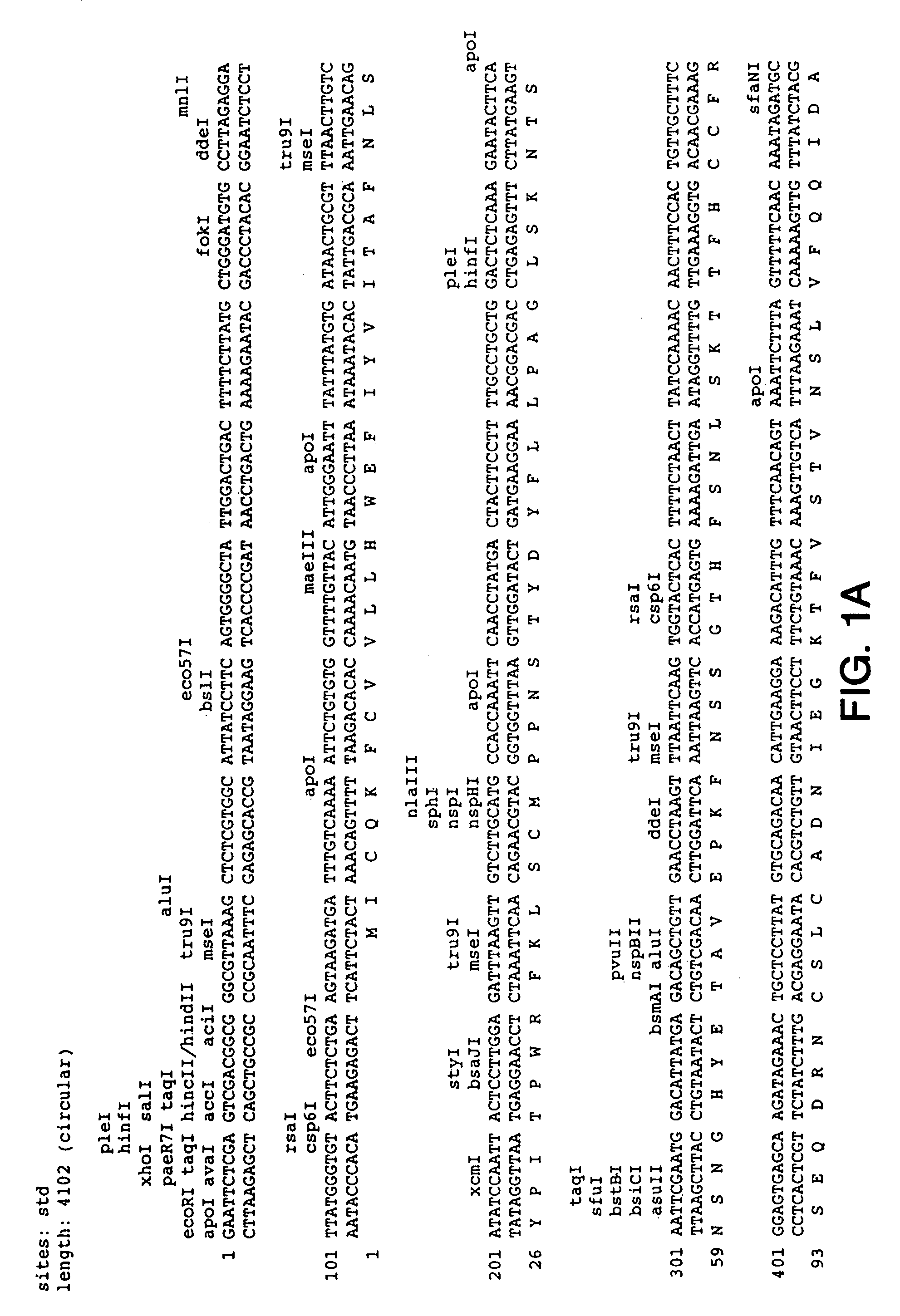
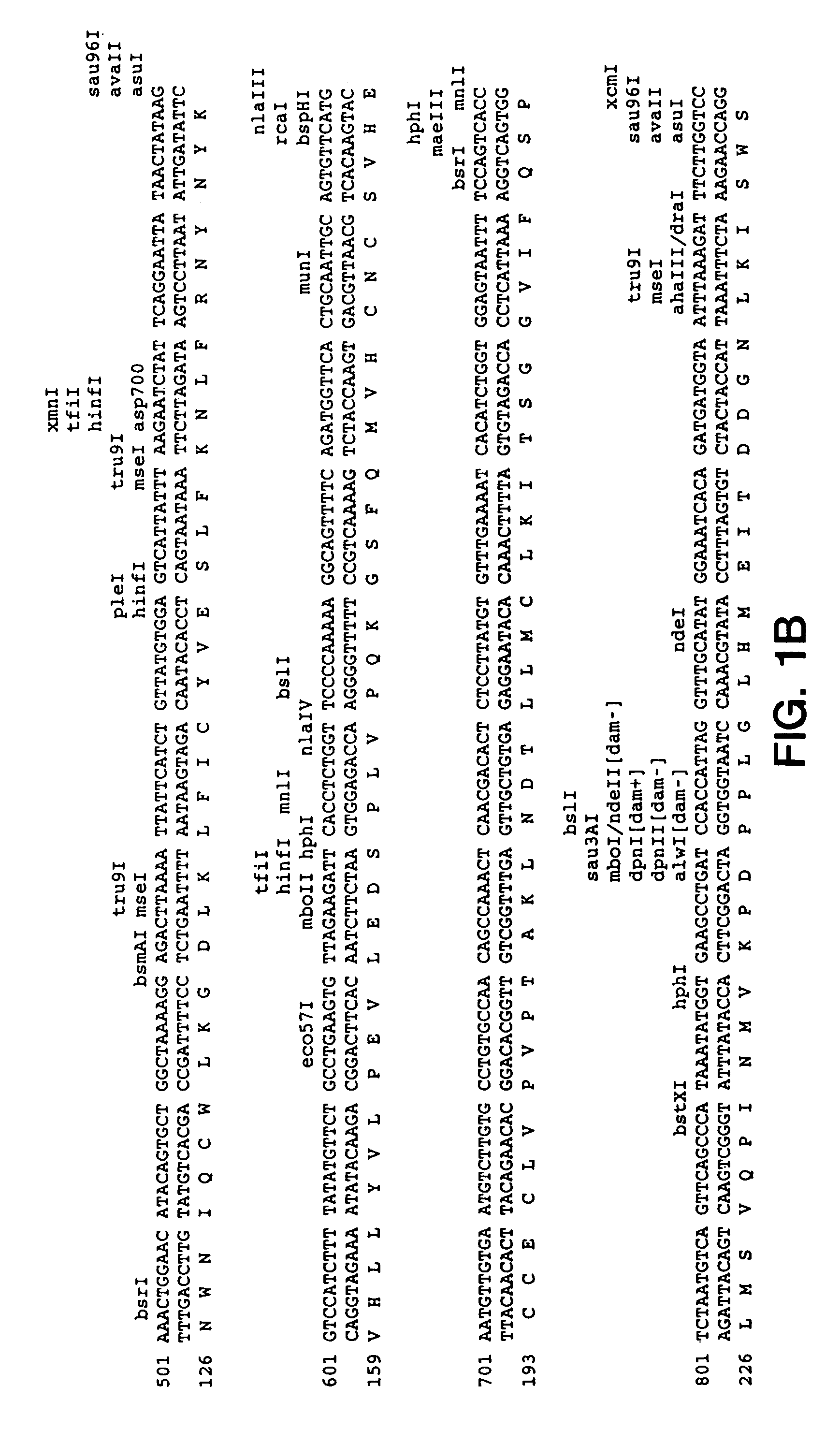
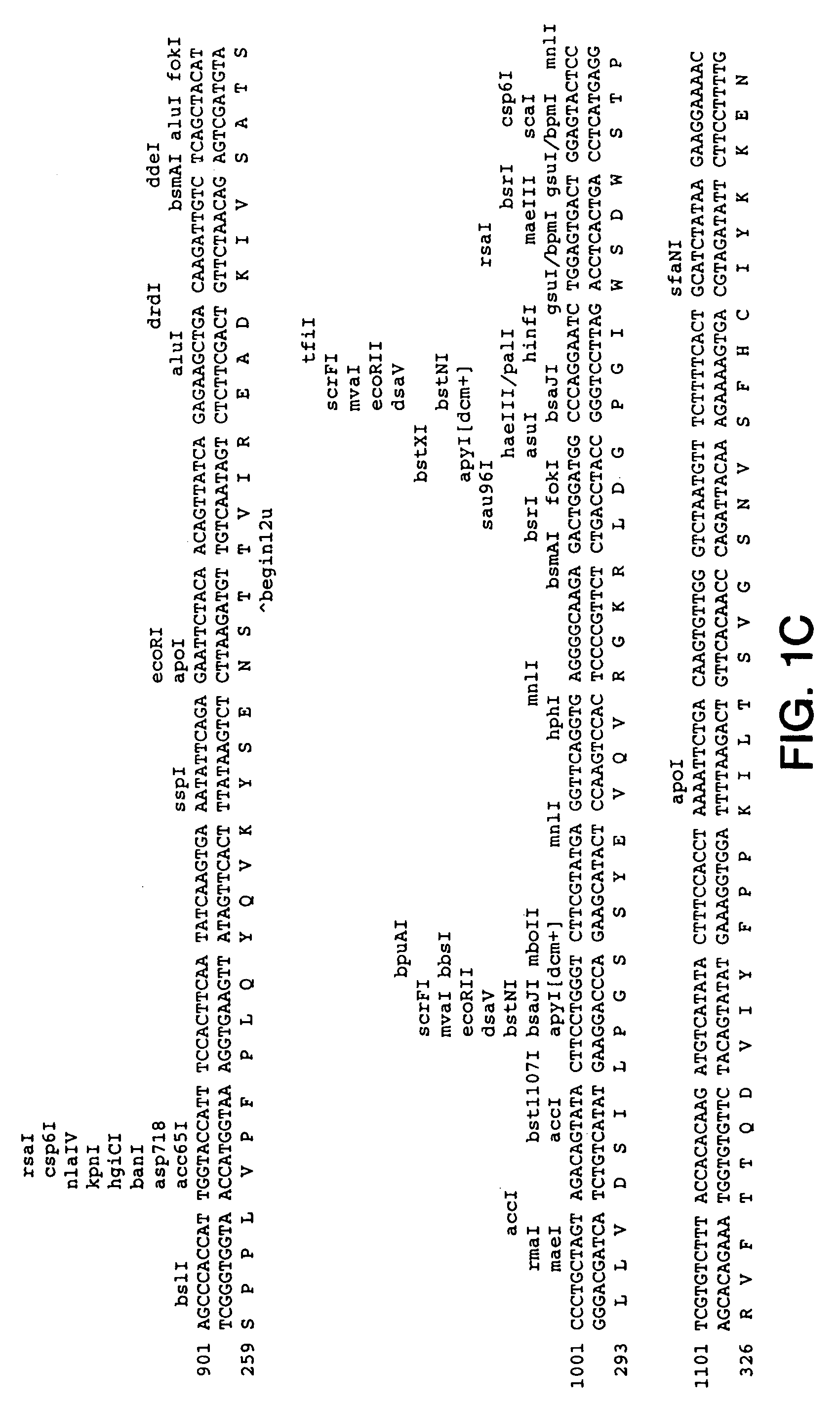
[0344]An oligonucleotide probe designated WSX.6 #1 was synthesized based upon the T73849 EST sequence. The WSX.6 #1 probe was a 51mer having the following sequence: 5′ GTCAGTCTCCCAGTTCCAGACTTGTGTGCAGTCTATGCTGTTCAGGTGCGC-3′ (SEQ ID NO:45).
[0345]The radiolabeled WSX.6 #1 probe was used to probe 1.2×10⁶ clones from a random and oligo dT primed λgt10 fetal liver library (Clontech, Palo Alto, Calif.). Following hybridization at 42° C. overnight, the filters were washed at 50° C. in 0.5×SSC and 0.1% NaDodSO4 (SDS). From the initial screen, 10 clones were selected and upon subsequent screening 5 individual plaque pure clones were isolated. Of these 5 individual clones, four clones designated 1, 5, 6 and 9 were subcloned into pBSSK (Stratagene) following EcoRI digestion. Sequence analysis revealed clone and clone 9 contained the putative initiation methionine and signal peptide. Clone 6 (designated 6.4) contained the most 3′ end sequence and subsequently was use...
example 2
WSX Receptor Immunoadhesin
[0349]Using polymerase chain amplification, a WSX receptor immunoadhesin was created by engineering an in-frame fusion of the WSX receptor gene extracellular domain (WSX.ECD) with human CH2CH3(Fc)IgG (Bennett et al., J. Biol. Chem. 266(34):23060–23067 (1991)) at the C terminus of the ECD and cloned into pBSSK− (Stratagene). For expression, the WSX-Fc was excised with ClaI and BstEII and ligated into the pRK5.HulF.grbhlgG Genenase I vector (Beck et al., Molecular Immunology 31(17):1335–1344 (1994)), to create the plasmid pRK5.WSX-IgG Genenase I. This plasmid was transiently transfected into 293 cells using standard calcium phosphate transfection techniques. The transfected cells were cultured at 37° C. in 5% CO2 in DMEM F12 50:50 supplemented with 10% FBS, 100 mM HEPES (pH 7.2) and 1 mM glutamine. The WSX receptor immunoadhesin was purified using a ProSepA™ protein A column.
example 3
Antibody Production
[0350]In order to raise antibodies against the WSX receptor, the WSX receptor immunoadhesin of Example 2 was used to inoculate rabbits to raise polyclonal antibodies and mice to raise monoclonal antibodies using conventional technology.
PUM
| Property | Measurement | Unit |
|---|---|---|
| time | aaaaa | aaaaa |
| concentration | aaaaa | aaaaa |
| temperature | aaaaa | aaaaa |
Abstract
Description
Claims
Application Information
 Login to View More