

Composite solid-state scintillators for neutron detection
a solid-state scintillator and neutron detection technology, applied in the direction of instruments, x/gamma/cosmic radiation measurement, photosensitive materials, etc., can solve the problems of eliminating the possibility of using organic scintillators, difficult to directly detect neutrons, and material integration as films into electronic devices for neutron detection or casting as large screens, etc., to achieve enhanced efficiency
- Summary
- Abstract
- Description
- Claims
- Application Information
AI Technical Summary
Benefits of technology
Problems solved by technology
Method used
Image

Examples
example 1
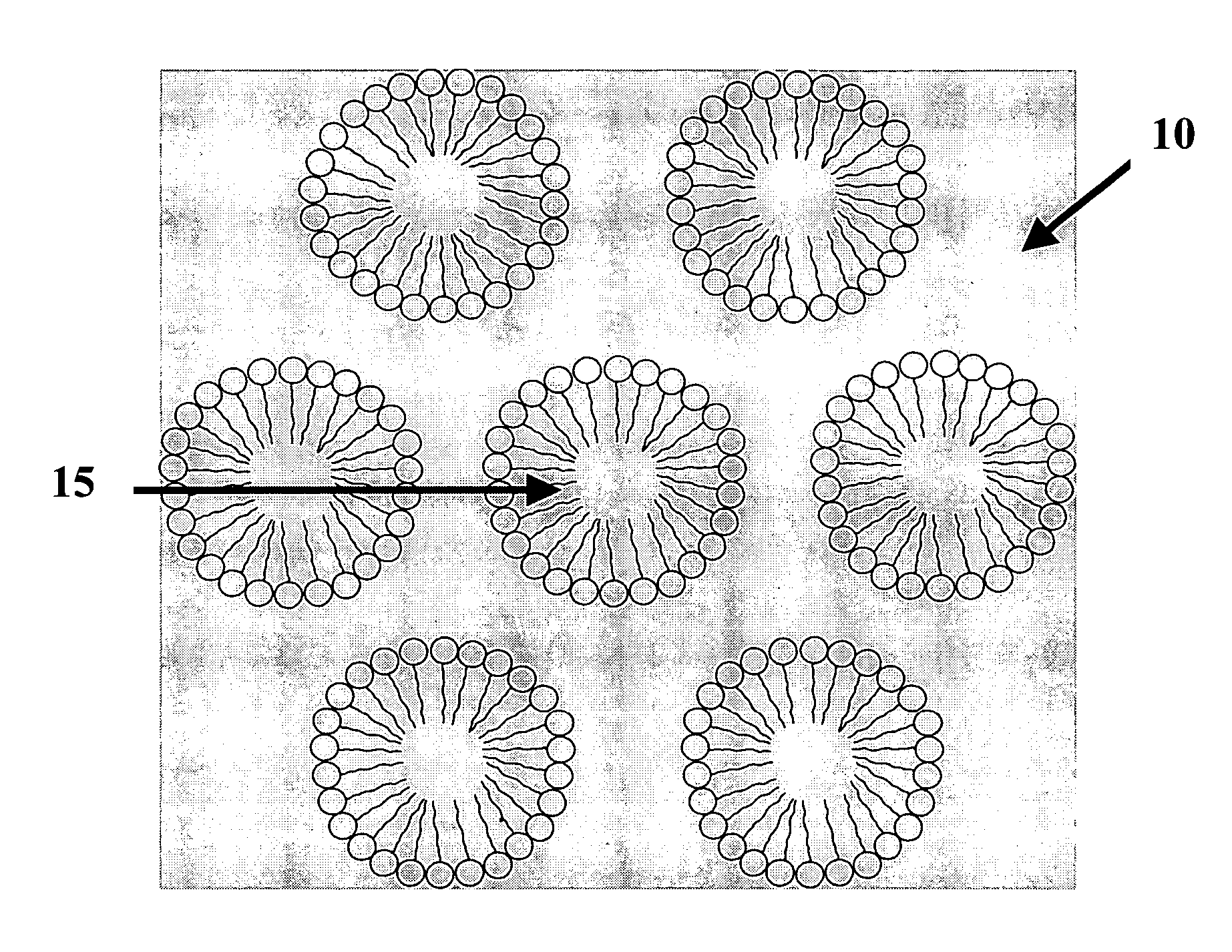
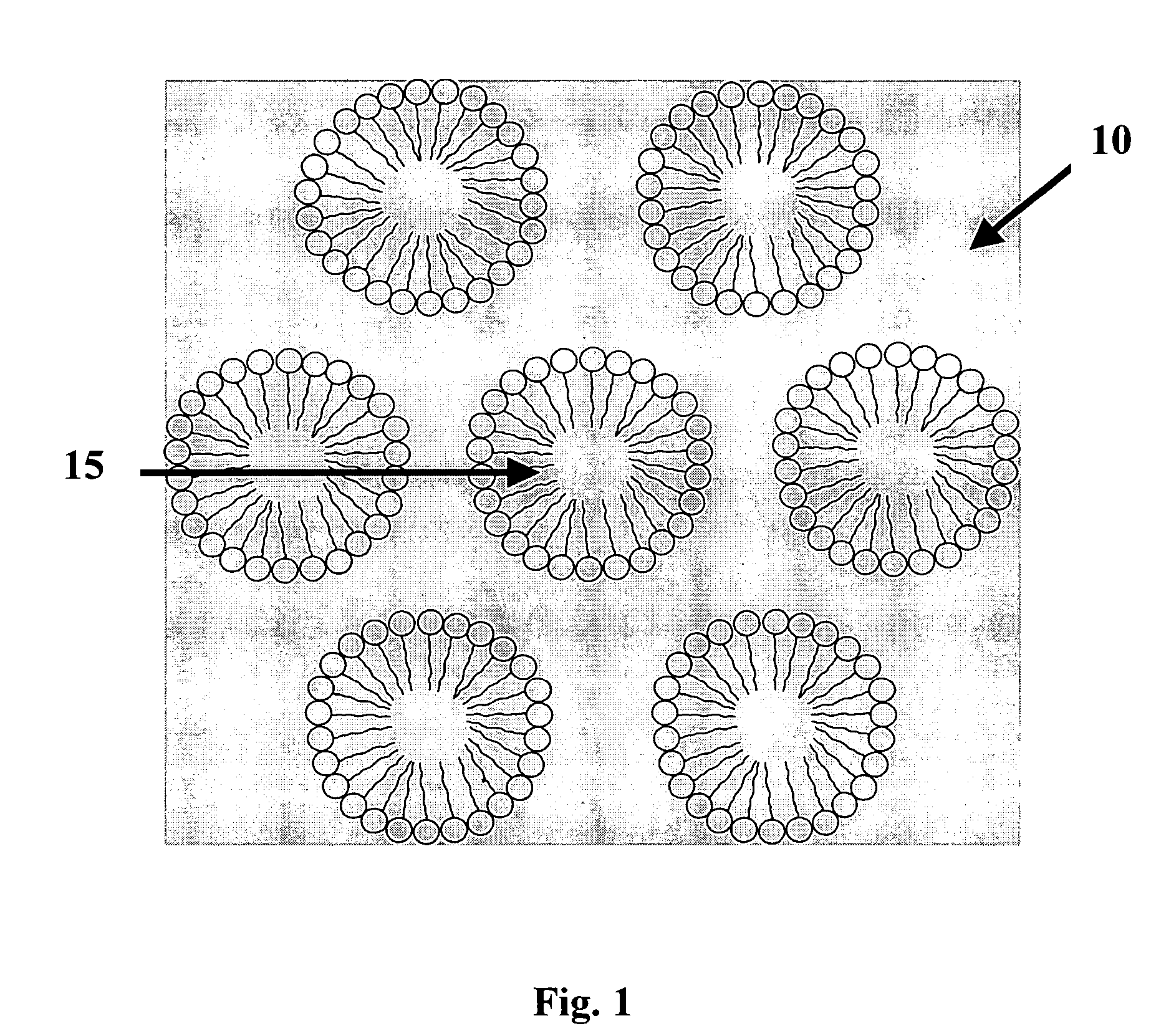
[0029]The liquid scintillator was prepared separately by dissolving a nonionic surfactant (polyoxyethylene(5)nonylphenyl ether, Aldrich) (14 wt. %) and anionic surfactants (14 wt. % bis(2-ethylhexyl)hydrogen phosphate, 97%, Aldrich; (1 wt. %) sodium di-octylsulphosuccinate, 99.8%, Aldrich; and (1 wt. %) triethyl phosphate, 98% Aldrich) and PPO (1˜2 wt. %) (2,5-diphenyloxazole, Rip Corp. Scintillation grade) / POPOP (0.01˜0.02 wt. %) (1,4-bis-2-(5-phenyloxazolyl)-benzene, Packed Instrument Company, Scintillation grade) into diisopropylnaphthalene (68 wt. %) (Ruetasolv DI, >98% Rutgers Krueha Solvents GmbH) via a micelle system. 6LiCl was also prepared by dissolving 1.000 g of 6LiOH (95%, obtained from Y-12, BWXT, through ORNL Isotope Sales (also commercially available)) in deionized water with 2.7 ml concentrated HCl (12.2 M, EM Science). Volatiles were removed from the clean colorless solution under vacuum, and the pH was checked to verify neutrality.
[0030]A series of samples was prep...
PUM
| Property | Measurement | Unit |
|---|---|---|
| temperature | aaaaa | aaaaa |
| wt. % | aaaaa | aaaaa |
| temperature | aaaaa | aaaaa |
Abstract
Description
Claims
Application Information
 Login to View More