
Multi-copy gene carrier of high efficient expression mannanase
A technology of mannanase and expression vector, which is applied in the field of multi-copy expression vector and its primer construction, and can solve the problem of no multi-copy expression mode
- Summary
- Abstract
- Description
- Claims
- Application Information
AI Technical Summary
Problems solved by technology
Method used
Image

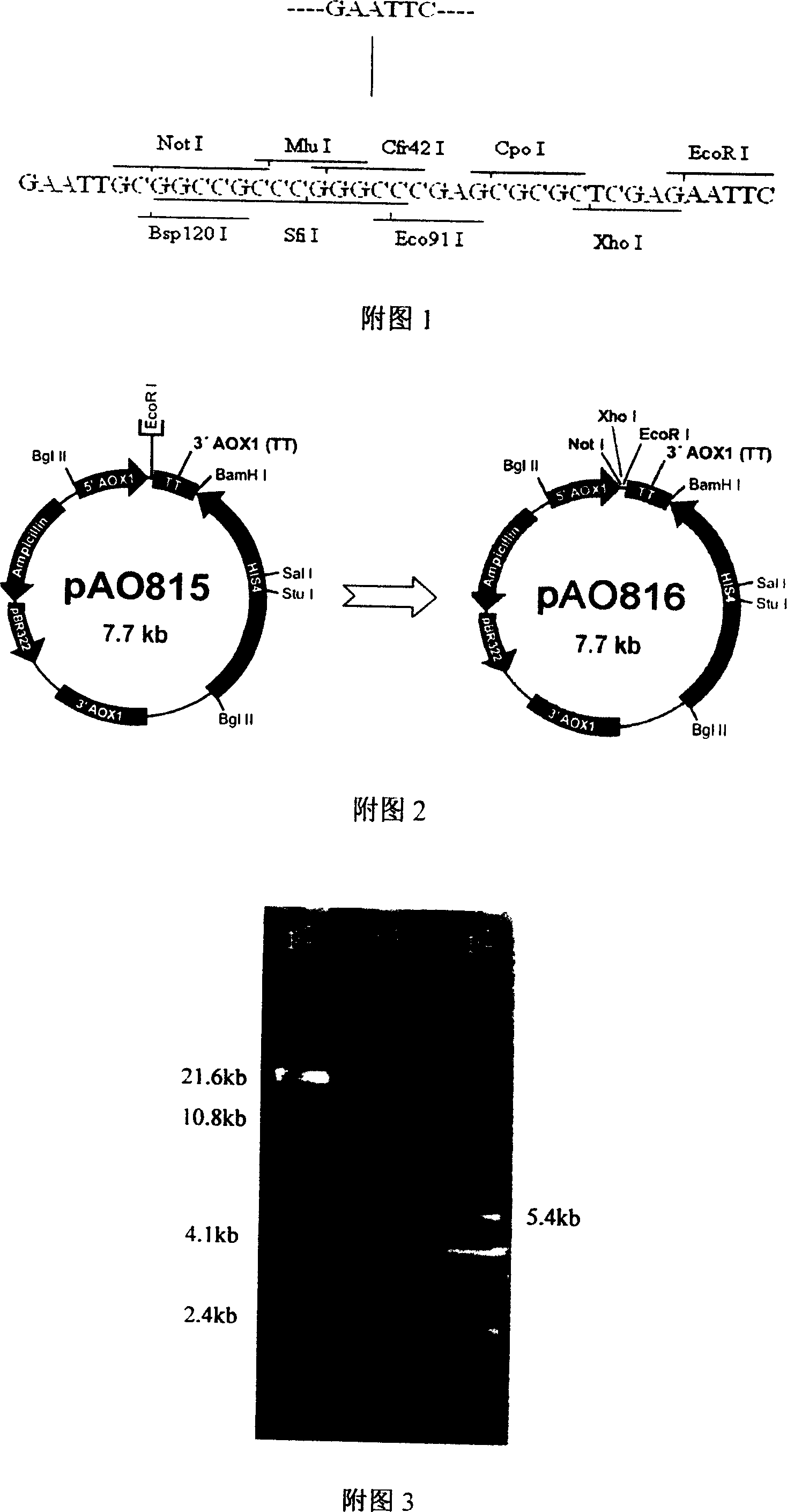
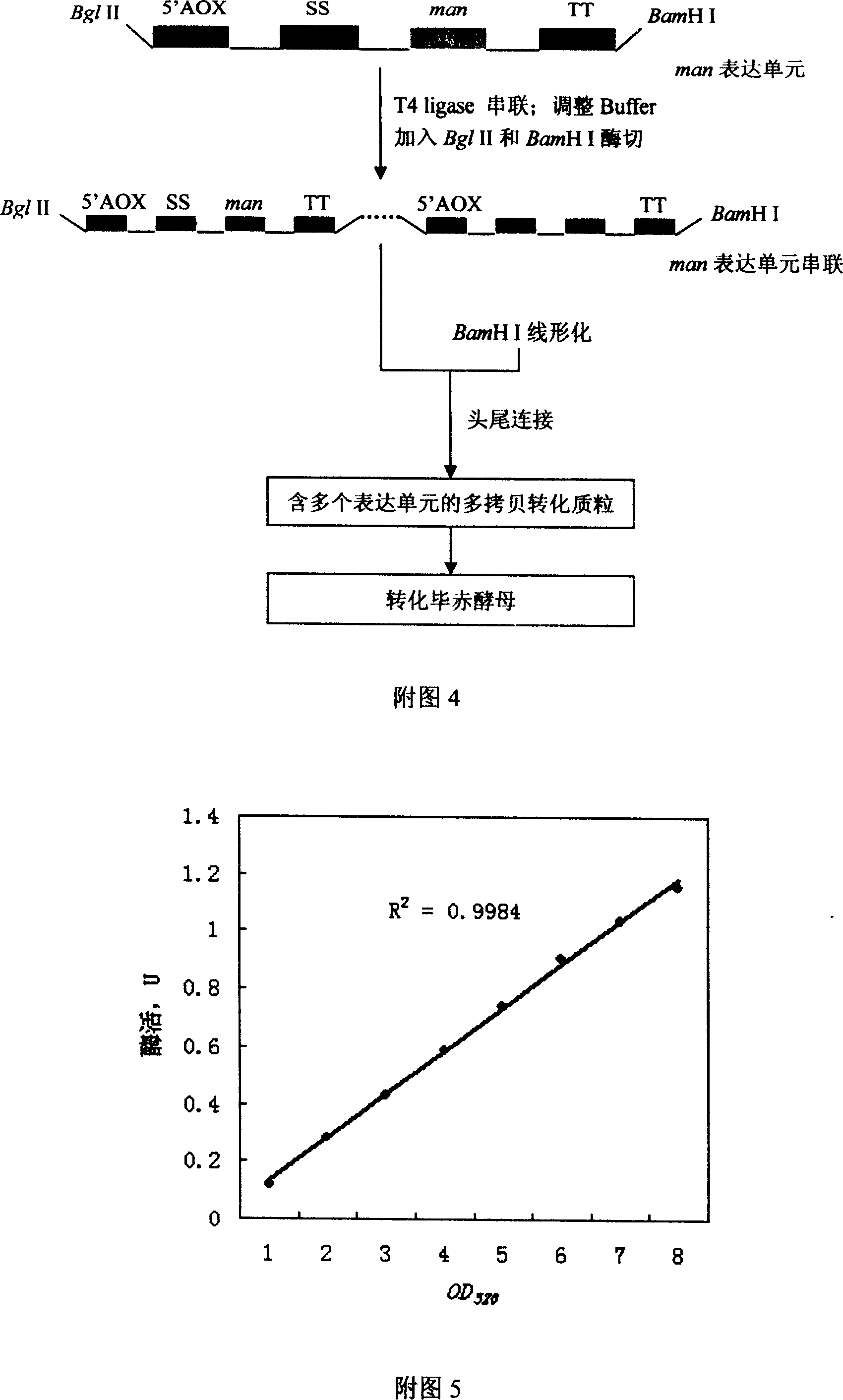
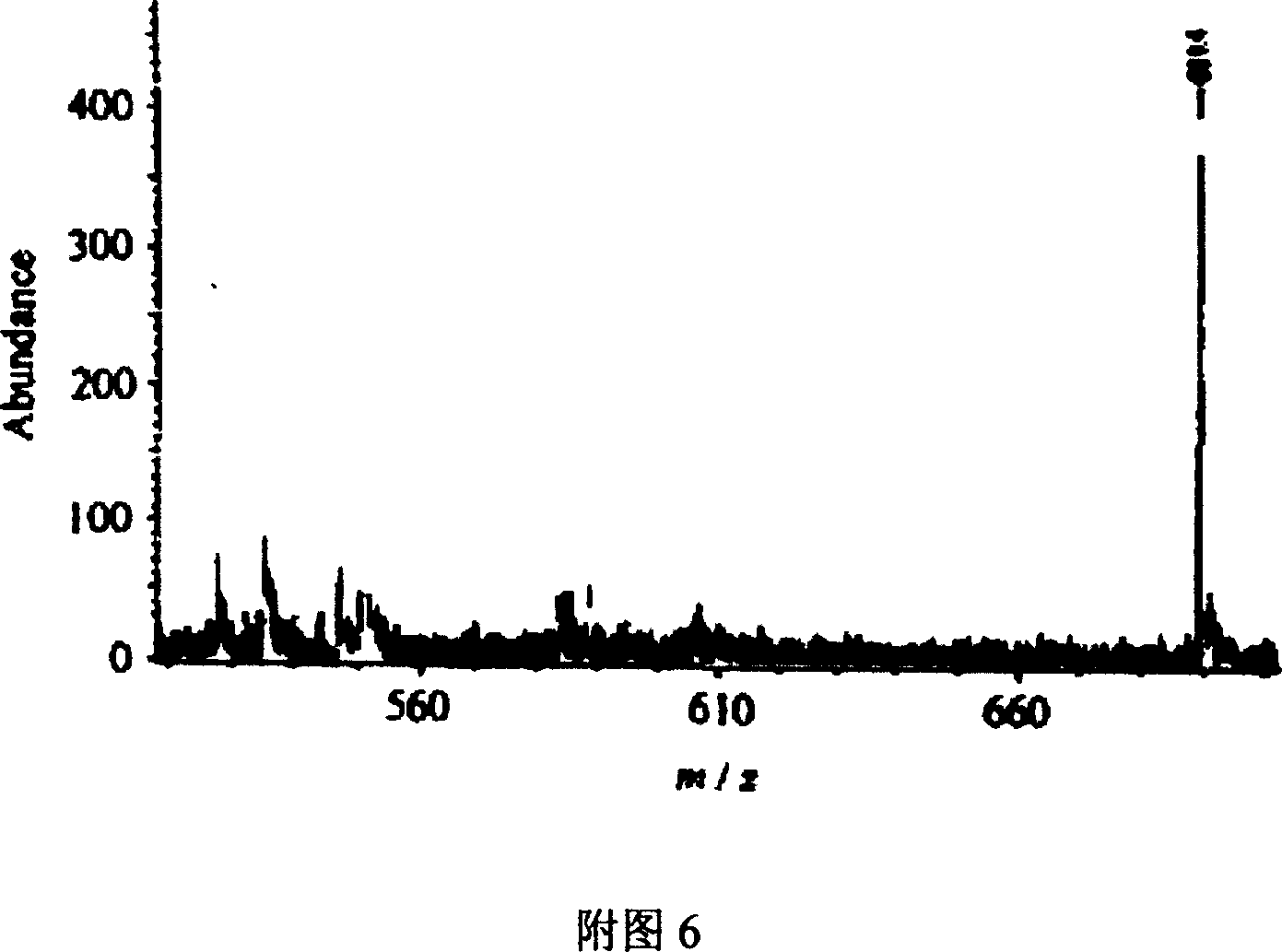
Examples
Embodiment 1
[0036] Example 1 Screening of mannanase-producing bacteria
[0037] Take the soil under the old haystacks, and carry out enrichment culture in: 2% konjac flour, 0.5% ammonium sulfate, 0.5% dipotassium hydrogen phosphate, 0.1% magnesium sulfate medium, 30°C, 180rpm. After 10 days, the supernatant was taken and diluted according to the ratio of 10 to 1000 to coat a plate, which was composed of LB medium, 0.3% konjac flour and 0.5% Trypon-blue. After static culture at 30°C for 16 hours, observe the transparent circle on the plate, and select the bacterium with a large transparent circle as the mannanase-producing strain man37.
Embodiment 2
[0038] Cloning of embodiment 2 mannanase gene
[0039] After the mannanase-producing bacteria were cultured in LB medium at 30°C overnight, the genomic DNA was extracted according to the following method: Centrifuge the cultured bacteria in a 1.5mL centrifuge tube at 12000rpm for 2-3min, Collect the cells; suspend the cells in 200 μL TE (pH 8.0), add 50 μL of 20 mg / mL lysozyme, and incubate at 37°C for 30 minutes; add 400 μL of lysis buffer, and break the cells by high-speed shaking; then add 300 μL of 5M NaCl liquid , mix well, and centrifuge at 12000rpm for 15min; transfer the supernatant to another new centrifuge tube, add an equal volume of chloroform, mix gently, and centrifuge at 12000rpm for 5min; then transfer the upper aqueous phase to another new centrifuge tube, add 2 times the volume DNA was precipitated with absolute ethanol; washed with 70% ethanol, dried and dissolved in TE for later use. The extracted DNA was partially digested with Sau3A I to obtain a series ...
Embodiment 3
[0043] Example 3 Directed Mutagenesis of Mannanase
[0044] Take known mannanase, design primers for its two ends, use mannanase as a template, add 5-bromouracil solution with a concentration of 1% to 10% in the PCR system, and use rTaq DNA polymerase to carry out PCR (conditions are 94°C for 4min; 94°C for 30s, 50°C for 30s, 72°C for 1min, 35cycles; 72°C for 5min; 4°C hold), using the mismatch generated by gene amplification in the 5-bromouracil system, the The mutation is introduced into the mannanase gene, and then screened on a plate made of LB medium, 100 μg / mL AP, 0.3% konjac flour and 0.4% Trypon-blue, and the gene with a large hydrolysis circle is selected and screened, which is the construction vector The desired expressed gene was named man37-1.
PUM
 Login to View More
 Abstract
Description
Claims
Application Information
 Login to View More