
Electrode foil, current collector, electrode, and energy storage element using same
A current collector and capacitor component technology, which is applied in the field of electrode foil, can solve the problems of adhesion, electrical conductivity, insufficient chemical stability, difficulty in charging and discharging, and increased contact resistance, so as to improve electrical conductivity and chemical stability. , Good anti-oxidation effect
- Summary
- Abstract
- Description
- Claims
- Application Information
AI Technical Summary
Problems solved by technology
Method used
Image

Examples
no. 1 Embodiment approach
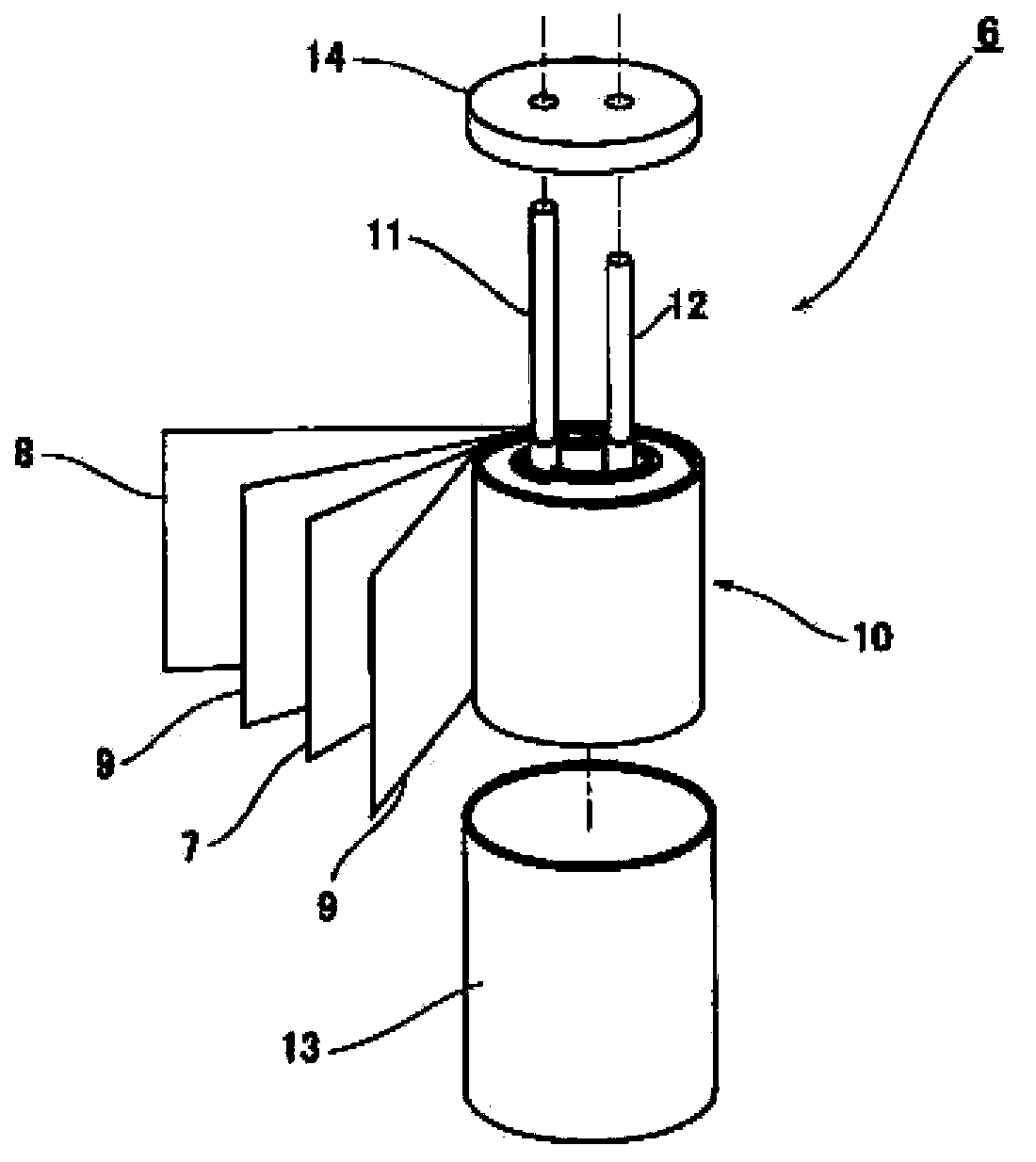
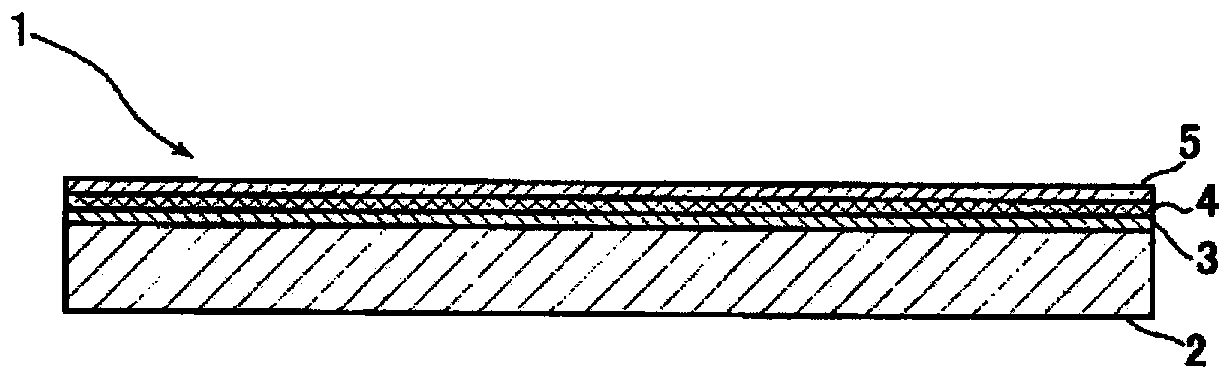
[0088] The following description: On the non-roughened aluminum foil, a first conductive layer composed of Ti or Al, a mixed layer composed of Ti or Al and carbon, and a second conductive layer composed of carbon are formed. Layered cathode foil, and a solid electrolytic capacitor fabricated using the cathode foil, are an embodiment of the present invention. However, as already explained, the aluminum foil used as the substrate and the Ti or Al used to form the first conductive layer can be replaced by other materials, or as explained by the performance test data, even if the surface of the substrate is not roughened Therefore, the cathode foil of the present invention also has good characteristics.
[0089] (cathode foil of the present invention)
[0090] figure 1 It is a cross-sectional view showing the layer structure of the cathode foil 1 according to the above-mentioned one embodiment. The cathode foil 1 is: a smooth aluminum foil 2 that has not been roughened by etchi...
Embodiment 1
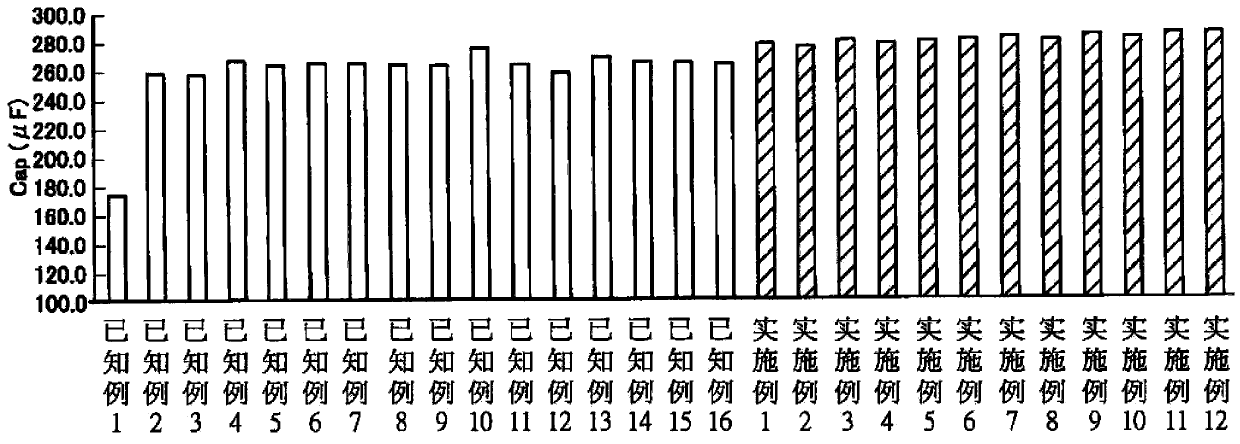
[0146] The smooth aluminum foil was etched to form a cathode foil having a Ti coating of 0.2 μm, a Ti and carbon mixed layer a of 0.1 μm, and a carbon coating of 0.2 μm.
Embodiment 2
[0148] The smooth aluminum foil was etched to form a cathode foil having a Ti coating of 0.008 μm, a Ti and carbon mixed layer a of 0.004 μm, and a carbon coating of 0.008 μm.
PUM
| Property | Measurement | Unit |
|---|---|---|
| thickness | aaaaa | aaaaa |
| thickness | aaaaa | aaaaa |
Abstract
Description
Claims
Application Information
 Login to View More