

Anabaena capable of efficiently degrading polychlorinated biphenyl and application thereof
A PCB and Anabaena technology, applied in the direction of single-cell algae, microorganism-based methods, microorganisms, etc., to achieve the effect of important application prospects
- Summary
- Abstract
- Description
- Claims
- Application Information
AI Technical Summary
Problems solved by technology
Method used
Image

Examples
Embodiment 1
[0042] (1) Separation and screening of algal species
[0043] Soil sample: collected from a PCB-contaminated rice field in Taizhou City, Zhejiang Province;
[0044] Enrichment and separation of algal species: screening with liquid medium containing 10ppm PCBs;
[0045] The medium of the present invention is: BG11 inorganic salt chlorine-free liquid medium (1000mL), the composition is shown in Table 2;
[0046]The composition of BG11 inorganic salt medium is shown in Table 1 (the solvent is water):
[0047] Table 1
[0048]
[0049] A 5 The composition of the solution is shown in Table 2 (the solvent is water):
[0050] Table 2
[0051]
[0052] The composition of BG11 inorganic salt chlorine-free medium is shown in Table 3 (the solvent is water):
[0053] table 3
[0054]
[0055] Molecular identification of algal species:
[0056] The 16SrDNA sequence of the algal species was sequenced, and the sequence shown as SEQ ID NO.1 was obtained, and the BLAST of the ...
Embodiment 2
[0062] Example 2: Anabaena species AnabaenaPD-3 biodegrades 2mg / L of PCB287 days exposure experiment
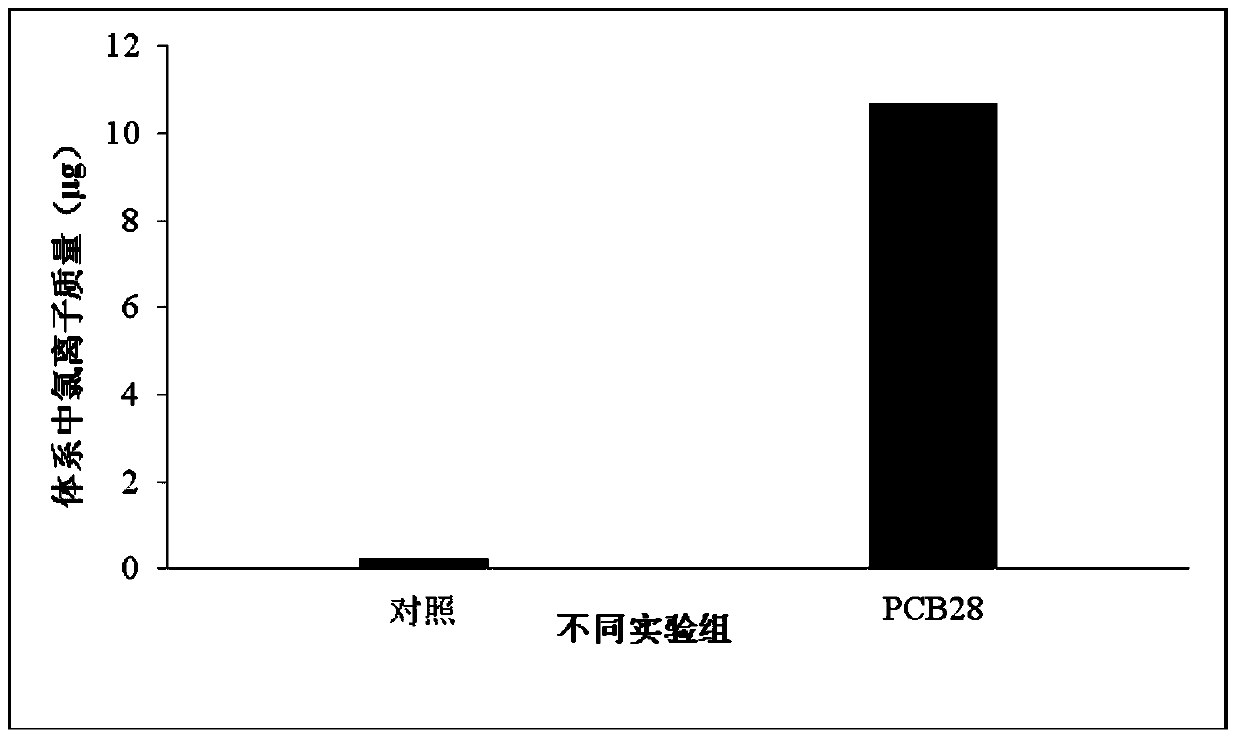
[0063] First, measure the OD value of the algae liquid (the culture medium is BG11 inorganic salt chlorine-free liquid medium, the same below) at a wavelength of 680nm with the dechlorination functional algae species PD-3 (CCTCCNo: M2013398), and adjust the OD value to 0.38. Keep the algae in logarithmic growth phase. Then add 20mL of algae solution to a clean 50mL Erlenmeyer flask, and add 400μL of PCB28 (concentration: 100mg / L) to adjust the final concentration of PCB28 to 2mg / L. Seal the Erlenmeyer flask with a sterile filter. Finally, the light intensity of the artificial climate incubator was adjusted to 1003lux respectively, the culture condition was 25°C, and the light-dark ratio was 12:12h (that is, 12h of light and 12h of darkness alternately). After 7 days of exposure culture, it was measured by mercury thiocyanate ferric photometry The concentration of chloride i...
Embodiment 3
[0064] Example 3: Anabaena species AnabaenaPD-3 biodegrades 2mg / L of PCB297 days exposure experiment
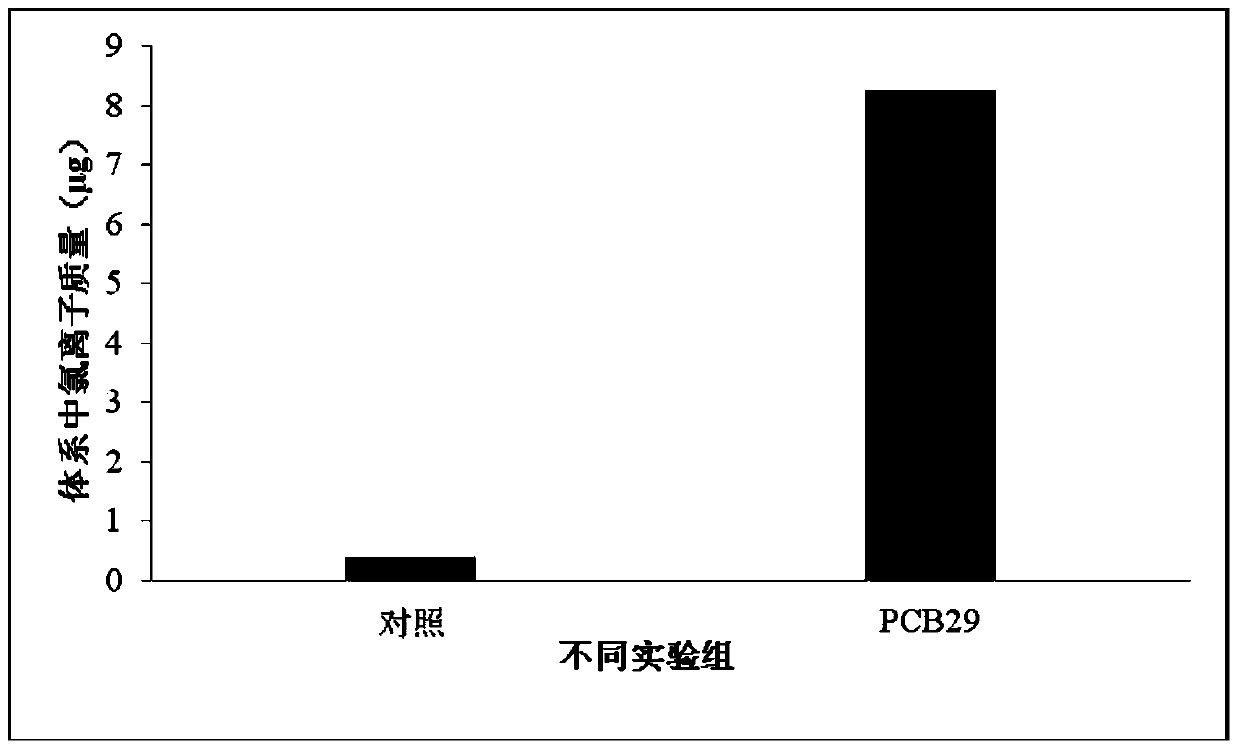
[0065] First, measure the OD value of the algae liquid with the dechlorination functional algae PD-3 at a wavelength of 680nm, and adjust the OD value to 0.38, so that the algae is in the logarithmic growth phase. Then, 20 mL of algae solution was added to a clean 50 mL Erlenmeyer flask, and 400 μL of PCB29 (concentration of 100 mg / L) was added to adjust the final concentration of PCB29 to 2 mg / L. Seal the Erlenmeyer flask with a sterile filter. Finally, the light intensity of the artificial climate incubator was adjusted to 1003 lux, the culture condition was 25°C, and the light-dark ratio was 12:12h. After 7 days of exposure culture, the chloride ion concentration was measured by mercury thiocyanate ferric photometry, and its degradation effect was studied. The degradation efficiency is up to 54%, see the degradation results figure 2 .
PUM
 Login to View More
 Abstract
Description
Claims
Application Information
 Login to View More