
One-step color-development screening method for banned azo-dye in dyeing textiles
A technology for banning azo and textiles, applied in the field of analytical chemistry, can solve the problems of complex processing, long time, harsh detection conditions, etc., and achieve the effect of broad application prospects, simple technology, and easy to master.
- Summary
- Abstract
- Description
- Claims
- Application Information
AI Technical Summary
Problems solved by technology
Method used
Image

Examples
Embodiment 1-29
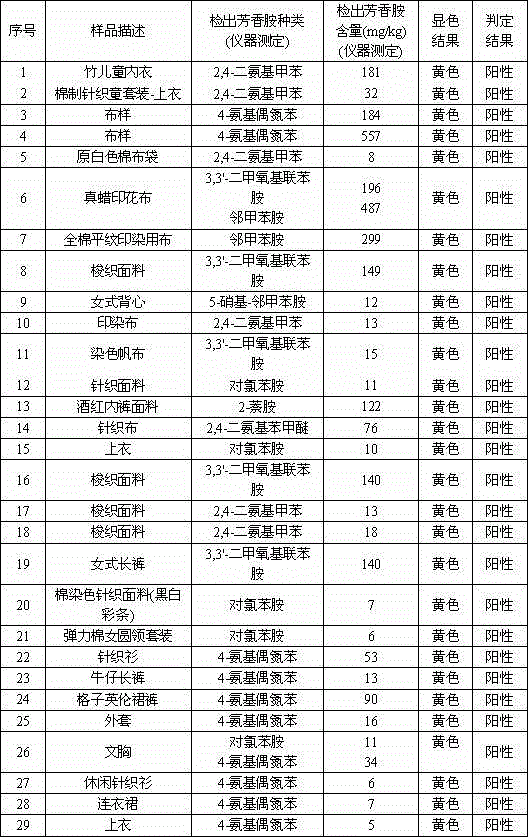
[0026] Embodiment 1-29: Test results of 29 actual fabric samples
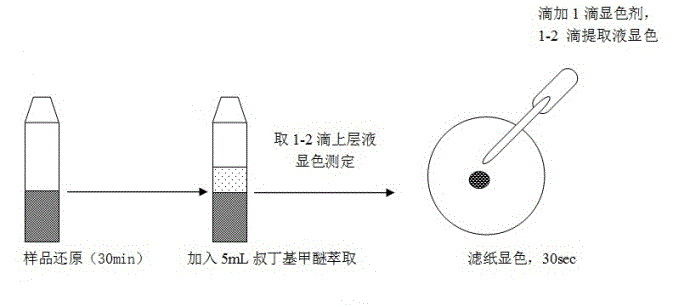
[0027] First, the developer formula: dissolve 1g of N,N-dimethyl-4-aminobenzaldehyde in 75mL of ethanol, add 25mL of hydrochloric acid, mix well before use.
[0028] Secondly, the collected instruments were detected to contain 2-naphthylamine, p-chloroaniline, o-toluidine, 3,3'-dimethoxybenzidine, 5-nitro-o-toluidine, 2,4-diamino 8 kinds of banned aromatic amines such as toluene, 2,4-diaminoanisole and 4-aminoazobenzene, the content ranges from 29 cloth samples of 5 mg / kg-557 mg / kg, and is measured according to the steps of the present invention , are all colored, the detection rate of this method is 100%, and there is no false negative. Specific steps are as follows:
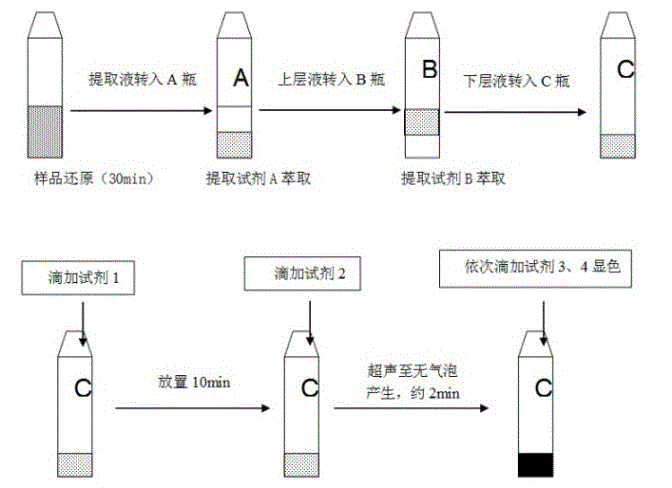
[0029] (1) Reduction of samples: Weigh 2.0 g of chopped representative samples into a reaction bottle, add 16 mL of citrate buffer solution (0.06 mol / L, pH=6) and 3.0 mL of sodium dithionite solution (200 mg / L mL, ready-to-use), seal the reac...
PUM
 Login to View More
 Abstract
Description
Claims
Application Information
 Login to View More