
Self-assembling ultrashort aliphatic depsipeptides for biomedical applications
A technology for self-assembling, aliphatic amino acids with applications in cell and tissue engineering and nanomedicine
- Summary
- Abstract
- Description
- Claims
- Application Information
AI Technical Summary
Problems solved by technology
Method used
Image

Examples
Embodiment
[0246] 1. Materials and Methods
[0247] 1.1 Materials
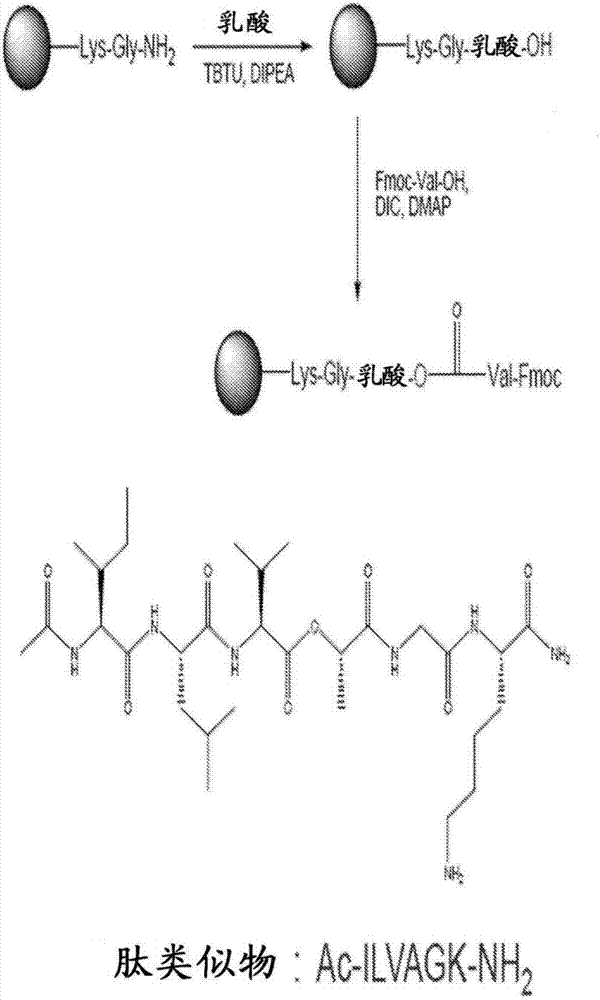
[0248] Fmoc-lys-rink resin (0.42 mg / mol resin), Fmoc-protected amino acids, namely glycine, alanine, valine, leucine and isoleucine, 2-(7-aza-1H-phenyl Triazole)-1,1,3,3-tetramethyluronium hexafluorophosphate (HATU) was purchased from GL Biochem (Shanghai) Co., Ltd. Dimethylformamide (DMF) (analytical grade) was purchased from Fisher Scientific UK. Acetic anhydride (Ac 2 O) and dimethylsulfoxide (DMSO) were purchased from Sigma Aldrich. N,N-Diisopropylethylamine (DIPEA), dichloromethane (DCM), trifluoroacetic acid (TFA) and TIS (triisopropylsilane) were purchased from Alfa Aesar, a Johnson Matthey Company. Piperidine was purchased from Merck Schuchardt OHG. Diethyl ether (Et 2 O) was purchased from Tedia Company Inc. and lactic acid was purchased from Sigma-Aldrich. All chemicals were used as received.
[0249] All peptide-based compounds were purified on an Agilent 1260 Infinity preparative HPLC system equipped ...
PUM
 Login to View More
 Abstract
Description
Claims
Application Information
 Login to View More