Uses of Slc6a12 gene and protein thereof
A technology of genes and uses, applied in the biological field, can solve problems such as different pathogenic mechanisms, unclear target mechanisms, and toxic damage
- Summary
- Abstract
- Description
- Claims
- Application Information
AI Technical Summary
Problems solved by technology
Method used
Image

Examples
Embodiment 1
[0106] Example 1 Construction and Identification of Slc6a12 Gene Knockout Mice
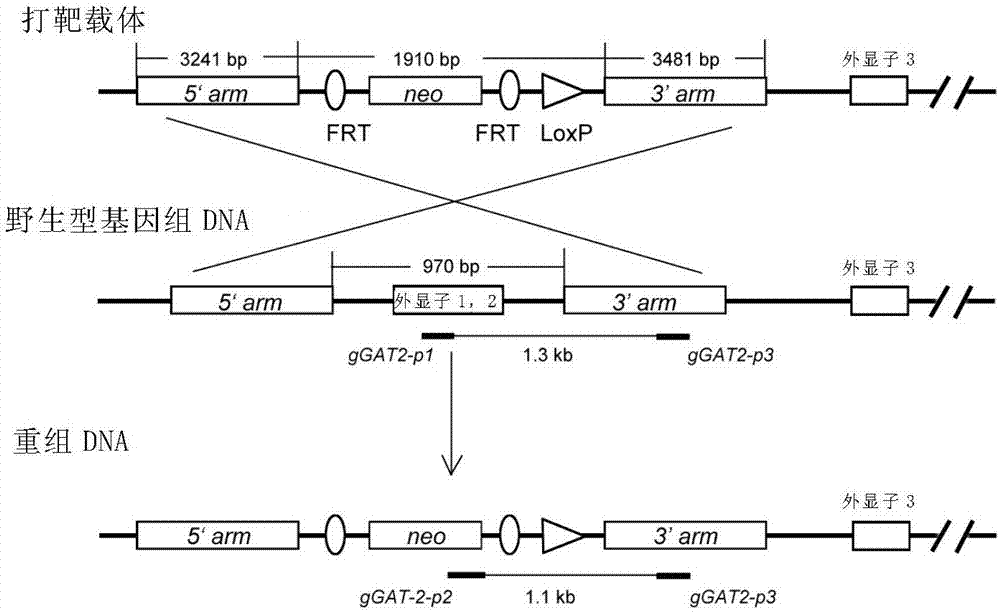
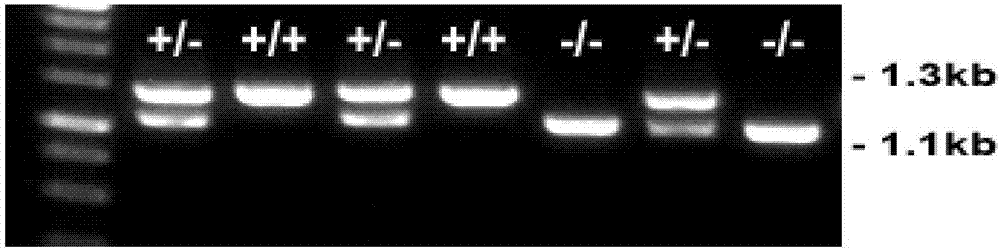
[0107] The construction of Slc6a12 knockout mice was carried out according to conventional gene targeting technology. By constructing a targeting vector, it is introduced into embryonic stem cells (ES) (SCR012) extracted from mouse blastocysts, and the Slc6a12 gene is targeted to be destroyed by homologous recombination using the homologous fragment and genome on the targeting vector and the target gene region. figure 1 It is a schematic diagram of the targeting vector and homologous recombination targeting, in which the exon 1-2 region of Slc6a12 in the mouse genome is replaced by the selection gene neo, resulting in the destruction of the Slc6a12 gene and the deletion of the gene start codon.
[0108] The gene targeting experiment was carried out according to routine operations. The targeting vector DNA was introduced into mouse embryonic stem cells (ES) by electroporation, and cultured on feede...
Embodiment 2
[0116] Example 2 The role of Slc6a12 in acute liver injury
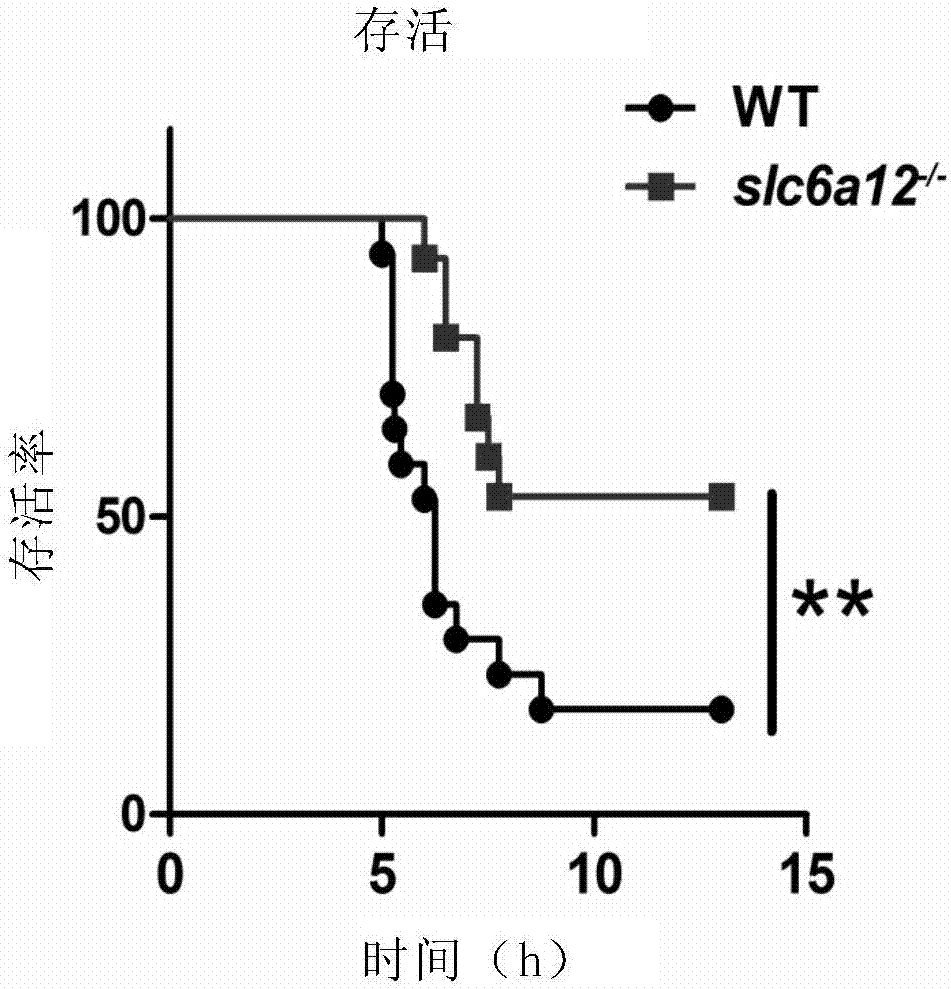
[0117] 10-week-old male wild-type (WT) and Slc6a12 knockout mice (slc6a12- / -) were used to establish a model of acute liver failure induced by LPS+GalN. All animals need to adapt to the feeding environment for more than one week before the experiment. Mice were injected intraperitoneally with LPS (11 μg / kg body weight) + GalN (700 mg / kg body weight) to induce an acute liver failure model. GalN is a hepatotoxic substance, and its metabolite uridine diphosphate can inhibit uracil metabolism, interfere with cellular RNA synthesis, and lead to hepatocyte apoptosis. GalN is often combined with LPS to induce acute liver failure models. LPS has strong immunogenicity and can activate Kupffer cells in the liver (a liver-specific macrophage) to attack liver cells, further expanding the damage of GalN. This model is currently one of the most commonly used models in the study of acute liver failure.
[0118] For the survival...
Embodiment 3
[0122] Embodiment 3 uses the drug verification drug screening platform for the treatment of liver injury (such as acute liver injury)
[0123] In this example, the model animal mice established in Example 1 were injected with tiopronin and / or bicyclol, which are current clinical drugs for treating acute liver injury, and then the severity of liver injury in the model animal mice was evaluated.
[0124] The result shows that medicine tiopronin and / or bicyclol etc. can significantly reduce the liver damage severity of model animal mice, can significantly improve the survival rate of model animal mice, significantly reduce the blood index of liver damage (such as alanine aminotransferase and Aspartate aminotransferase content), significantly improve the liver histopathological symptoms, significantly reduce the apoptosis of liver cells, and significantly reduce the expression levels of inflammatory factors or their proteins in the liver and blood.
PUM
 Login to View More
 Abstract
Description
Claims
Application Information
 Login to View More
 - R&D
- Intellectual Property
- Life Sciences
- Materials
- Tech Scout
- Unparalleled Data Quality
- Higher Quality Content
- 60% Fewer Hallucinations
Browse by: Latest US Patents, China's latest patents, Technical Efficacy Thesaurus, Application Domain, Technology Topic, Popular Technical Reports.
© 2025 PatSnap. All rights reserved.Legal|Privacy policy|Modern Slavery Act Transparency Statement|Sitemap|About US| Contact US: help@patsnap.com