
A kind of construction method of mouse lung cancer model
A construction method, mouse technology, applied in the direction of pharmaceutical formula, medical preparations containing active ingredients, drug delivery, etc., can solve the problems of cumbersome operation, death of experimental animals, time-consuming operation, etc. Simple, wide-ranging effects
- Summary
- Abstract
- Description
- Claims
- Application Information
AI Technical Summary
Problems solved by technology
Method used
Image

Examples
Embodiment 1
[0034] The processing of embodiment one mouse
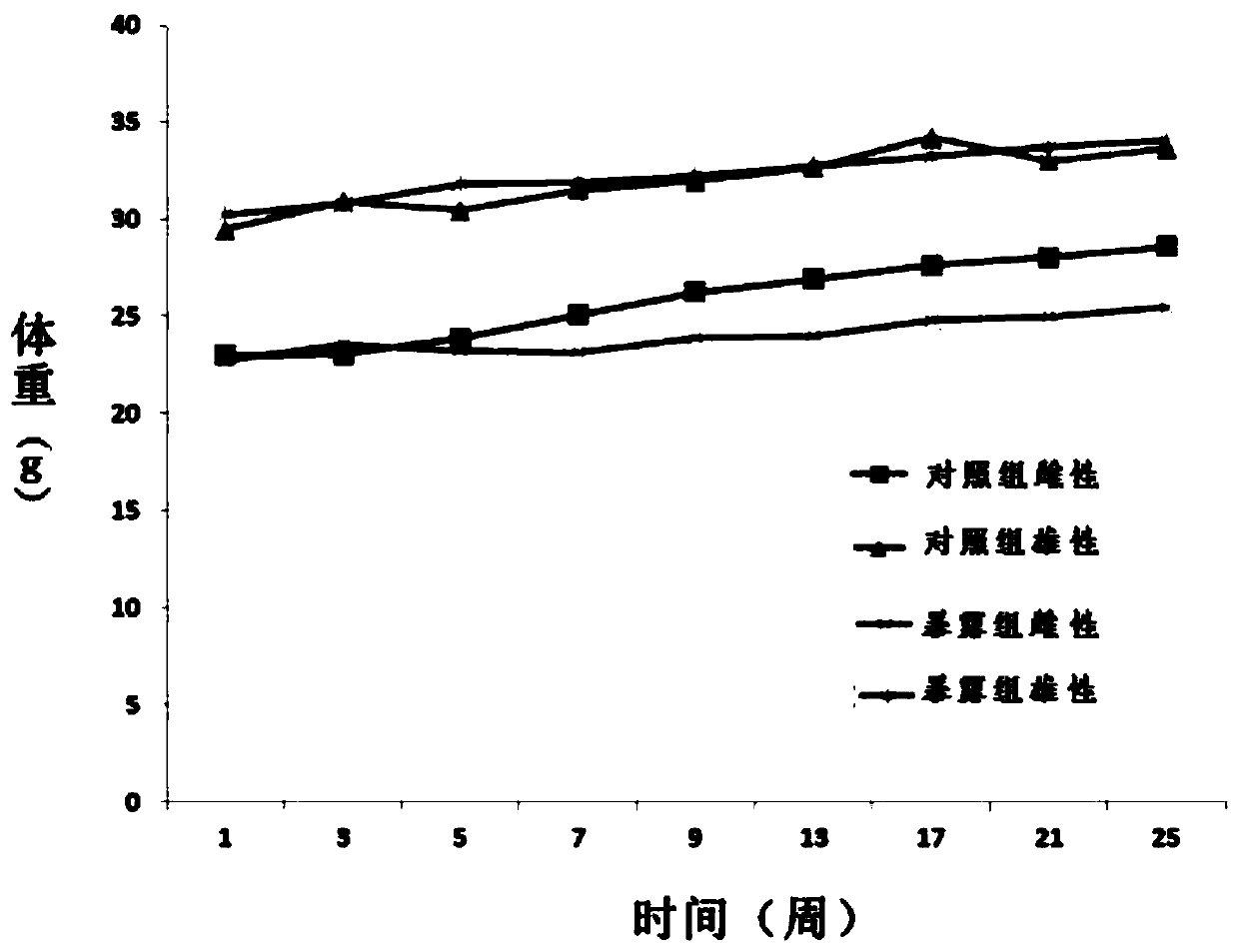
[0035] SPF grade C57BL / 6J wild-type mice were taken, and after one week of adaptation, they were randomly divided into two groups, 48 in the control group and 48 in the exposure group, with half male and half male. The mice in the exposure group were exposed in the main cabinet of the dynamic inhalation exposure cabinet for 25 weeks, 5 days / week, 6h / day, and the specific exposure condition parameters are shown in Table 1.
[0036] Table 1 Parameters of dynamic inhalation exposure conditions
[0037]
[0038] During the exposure period, the mice were allowed to drink water freely, and the food supply was stopped. After the exposure, the mice were moved out of the mobile inhalation exposure cabinet, and the mice were allowed to drink water and eat freely. Throughout the process, observe the living conditions and body weight changes of the experimental animals, record the experimental animal body weight once a week, and the re...
Embodiment 2
[0039] Embodiment two BaP content detection
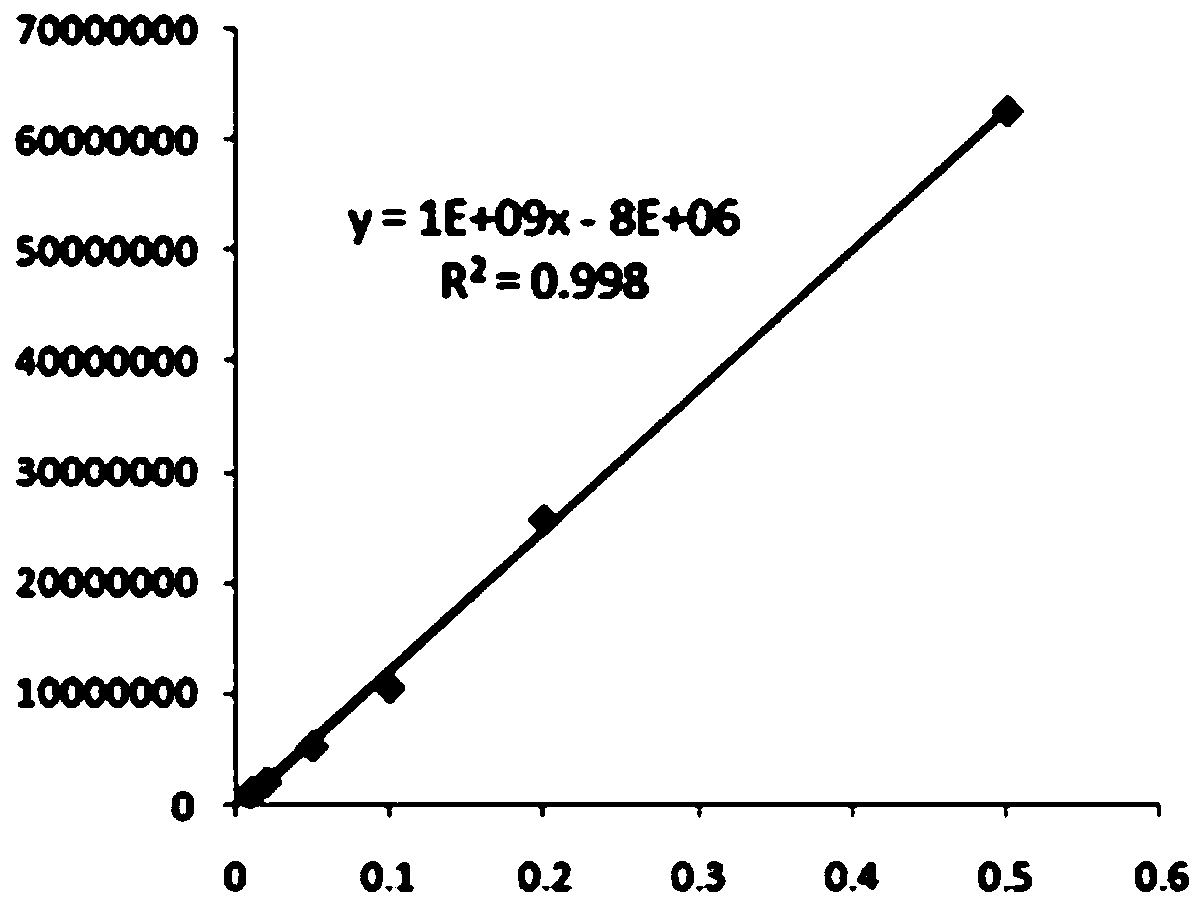
[0040] In order to ensure that the exposure concentration reached the expected level, the external exposure concentration of BaP in the exposure cabinet was regularly monitored by using the activated carbon tube method. Four TH-150C mid-flow samplers were used to start the collection at the same time around the exposure cabinet, and the samples were collected with the GH-1 type activated carbon tube. , all samples were collected at a flow rate of 0.5L / min for 2 hours, and the door of the poisoning cabinet was closed during sampling to ensure a relatively closed environment. Immediately after the samples were collected, the activated carbon tubes were sealed and stored in a freezer at -20°C. GC-MSD (Agilent 6890 5973 7683 autosampler) was used to analyze the content of BaP in the collected gas samples.
[0041] By measuring the BaP standard series solutions (0, 0.01, 0.02, 0.05, 0.1, 0.2, 0.5mg / L), the peak area of the standard seri...
Embodiment 3
[0046] The construction of embodiment three mouse lung cancer model
[0047] A method for constructing a mouse lung cancer model, comprising the steps of:
[0048] In S1, C57BL / 6J wild-type mice were taken, and after 1 week of adaptation, they were placed in the main cabinet of the dynamic inhalation exposure cabinet for benzopyrene exposure. The conditions and parameters of the exposure included: 5 days / week, 6h / day, The exposure concentration of pyrene is 10.294±0.518μg / m 3 , a temperature of 22°C, a relative humidity of 60%, and an oxygen content of 20%; during the exposure period, the mice drank water freely and stopped feeding; the main cabinet maintained a negative pressure of 0.08 MPa, and the mechanical ventilation system maintained a ventilation frequency of 12 times / h;
[0049] After S2 exposure for 180 days, a mouse lung cancer model was obtained.
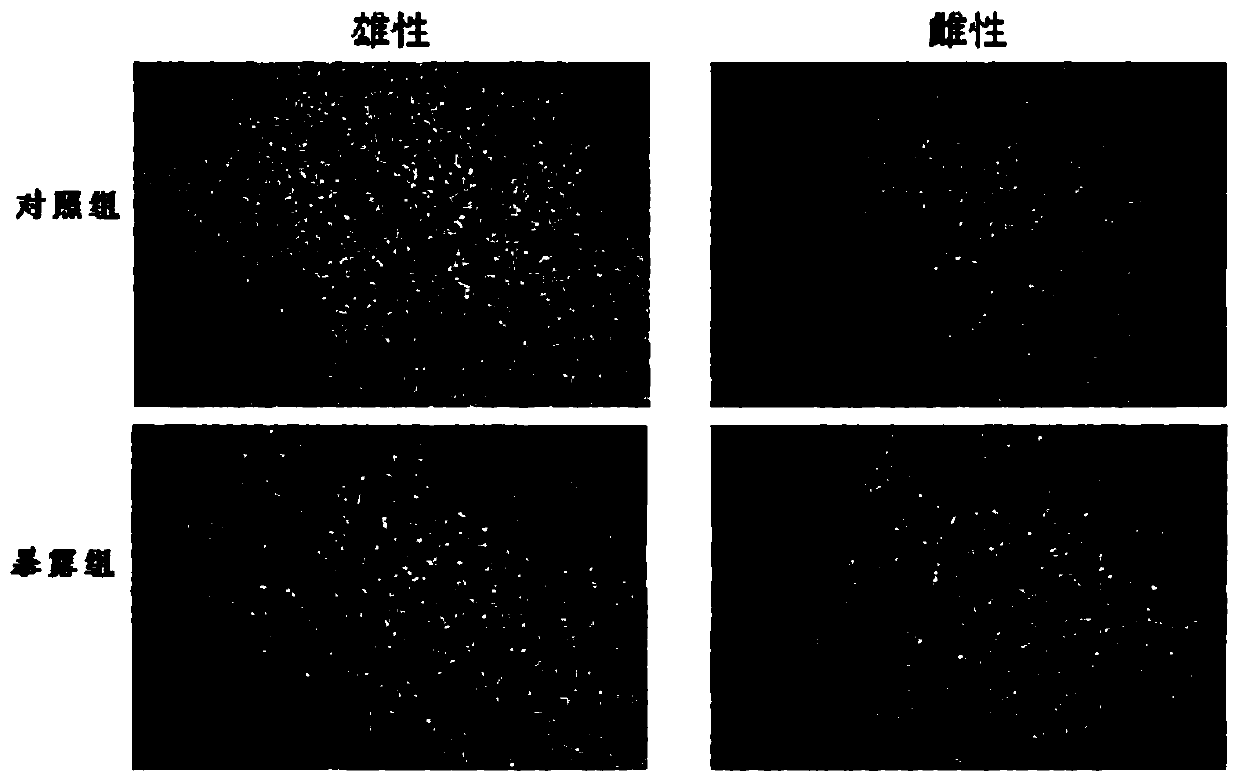
[0050] After exposure for 180 days, the mice were anesthetized with ether, and the whole lung tissue was surgically ...
PUM
| Property | Measurement | Unit |
|---|---|---|
| particle diameter | aaaaa | aaaaa |
Abstract
Description
Claims
Application Information
 Login to View More