Cyclodextrin modified gold nanoparticles and preparation method and application thereof
A gold nanoparticle and cyclodextrin technology, which is applied in measuring devices, instruments, and material analysis through electromagnetic means, can solve problems affecting applications, achieve simple methods, simple preparation methods, and good application prospects
- Summary
- Abstract
- Description
- Claims
- Application Information
AI Technical Summary
Problems solved by technology
Method used
Image

Examples
Embodiment 1
[0023] Example 1 Preparation method of β-CD@AuNPs
[0024] (1) The preparation method is as follows
[0025] 1. Preparation of β-CD@AuNPs
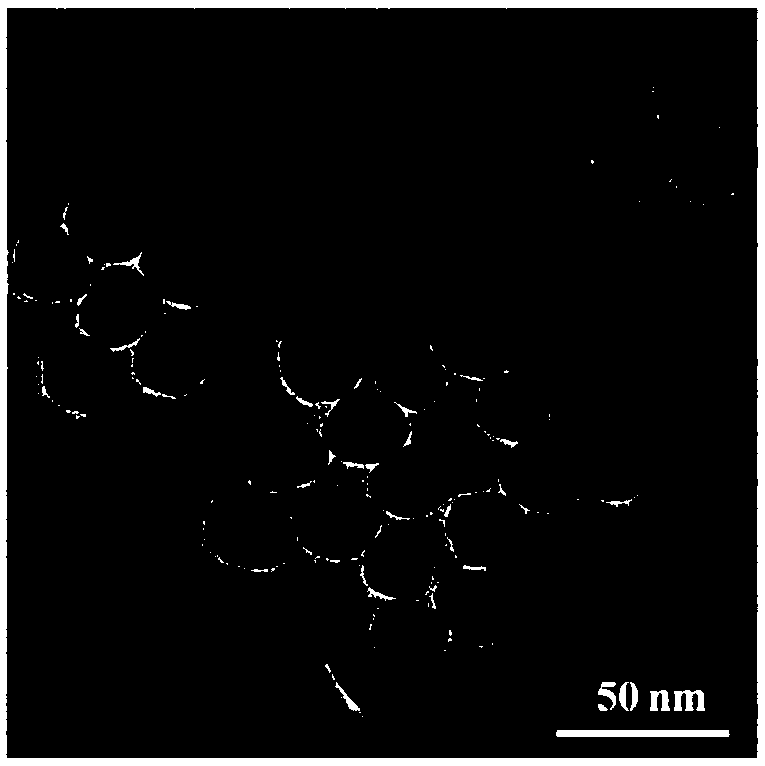
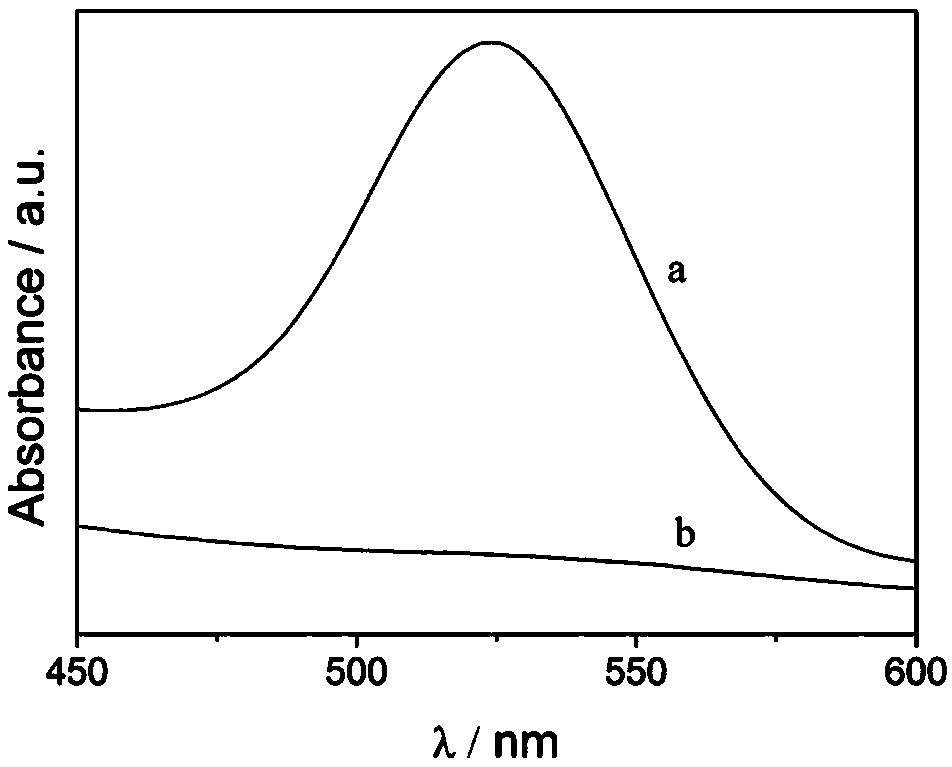
[0026] In 35 mL of ultrapure water, add 5 mL of 0.1 mol / L, PBS at pH=7.00, 1 mL of 0.01 mol / L, HAuCl 4 and 10mL 0.01mol / L, β-CD and mix well. Then heated in an oil bath at 100 °C, the solution gradually changed from light yellow to bright red, purple, and finally wine red, indicating that gold nanoparticles had been formed. The product was centrifuged at 10,000rpm for 10min and washed twice with water to obtain the target product β-CD@AuNPs, which was stored in a low-temperature environment at 4°C.
[0027] 2. Preparation of unmodified AuNPs
[0028] In 20mL of ultrapure water pre-cooled at 4°C, add 0.5mL of 1% chloroauric acid solution, and then add 0.2mol / L of K 2 CO 3 Solution 0.1mL, under the condition of stirring, quickly add 0.5mg / mL sodium borohydride solution 0.5mL in batches until wine red color appears, the product is centr...
Embodiment 2
[0032] Example 2 Detection performance of β-CD@AuNPs modified electrode
[0033] (1) Preparation of β-CD@AuNPs modified electrode
[0034] 1. Electrode pretreatment
[0035] Use 0.1, 0.3, 0.05μm A1 2 o 3 Polish the glassy carbon electrode. Then, ultrasonic cleaning was performed with acetone, ethanol, and ultrapure water for 1 min in sequence. The glassy carbon electrode is used as the working electrode, the Ag / AgCl electrode is used as the reference electrode, and the platinum wire is used as the counter electrode. - 3 mol / L K 3 Fe(CN) 6 The electrochemical cyclic voltammetry (CV) test was carried out in the 1mol / L KCl solution, and the scanning range was 0.3-0.8V (vs.Ag / AgCl). After the test, the electrodes were cleaned with ultrapure water and dried with high-purity nitrogen gas for later use.
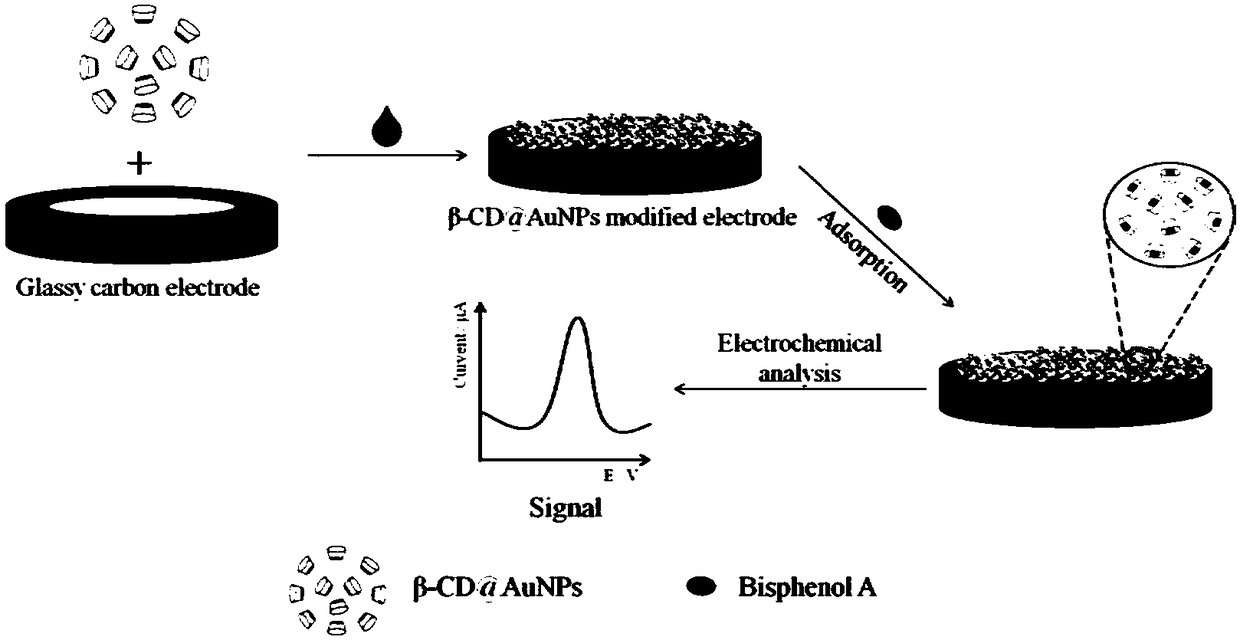
[0036] 2. Preparation of modified electrode β-CD@AuNPs
[0037] The β-CD@AuNPs prepared in Example 1 was dissolved in water, and 5 μL of the β-CD@AuNPs aqueous solution wi...
Embodiment 3
[0048] Example 3 Catalytic detection performance of β-CD@AuNPs modified electrode for bisphenol A
[0049] (1) Detection performance of β-CD@AuNPs modified electrode for different concentrations of BPA
[0050] The β-CD@AuNPs modified electrode prepared in Example 2 (1) was used as the working electrode, the Ag / AgCl electrode was used as the reference electrode, and the platinum electrode was used as the auxiliary electrode. Add 0.2 (a) to nitrogen-saturated PBS, respectively, 0.3, 1.3, 2.3, 3.3, 4.3, 6.3, 8.3, 10.3, 15.3 (j) μmol / L of bisphenol A, the test results are as follows Figure 5 As shown, when the concentration of BPA in the supporting electrolyte gradually increases, the oxidation peak current of the modified electrode will gradually increase, which proves that the modified electrode has good catalytic recognition performance for BPA.
[0051] (2) Effect of interfering substances on the detection performance of β-CD@AuNPs modified electrodes
[0052] The β-CD@AuN...
PUM
| Property | Measurement | Unit |
|---|---|---|
| Particle size | aaaaa | aaaaa |
Abstract
Description
Claims
Application Information
 Login to View More
 - R&D
- Intellectual Property
- Life Sciences
- Materials
- Tech Scout
- Unparalleled Data Quality
- Higher Quality Content
- 60% Fewer Hallucinations
Browse by: Latest US Patents, China's latest patents, Technical Efficacy Thesaurus, Application Domain, Technology Topic, Popular Technical Reports.
© 2025 PatSnap. All rights reserved.Legal|Privacy policy|Modern Slavery Act Transparency Statement|Sitemap|About US| Contact US: help@patsnap.com