
Solar water purifier based on interface solar photo-thermal conversion
A solar water purifier and photothermal conversion technology, applied in the directions of solar thermal energy, solar thermal collector, solar thermal collector thermal insulation, etc., can solve the problems of regular replacement of filter membranes, power consumption, low efficiency, etc., and achieve maintenance costs. Low, improve the utilization efficiency, the effect of improving the yield
- Summary
- Abstract
- Description
- Claims
- Application Information
AI Technical Summary
Problems solved by technology
Method used
Image

Examples
Embodiment 1
[0046] Example 1: Nano-CuS sponge is used as light-to-heat conversion material, and distilled water collector is made of ordinary glass
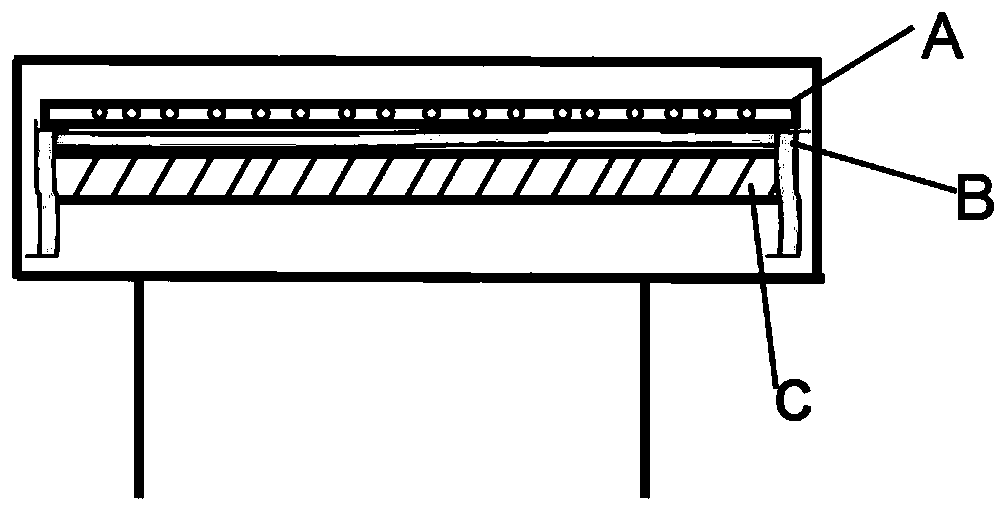
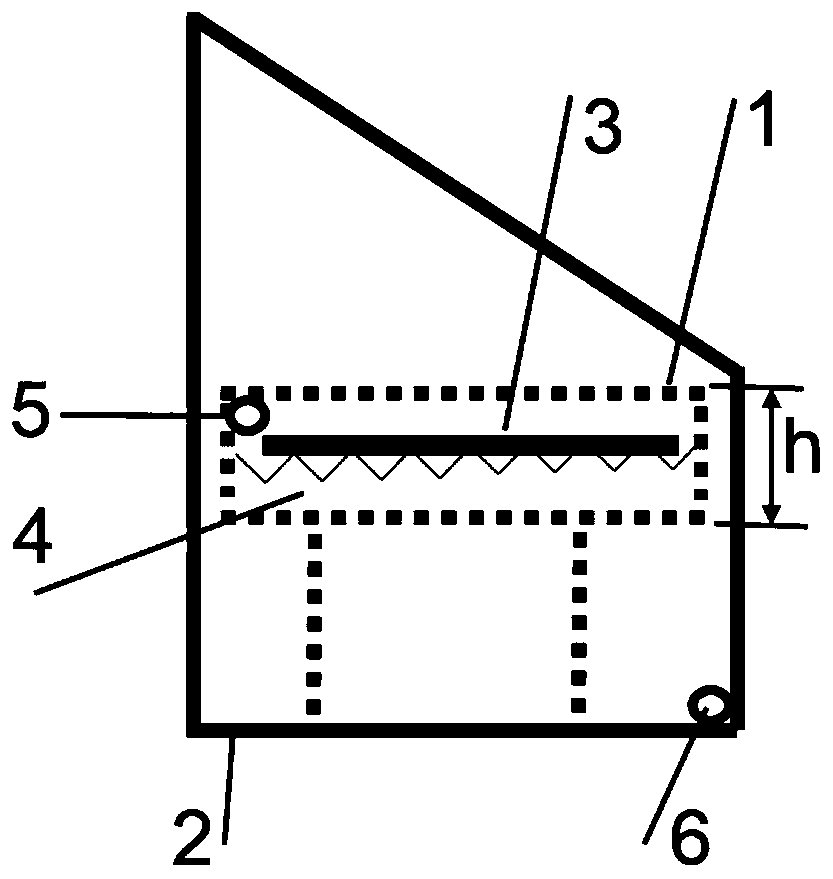
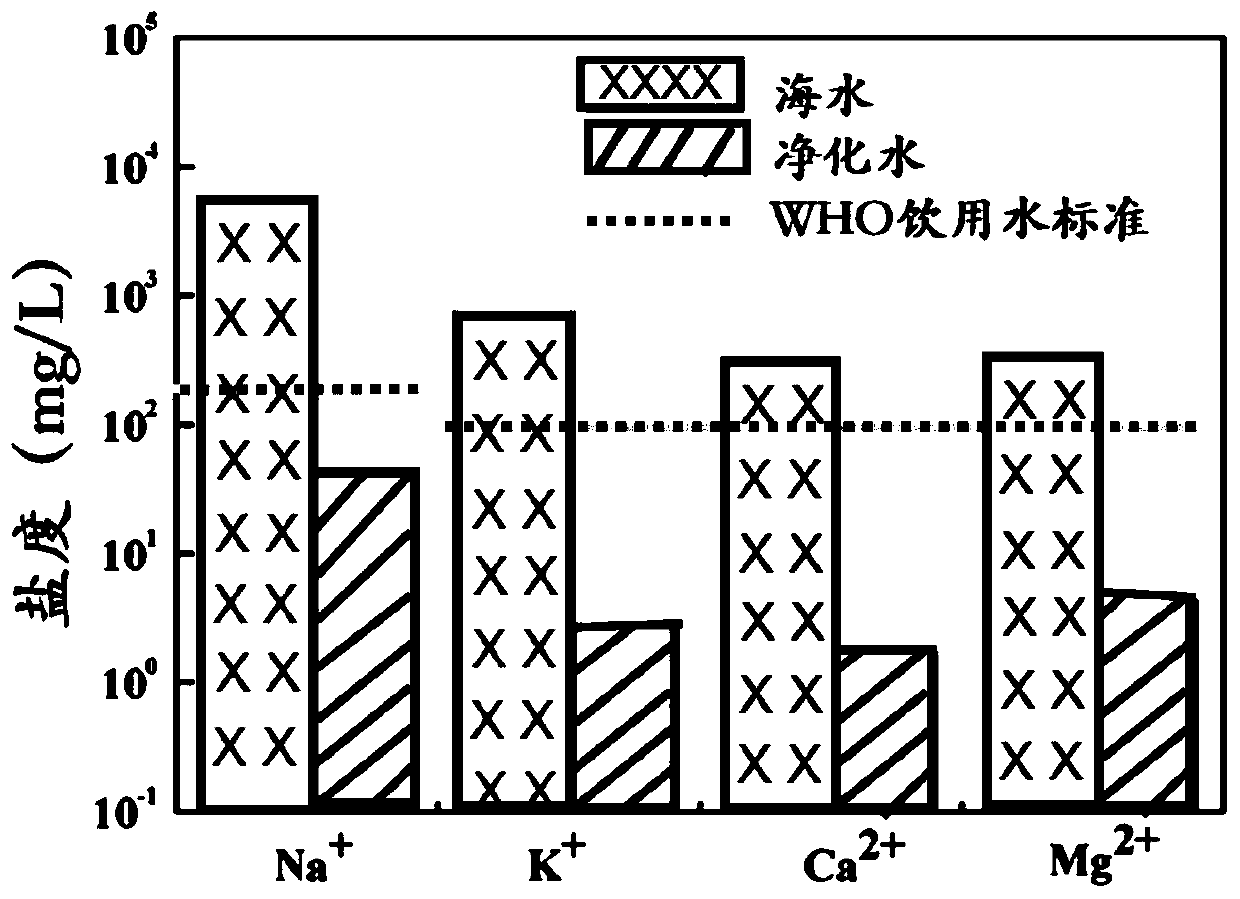
[0047] Put the nano-copper sulfide sponge (10*10*0.3cm) on the surface of foamed polyethylene wrapped in a dust-free cloth to form a light absorber, then put it into the water storage tray, use ordinary glass to form a distilled water collector, and seal the inclined cover . Simulated solar light irradiated on the slope cover and worked continuously for 4 hours. A large amount of mist composed of fine water vapor appeared on the glass wall of the collector, and the transmittance of sunlight was greatly reduced. The output was calculated based on the purified water collected at the water outlet. rate, the yield of desalinated seawater is 0.91kg / m 2 / h, the ion concentration of the fresh water produced meets the drinking water standard of the World Health Organization (WHO), and the light-to-heat conversion efficiency reaches 61%.
Embodiment 2
[0048] Embodiment 2: The CuS foam of the present invention is used as light-to-heat conversion material, and the distilled water collector is made of ordinary glass
[0049] Place CuS foam (10*10*0.3cm) on the surface of foamed polyethylene wrapped in a dust-free cloth to form a light absorber, then put it into a water storage tray, use ordinary glass to form a distilled water collector, and seal the slope cover. When the simulated solar light is irradiated on the inclined cover plate and works continuously for 4 hours, a large amount of mist composed of fine water vapor will appear on the glass wall of the collector, and the transmittance of sunlight will be greatly reduced. The yield of desalinated seawater is 0.97kg / m 2 / h, the ion concentration of the fresh water produced meets the WHO drinking water standard, and the light-to-heat conversion efficiency reaches 65%.
Embodiment 3
[0050] Example 3: Nano-CuS sponge is used as light-to-heat conversion material, with SiO 2 AR-coated glass forms the distilled water collector
[0051] Place the nano-CuS sponge (10*10*0.3cm) on the surface of foamed polyethylene wrapped in a dust-free cloth to form a light absorber, then put it into the water storage tray, and use SiO 2 AR-coated glass forms the distilled water collector and seals the beveled cover. The simulated solar light shines on the inclined cover plate and works continuously for 4 hours, and there is no obvious fog on the glass wall of the collector. The yield of desalinated seawater is 1.15kg / m 2 / h, the ion concentration of the fresh water produced meets the WHO drinking water standard, and the light-to-heat conversion efficiency reaches 78%.
PUM
| Property | Measurement | Unit |
|---|---|---|
| thickness | aaaaa | aaaaa |
| pore size | aaaaa | aaaaa |
| thickness | aaaaa | aaaaa |
Abstract
Description
Claims
Application Information
 Login to View More