
Molybdenum disulfide/tungsten disulfide multilayer tantalum-doped thin film and preparation method and application thereof
A technology of tungsten disulfide and molybdenum disulfide, which is applied in the direction of coating, metal material coating process, ion implantation plating, etc., can solve the problems of low humidity sensitivity and unsatisfied anti-oxidation performance, and achieve the improvement of mechanical properties and Anti-corrosion performance, good substrate bonding strength, satisfying the effect of lubrication stability
- Summary
- Abstract
- Description
- Claims
- Application Information
AI Technical Summary
Problems solved by technology
Method used
Image

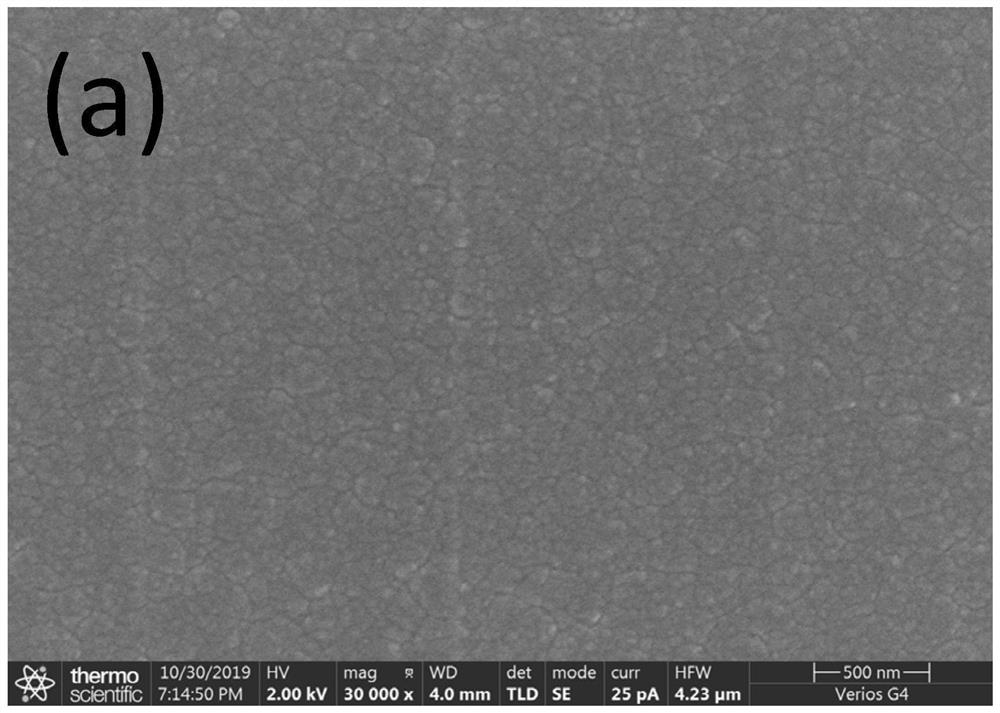
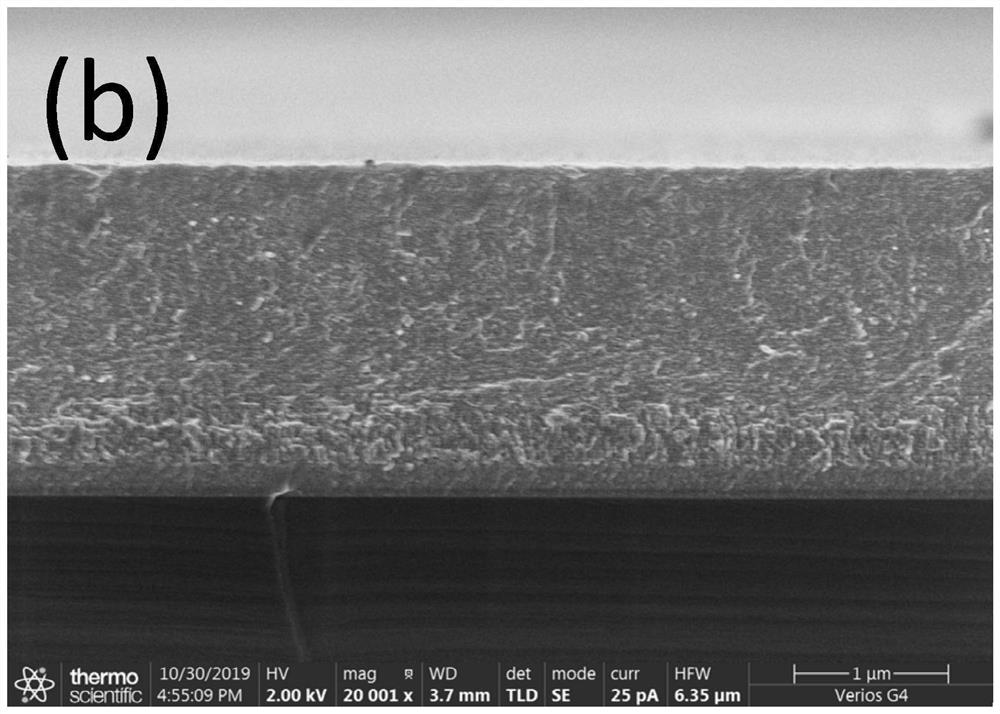
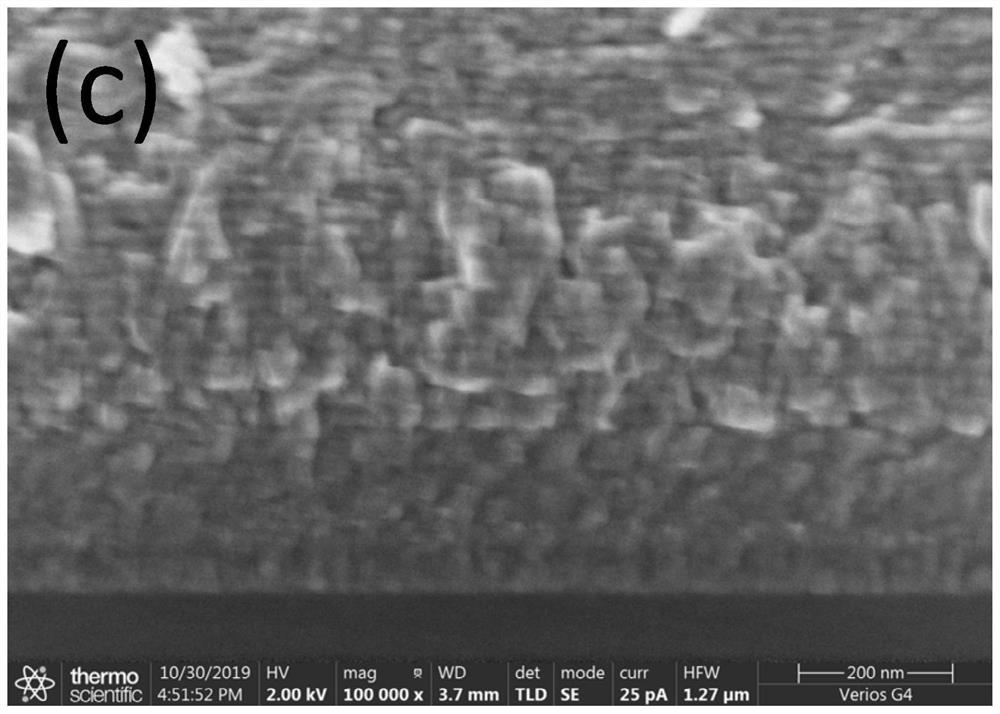
Examples
preparation example Construction
[0032] As another aspect of the technical solution of the present invention, it relates to the preparation method of the aforementioned molybdenum disulfide / tungsten disulfide multilayer tantalum-doped film, which includes: adopting magnetron sputtering technology to sequentially deposit a titanium transition layer on the surface of the substrate , a titanium / tantalum / molybdenum disulfide / tungsten disulfide multilayer gradient transition layer and a molybdenum disulfide / tungsten disulfide multilayer tantalum doped layer to obtain the molybdenum disulfide / tungsten disulfide multilayer tantalum doped film.
[0033] In some embodiments, the method for preparing a titanium transition layer includes: using magnetron sputtering technology, using a titanium target as a cathode target, using an inert gas as a working gas, applying a target current to the titanium target, and applying a negative bias to the substrate , so as to deposit a titanium transition layer on the surface of the s...
Embodiment 1
[0061] In this embodiment, the base material is nickel-based 718 high temperature steel and silicon wafer. Using magnetron sputtering technology to prepare a molybdenum disulfide / tungsten disulfide multilayer tantalum-doped film on the surface of the substrate, mainly including the following steps:
[0062] Perform mechanical polishing on the surface of the substrate, put the substrate material into an acetone solution for 15 minutes of ultrasonic cleaning, blow dry with nitrogen, put it in absolute ethanol solution for 15 minutes of ultrasonic cleaning, blow dry with nitrogen and take it out.
[0063] Put the cleaned substrate into the magnetron sputtering chamber, and evacuate until the vacuum degree is lower than 3×10 -5 Pa, and then sputtering and cleaning the target for 5 minutes, applying a bias voltage of -400V to the substrate sample, and performing plasma etching for 30 minutes, and the substrate temperature was 100°C.
[0064] Preparation and deposition of molybdenu...
Embodiment 2
[0075] In this embodiment, the base material is nickel-based 718 high temperature steel and silicon wafer. Using magnetron sputtering technology to prepare a molybdenum disulfide / tungsten disulfide multilayer tantalum-doped film on the surface of the substrate, mainly including the following steps:
[0076] Perform mechanical polishing on the surface of the substrate, put the substrate material into an acetone solution for 15 minutes of ultrasonic cleaning, blow dry with nitrogen, put it in absolute ethanol solution for 15 minutes of ultrasonic cleaning, blow dry with nitrogen and take it out.
[0077] Put the cleaned substrate into the magnetron sputtering chamber, and evacuate until the vacuum degree is lower than 3×10 -1 Pa, and then sputtering and cleaning the target for 5 minutes, applying a bias voltage of -450V to the substrate sample, and performing plasma etching for 20 minutes, and the substrate temperature is 150°C.
[0078] Preparation and deposition of molybdenum...
PUM
| Property | Measurement | Unit |
|---|---|---|
| thickness | aaaaa | aaaaa |
| thickness | aaaaa | aaaaa |
| thickness | aaaaa | aaaaa |
Abstract
Description
Claims
Application Information
 Login to View More