
A kind of porous polymer ion exchange membrane based on polybenzimidazole and its preparation method and application by sol-gel method
A technology of porous polymers and ion exchange membranes, applied in the direction of diaphragms, organic diaphragms, electrolytic components, etc., to achieve the effects of easy mass production, widening types and scope of application, and simple preparation methods
- Summary
- Abstract
- Description
- Claims
- Application Information
AI Technical Summary
Problems solved by technology
Method used
Image

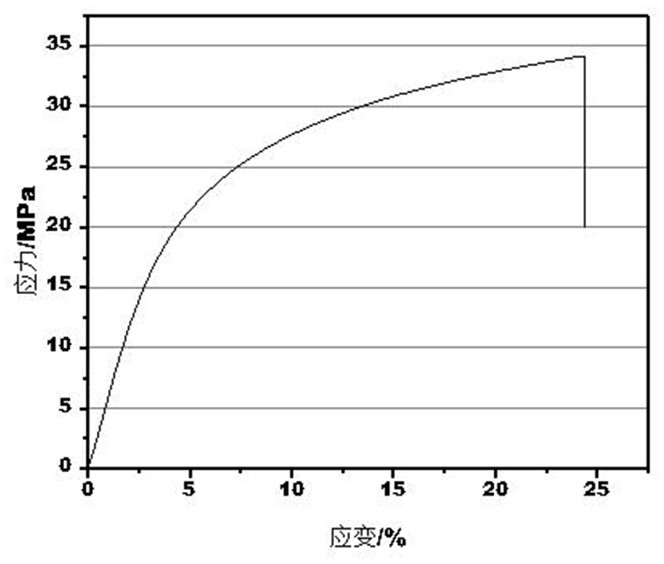
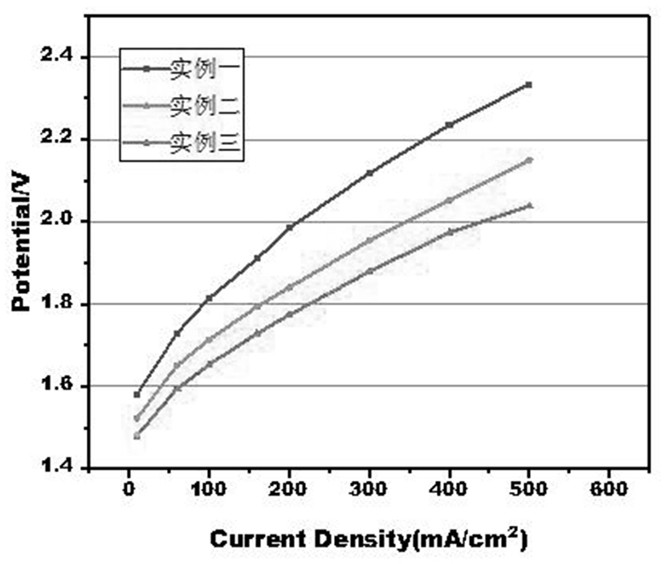
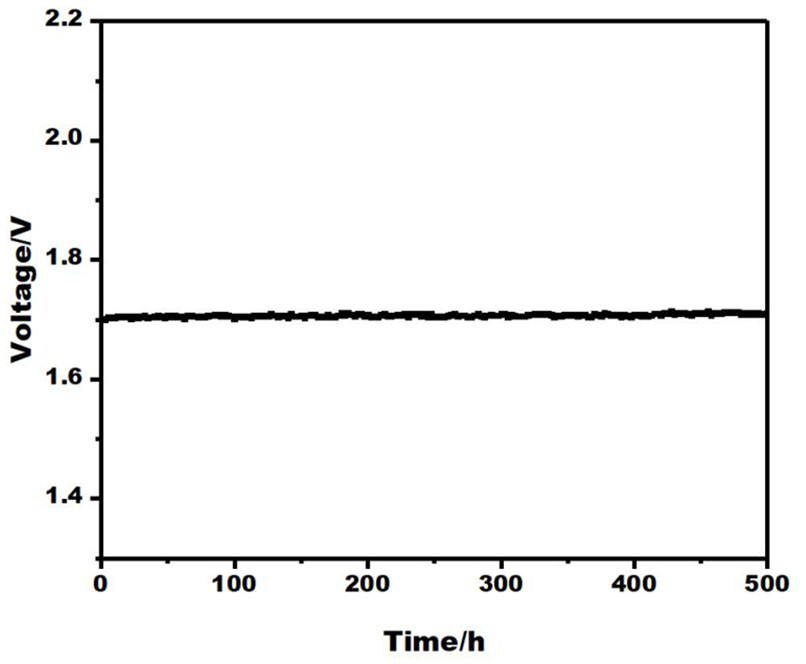
Examples
Embodiment 1
[0039] A kind of method adopting sol-gel method to prepare the porous polymer ion-exchange membrane based on polybenzimidazole, comprises the following steps:
[0040] 1. Preparation of stable solution.
[0041] Isophthalic acid (6.230g) and biphenyl tetramine (8.037g) are dissolved in the PPA of 300g, and the pH of adjusting solution is 1, obtains stable, transparent solution, is fully stirred under 110 ℃ at temperature, then in Polymerization at 250°C for 24h;
[0042] 2. Preparation of porous polybenzimidazole polymer electrolyte separator by sol-gel method. This step is as follows: slowly immerse the cleaned 20*20cm glass plate in the solution with a temperature of 250°C after polymerization, let it stand for 10 minutes, and pull the glass plate vertically upward at a speed of 0.05m / s. Immediately heat treatment in a steam atmosphere with a humidity of 50% for 24 hours to solidify and form a film, and repeat 5 times to obtain a film with a certain thickness. Soak the me...
Embodiment 2
[0049] A kind of method adopting sol-gel method to prepare the porous polymer ion-exchange membrane based on polybenzimidazole, comprises the following steps:
[0050] 1. The preparation steps of the stable solution are the same as in Example 1.
[0051] 2. Preparation of porous polybenzimidazole polymer electrolyte separator by sol-gel method. This step is as follows: slowly immerse the cleaned 20*20cm glass plate in the solution with a temperature of 250°C after polymerization, let it stand for 10 minutes, and pull the glass plate vertically upward at a speed of 0.05m / s. Immediately heat treatment in a steam atmosphere with a humidity of 60% for 24 hours to solidify and form a film, and repeat 5 times to obtain a film with a certain thickness. Soak the membrane in 1M ammonium hydroxide at 80°C for 12 hours to fully wash away the phosphoric acid in the membrane, then place the membrane in deionized water at 50°C for 12 hours, wash away the residual impurities, and dry it in ...
Embodiment 3
[0054] A kind of method adopting sol-gel method to prepare the porous polymer ion-exchange membrane based on polybenzimidazole, comprises the following steps:
[0055] 1. The preparation steps of the stable solution are consistent with Example 1.
[0056] 2. Preparation of porous polybenzimidazole polymer electrolyte separator by sol-gel method. This step is as follows: slowly immerse the cleaned 20*20cm glass plate in the solution with a temperature of 250°C after polymerization, let it stand for 10 minutes, and pull the glass plate vertically upward at a speed of 0.05m / s. Immediately heat treatment in a steam atmosphere with a humidity of 70% for 24 hours to solidify and form a film, and repeat 5 times to obtain a film with a certain thickness. Soak the membrane in 1M ammonium hydroxide at 80°C for 12 hours to fully wash away the phosphoric acid in the membrane, then place the membrane in deionized water at 50°C for 12 hours, wash away the residual impurities, and dry it in...
PUM
| Property | Measurement | Unit |
|---|---|---|
| size | aaaaa | aaaaa |
| thickness | aaaaa | aaaaa |
| area | aaaaa | aaaaa |
Abstract
Description
Claims
Application Information
 Login to View More