
Preparation method of composite rare earth permanent magnet material and anti-oxidation mixing equipment
A technology of permanent magnet materials and composite rare earths, applied in the fields of magnetic materials, inorganic materials, chemical instruments and methods, etc., can solve the problems of waste of resources and environment, easy to be oxidized, and low oxidation prevention efficiency, and achieve reasonable design and high production efficiency high effect
- Summary
- Abstract
- Description
- Claims
- Application Information
AI Technical Summary
Problems solved by technology
Method used
Image

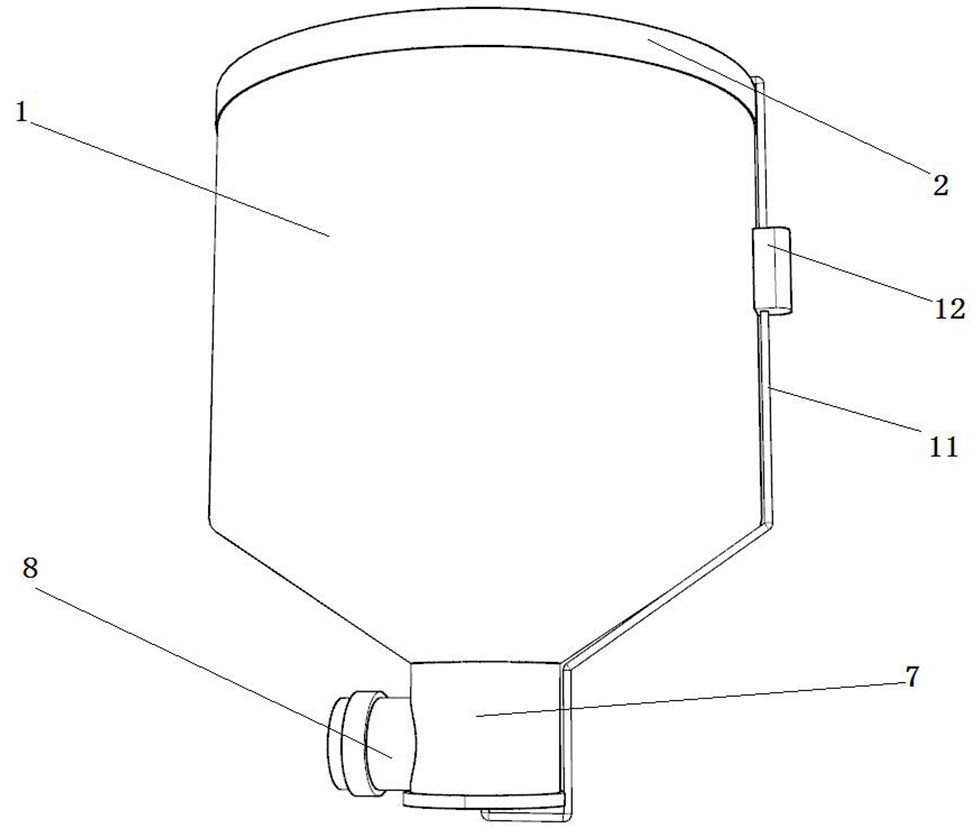
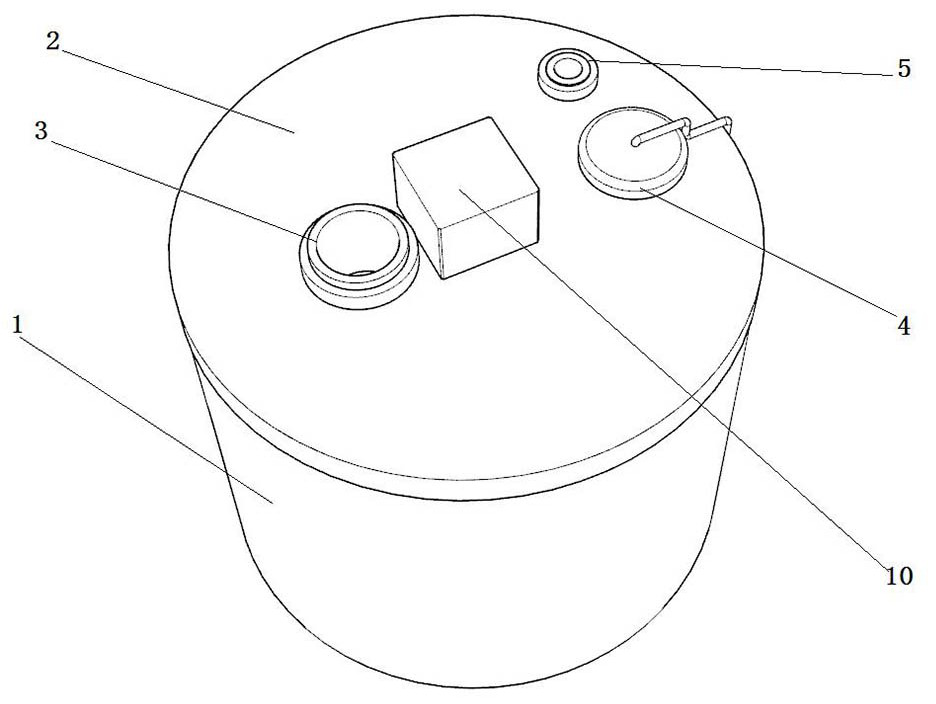
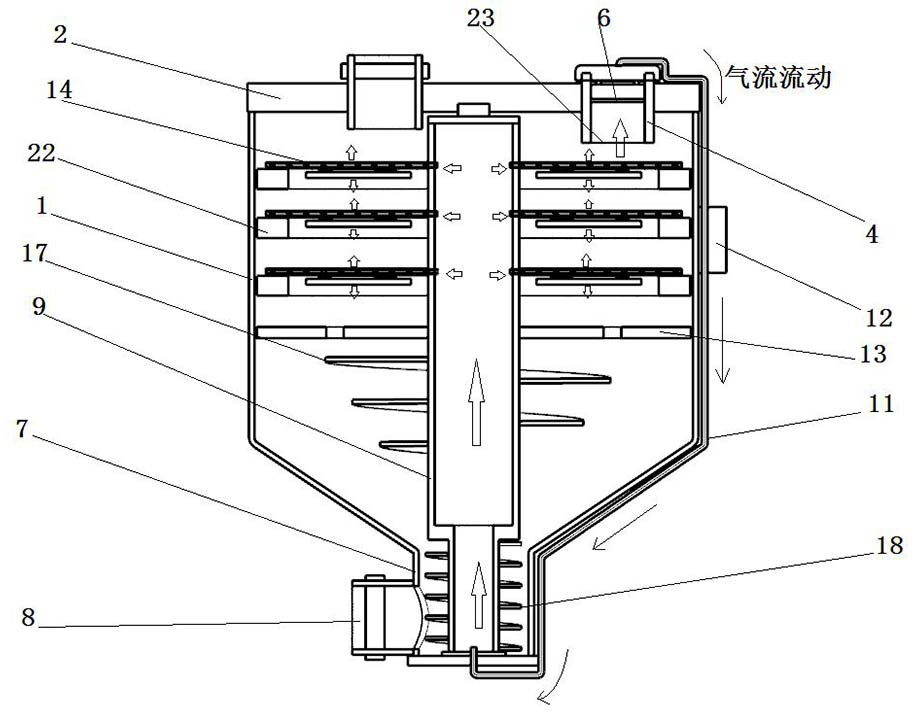
Examples
Embodiment 1
[0037] A preparation method of a composite rare earth permanent magnet material, comprising the steps of:
[0038] Step 1, batching, a composite rare earth permanent magnet material includes the following raw materials in weight percentage: 48% of neodymium iron boron magnetic powder, 20% of ferrite magnetic powder, 8% of samarium cobalt magnetic powder, 4% of alnico magnetic powder, polytetrafluoroethylene 1.5%, potassium sorbate 0.4%, acrylate resin 8%, polyethylene terephthalate-1,4-cyclohexanedimethanol 6%, silane coupling agent 1.6%, titanate coupling Agent 1.3%, graphite 0.7%, barium stearate 0.5%;
[0039] Step 2, smelting: the prepared materials are respectively passed through the large furnace and the small furnace to cast flakes or ingots;
[0040] Step 3, hydrogen crushing: use the hydrogen absorption properties of rare earth metal compounds to fuse rare earth alloys in a hydrogen environment;
[0041] Step 4, milling and mixing: use anti-oxidation mixing equipmen...
Embodiment 2
[0044] A preparation method of a composite rare earth permanent magnet material, comprising the steps of:
[0045] Step 1, batching, a composite rare earth permanent magnet material includes the following raw materials in weight percentage: 50% of neodymium iron boron magnetic powder, 22% of ferrite magnetic powder, 4% of samarium cobalt magnetic powder, 4% of alnico magnetic powder, and 0.7% of polytetrafluoroethylene %, potassium sorbate 0.3%, acrylate resin 8.5%, polyethylene terephthalate-1,4-cyclohexanedimethanol 6%, silane coupling agent 1.6%, titanate coupling agent 1.3%, graphite 0.8%, barium stearate 0.8%;
[0046] Step 2, smelting: the prepared materials are respectively passed through the large furnace and the small furnace to cast flakes or ingots;
[0047] Step 3, hydrogen crushing: use the hydrogen absorption properties of rare earth metal compounds to fuse rare earth alloys in a hydrogen environment;
[0048] Step 4, milling and mixing: use anti-oxidation mixi...
Embodiment 3
[0051] A preparation method of a composite rare earth permanent magnet material, comprising the steps of:
[0052] Step 1, batching, a composite rare earth permanent magnet material includes the following raw materials in weight percentage: 44% of neodymium iron boron magnetic powder, 22% of ferrite magnetic powder, 8% of samarium cobalt magnetic powder, 6% of alnico magnetic powder, polytetrafluoroethylene 0.3%, potassium sorbate 0.4%, acrylate resin 8%, polyethylene terephthalate-1,4-cyclohexanedimethanol 7.5%, silane coupling agent 1.7%, titanate coupling Agent 1.3%, graphite 0.3%, barium stearate 0.5%;
[0053] Step 2, smelting: the prepared materials are respectively passed through the large furnace and the small furnace to cast flakes or ingots;
[0054] Step 3, hydrogen crushing: use the hydrogen absorption properties of rare earth metal compounds to fuse rare earth alloys in a hydrogen environment;
[0055] Step 4, milling and mixing: use anti-oxidation mixing equipm...
PUM
 Login to View More
 Abstract
Description
Claims
Application Information
 Login to View More