
Mixed lithium-rich positive electrode material and preparation method and application thereof
A lithium-rich positive electrode material and a technology for a positive electrode material are applied in the field of hybrid lithium-rich positive electrode material and its preparation, which can solve the problems of unfavorable high specific energy positive electrode material, low specific capacity of positive electrode material, complicated preparation process, etc. The effect of migration ability, good material performance consistency and simple process
- Summary
- Abstract
- Description
- Claims
- Application Information
AI Technical Summary
Problems solved by technology
Method used
Image

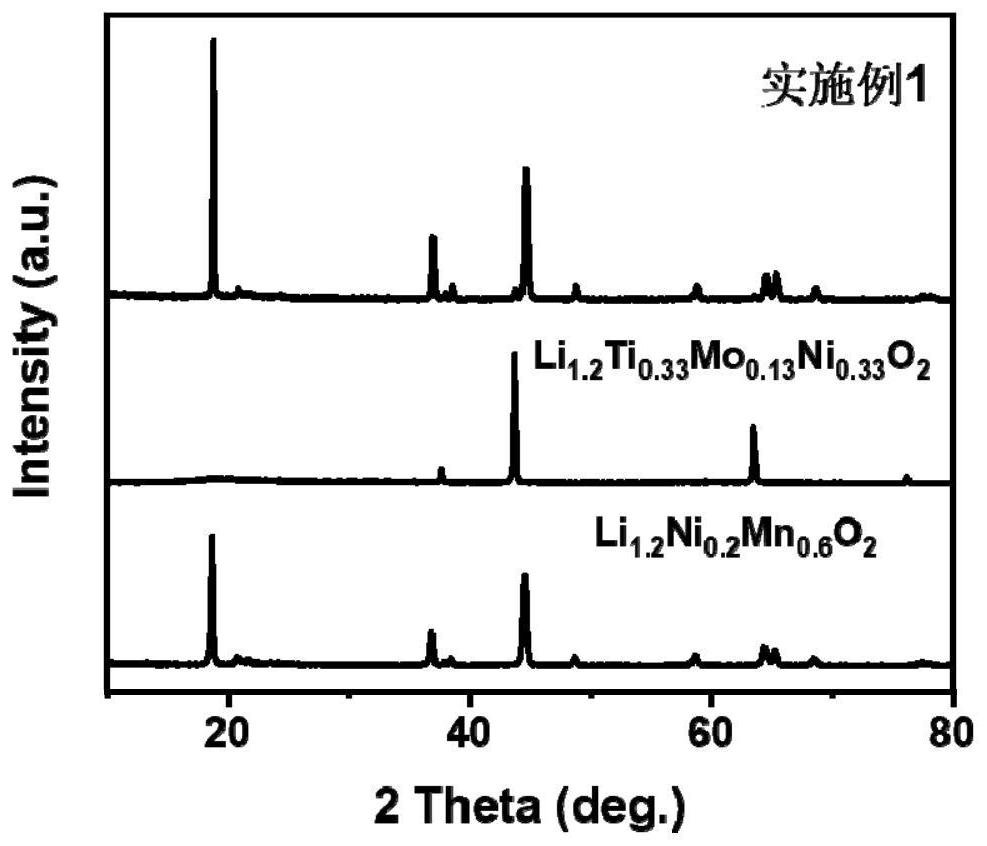
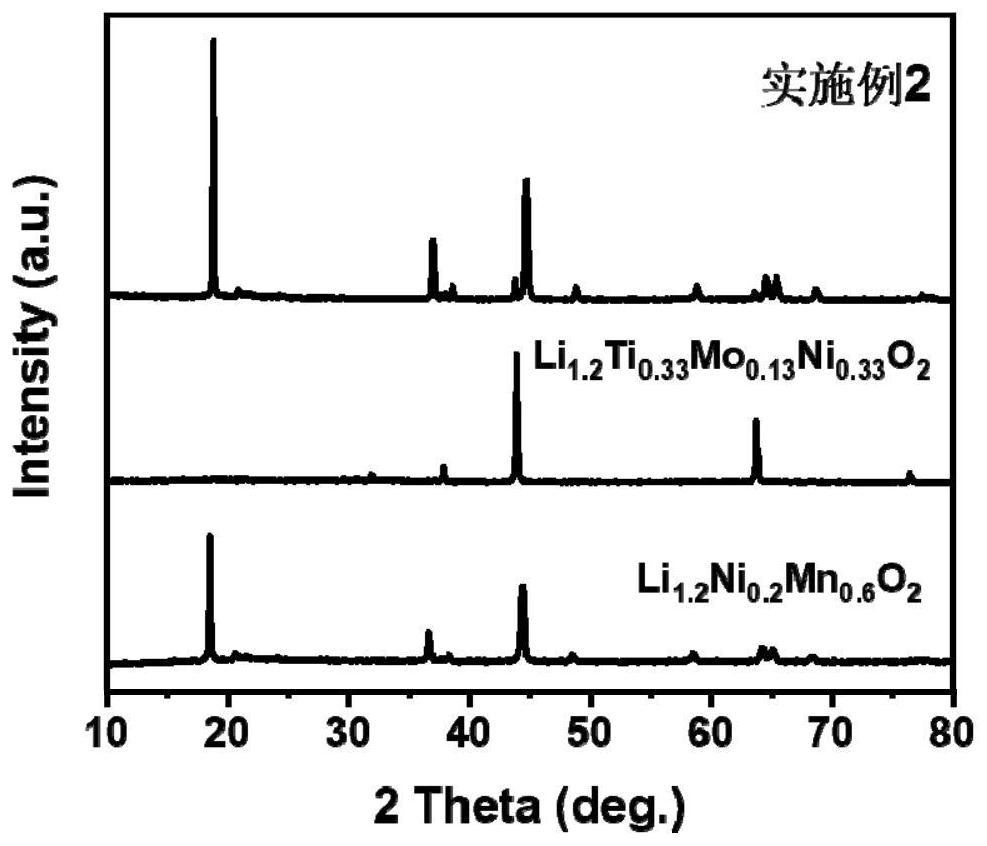
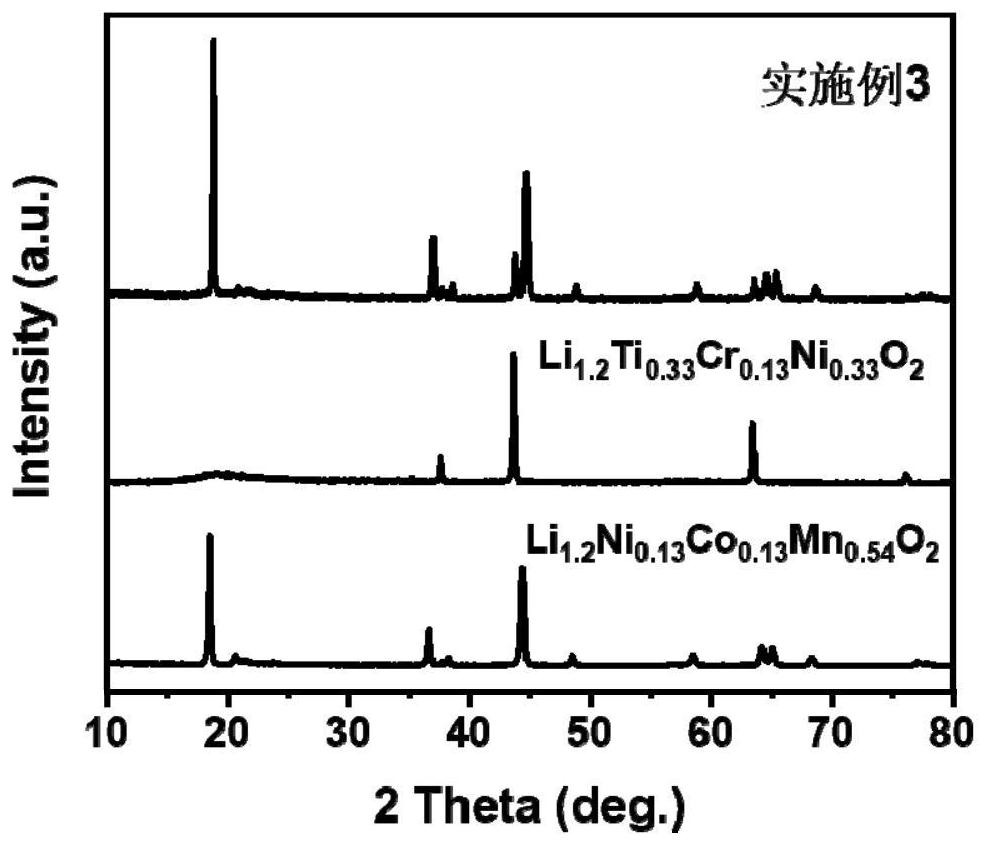
Examples
Embodiment 1
[0054] A mixed Li 1.2 Ni 0.2 mn 0.6 o 2 / Li 1.2 Ti 0.33 Mo 0.13 Ni 0.33 o 2 The lithium-rich positive electrode material, its preparation method comprises the following steps:
[0055] S1. Weigh and mix manganese sulfate and nickel sulfate with a molar ratio of 3:1 according to the composition of the lithium-rich cathode material, add distilled water to make a 2mol / L metal salt solution (the total molar number of transition metals is 2mol), and then weigh 2mol sodium carbonate Prepare a 2mol / L solution, use ammonia water as a complexing agent, slowly add the three solutions into the reaction kettle, react at 55°C for 12 hours at pH = 8, filter to obtain a precipitate, and vacuum dry to obtain a carbonate precursor;
[0056] S2, mix and stir the carbonate precursor and lithium carbonate (the molar ratio of precursor and lithium source: 1:1.05) with absolute ethanol as solvent until the solvent evaporates completely, then transfer the mixture to the crucible, In the Fur...
Embodiment 2
[0064] A mixed Li 1.2 Ni 0.2 mn 0.6 o 2 / Li 1.2 Ti 0.33 Mo 0.13 Ni 0.33 o 2 The lithium-rich positive electrode material, its preparation method comprises the following steps:
[0065] S1. Weigh and mix manganese sulfate and nickel sulfate with a molar ratio of 3:1 according to the composition of the lithium-rich cathode material, add distilled water to make a 2mol / L metal salt solution (the total molar number of transition metals is 2mol), and then weigh 2mol sodium carbonate Prepare a 2mol / L solution, use ammonia water as a complexing agent, slowly add the three solutions into the reaction kettle, react at 55°C for 12 hours at pH = 8, filter to obtain a precipitate, and vacuum dry to obtain a carbonate precursor;
[0066] S2, mix and stir the carbonate precursor and lithium carbonate (the molar ratio of precursor and lithium source: 1:1.05) with absolute ethanol as solvent until the solvent evaporates completely, then transfer the mixture to the crucible, In the Fur...
Embodiment 3
[0074] A mixed Li 1.2 Ni 0.13 co 0.13 mn 0.54 o 2 / Li 1.2 Ti 0.33 Cr 0.13 Ni 0.33 o 2 The lithium-rich positive electrode material, its preparation method comprises the following steps:
[0075] S1. Weigh and mix manganese sulfate, cobalt sulfate and nickel sulfate with a molar ratio of 4:1:1 according to the composition of the lithium-rich positive electrode material, add distilled water to form a 2mol / L metal salt solution (the total molar number of transition metals is 2mol), and then Weigh 2 mol of sodium carbonate to prepare a 2 mol / L solution, use ammonia water as a complexing agent, slowly add the three solutions into the reaction kettle, react at 55°C for 12 hours at pH = 8, filter to obtain a precipitate, and vacuum dry to obtain carbonic acid salt precursor;
[0076] S2, mix and stir the carbonate precursor and lithium carbonate (the molar ratio of precursor and lithium source: 1:1.05) with absolute ethanol as solvent until the solvent evaporates completely...
PUM
| Property | Measurement | Unit |
|---|---|---|
| Particle size | aaaaa | aaaaa |
| Particle size | aaaaa | aaaaa |
| Particle size | aaaaa | aaaaa |
Abstract
Description
Claims
Application Information
 Login to View More