
Plastic bag for fine powders
a technology of plastic bags and powders, applied in the direction of sacks, transportation and packaging, packaging goods types, etc., can solve the problems of achieve the effects of preserving the quality of packaged products, efficient formation, and increasing the rate of bag filling and sealing
- Summary
- Abstract
- Description
- Claims
- Application Information
AI Technical Summary
Benefits of technology
Problems solved by technology
Method used
Image

Examples
example 1
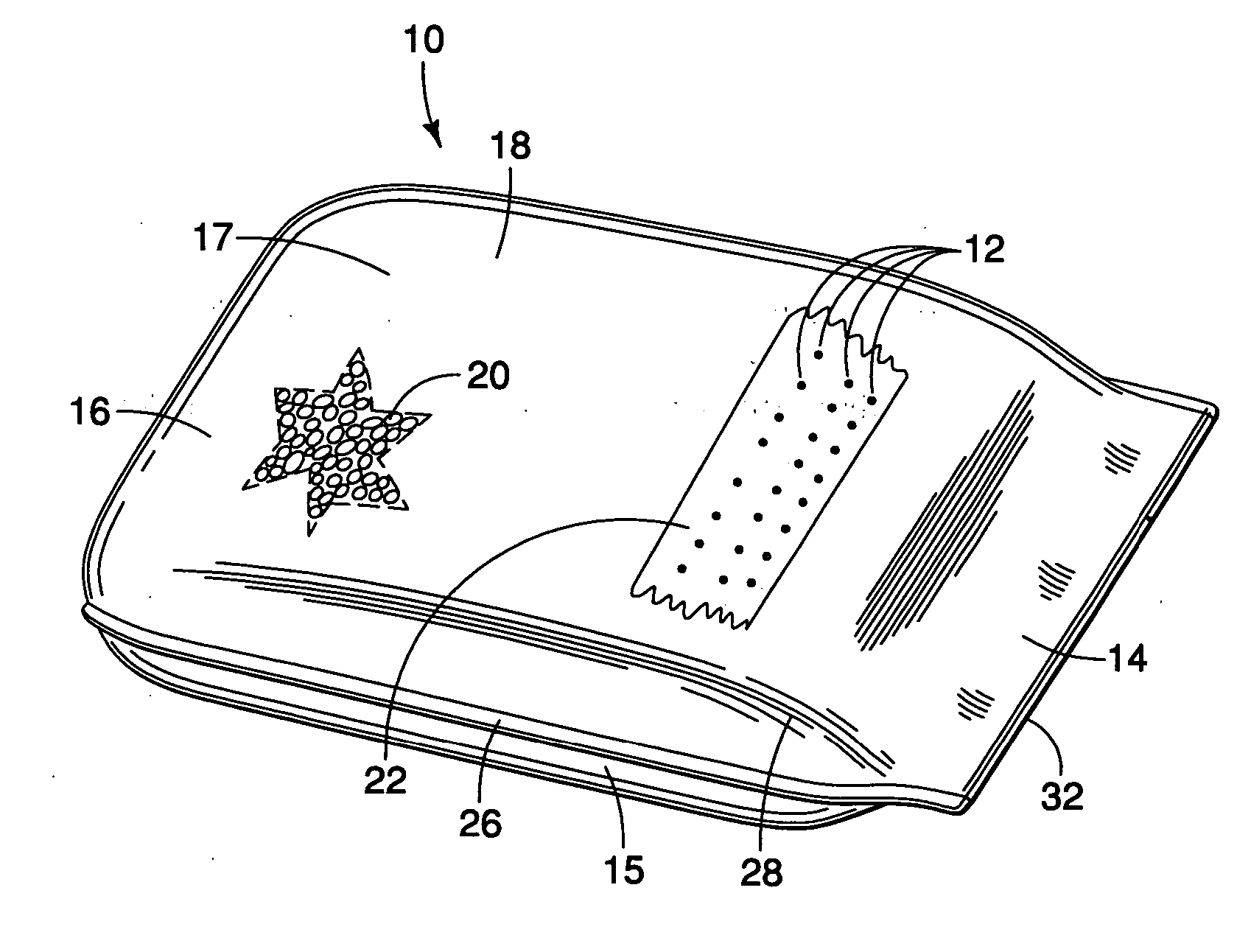
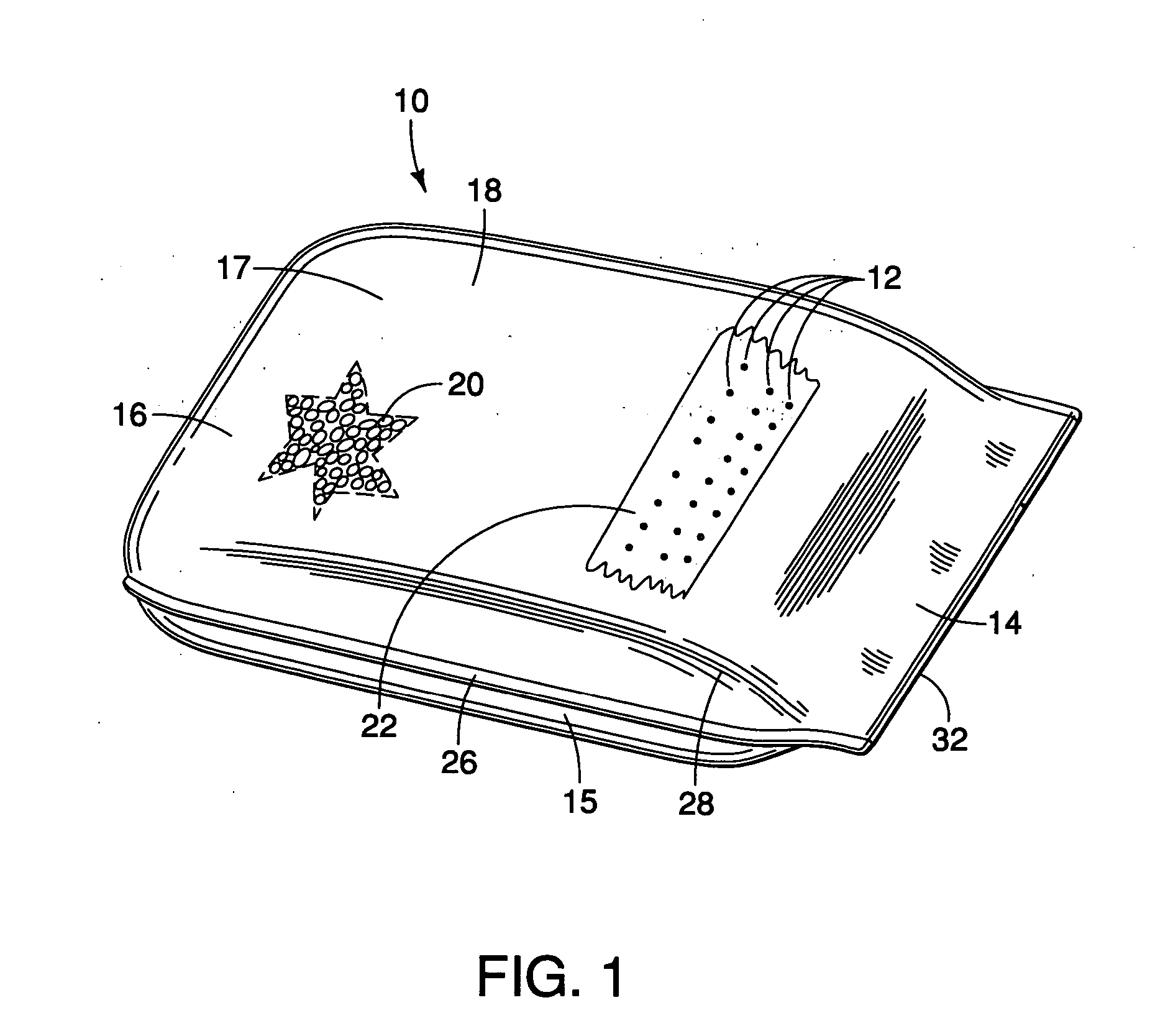
[0047] Plastic bags made of 3 ply polyethylene (Plassein International Packaging, Willington, Conn.) were prepared having 125 μm microperforations along the length of each side of the bag. The microperforations were tightly packed within a thin band running along the sides of the package. The bags were filled with 2.5 (5.7 Kg) pounds of the joint compound mix and sealed, the entrapped air expelled, then heat sealed at the top closure to close the bag. A GLUEFAST ethyl acrylate / 2-ethylhexyl acrylate copolymer sealant (Hughes Enterprises, Trenton, N.J.) was applied via brush and allowed to air dry.
[0048] Aging tests were conducted to determine if application of a sealant was beneficial over time. Test bags were either held at constant temperature and humidity or cycled between various temperature and humidity conditions for a period of eleven days. The following test conditions were used:
[0049] Test Condition 1: 90° F. (32° C.) and 90% Relative Humidity, Continuous.
[0050] Test Cond...
example 2
[0054] Polyethylene bags of the type and source used in Example 1 were obtained for testing. Approximately 2400 microperforations were made in a 1″×4″ (2.5 cm×10 cm) strip across the front of the bag. Each of the microperforations was about 100 μm.
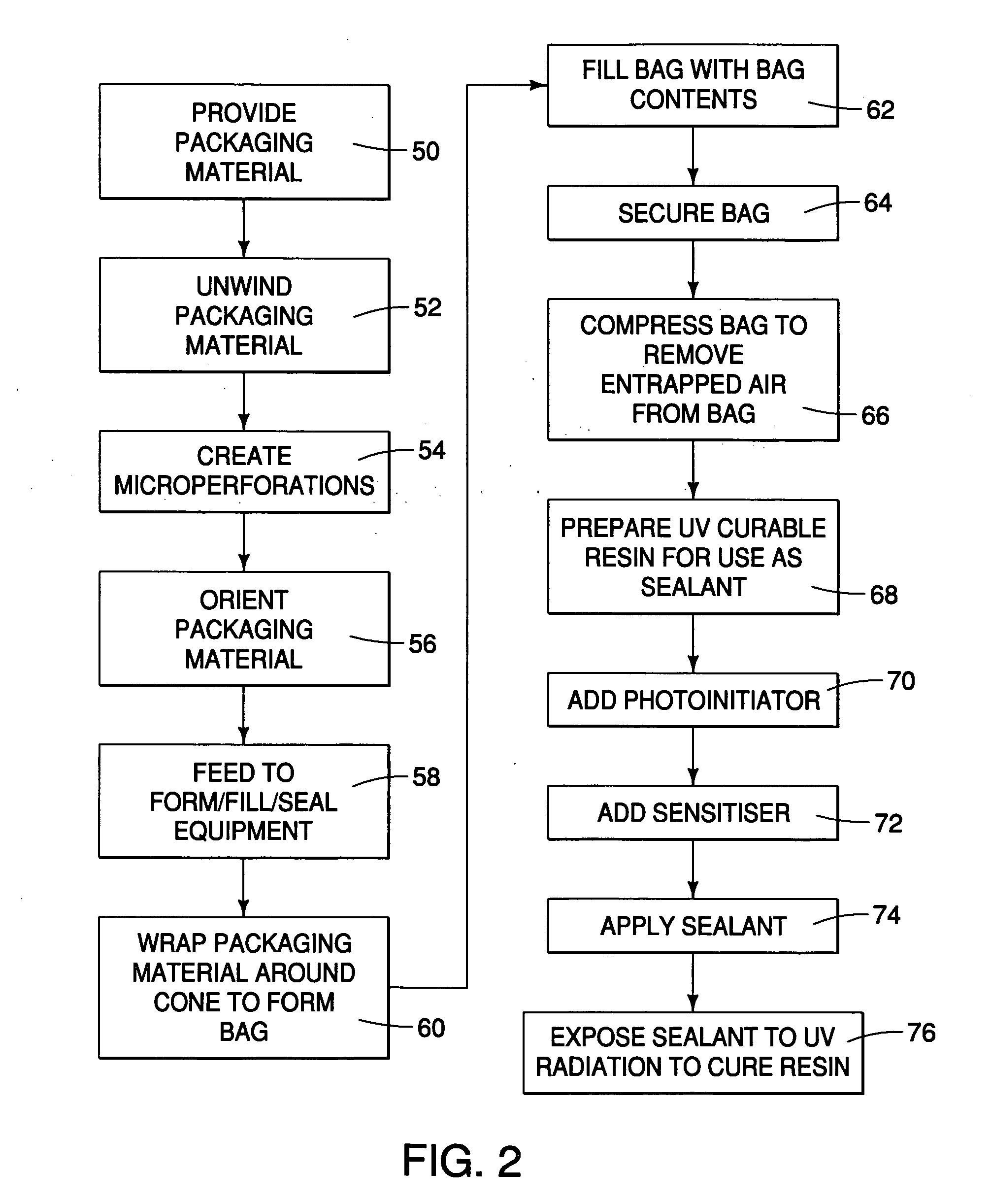
[0055] The 18-pound bags were filled with Easy Sand Joint Compound mix and heat-sealed at the top. The sealant, Apsqure 9010-20 UV-curable resin (Applied Polymer Systems, Schaumburg, Ill.) was applied by brush. The perforated area was not cleaned prior to application to remove all of the joint compound dust from the front surface of the bag. While moving at 42 ft / min. (0.2 m / sec), the bags passed about 6 inches (15 cm) from a 300 Watt / in2 (46 Watt / cm2) UV Source described below.
[0056] The following tests demonstrate the effectiveness of ultraviolet curable resin on sealing the microperforations of a plastic bag containing Easy Sand setting-type joint compound.
TABLE 2Bulb LampNumber ofSample IDSample No.TypeUV PhotoinhibitorPassesT42HX1...
PUM
 Login to View More
 Abstract
Description
Claims
Application Information
 Login to View More