
Tubular sputtering target
a sputtering target and tube technology, applied in the direction of electrolysis components, vacuum evaporation coatings, coatings, etc., can solve the problems of limited heat absorption and dissipation capacity, and the inability to use sputtering targets, etc., to achieve the necessary stability and heat dissipation, improve thermal conductivity, and improve thermal conductivity.
- Summary
- Abstract
- Description
- Claims
- Application Information
AI Technical Summary
Benefits of technology
Problems solved by technology
Method used
Image

Examples
Embodiment Construction
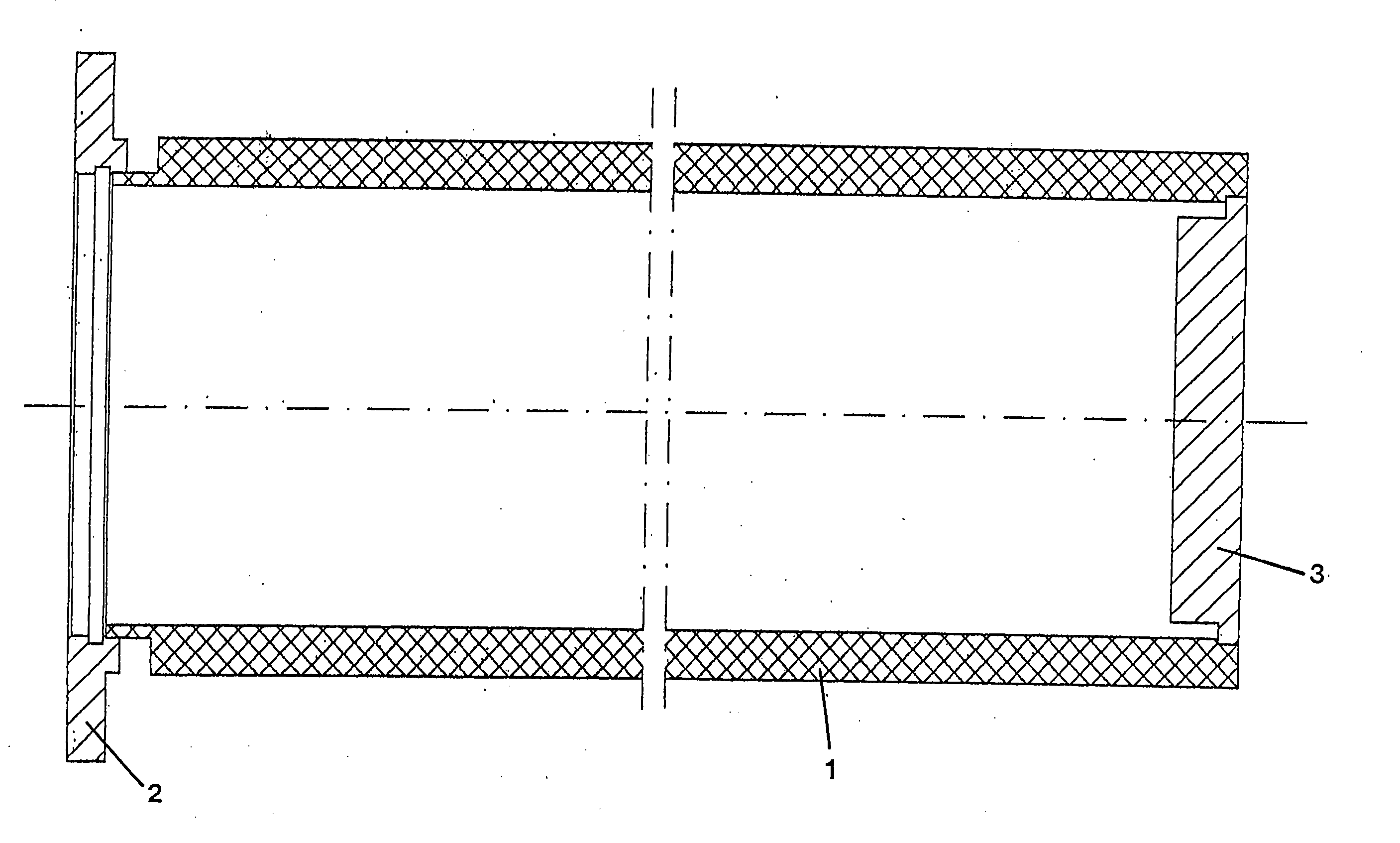
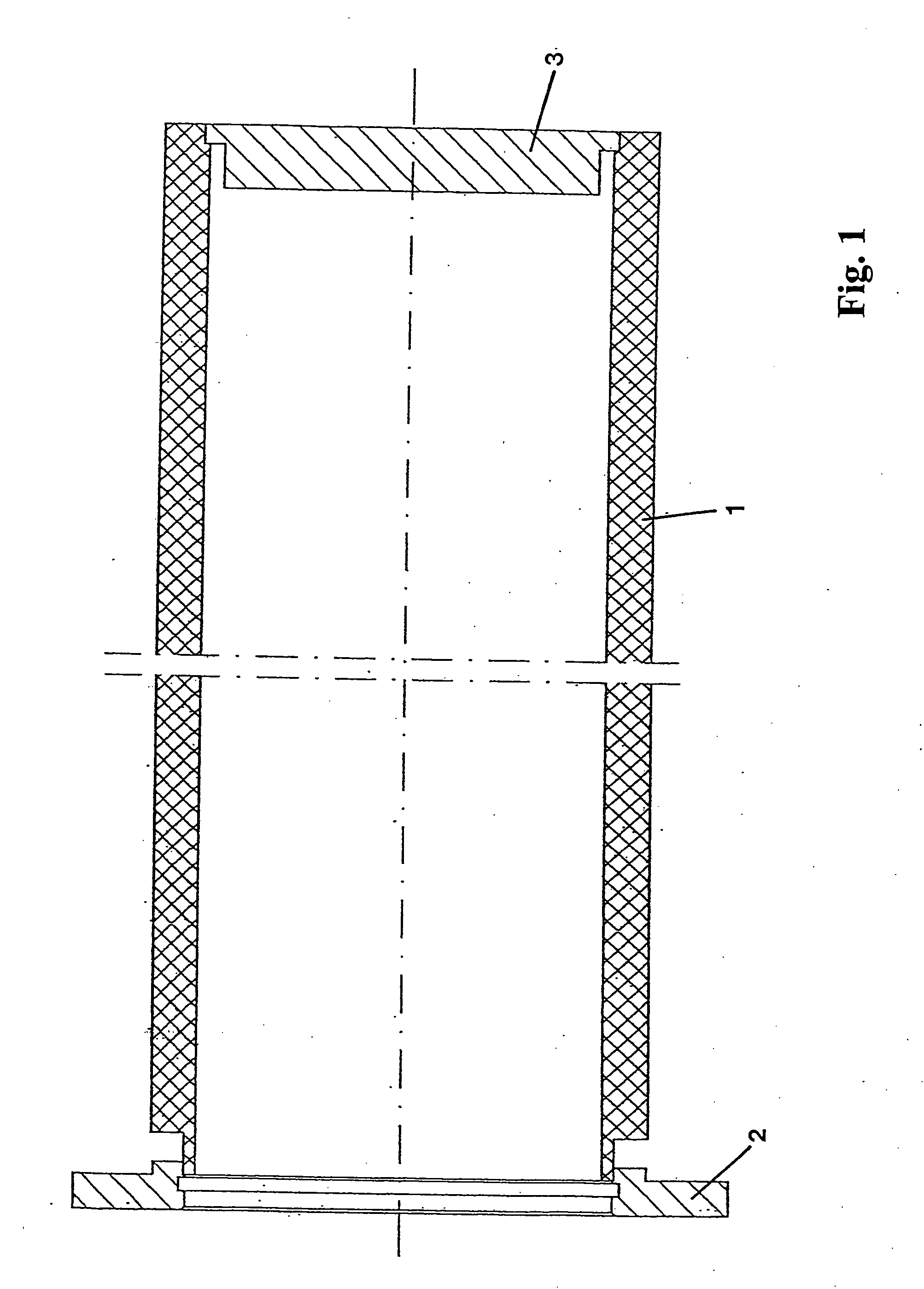
[0011] Tubular targets can be supported in the sputtering installation either at one end or at both ends. The inside of the tube is sealed vacuum-tight from the outside environment. The target / support body 1 is made of molybdenum, possibly alloyed with about 0.5 wt.% to about 5 wt. % chromium or tungsten. In the case of a tubular target supported at one end (FIG. 1), an attachment flange 2 is welded vacuum-tight to only one end of the tube by the electron beam welding process, while the other end is joined vacuum-tight with a tube end cover 3 by electron beam welding.
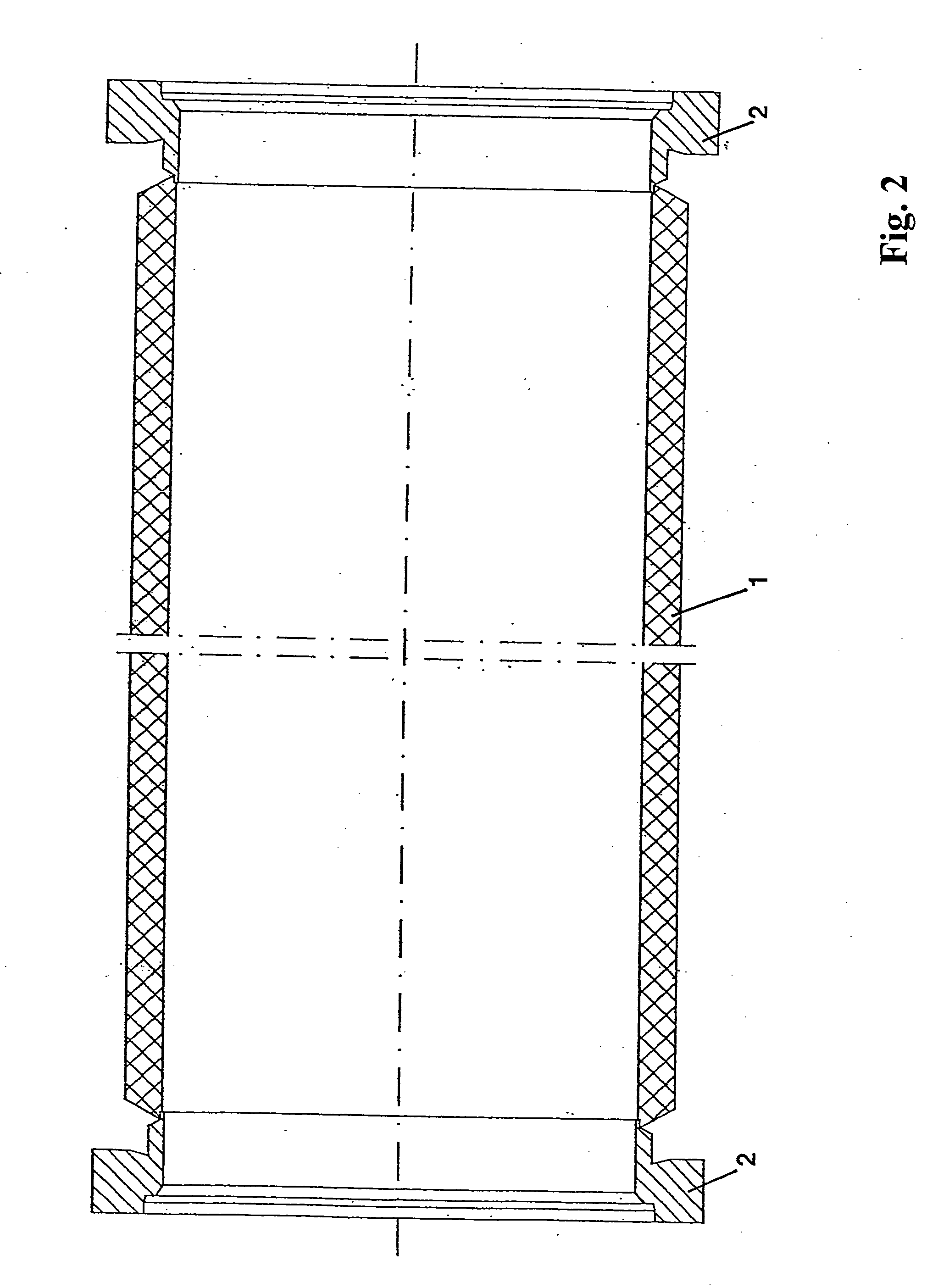
[0012] In the case of a tubular target supported at both ends (FIG. 2), and attachment flange 2 is welded onto both ends of the support body 1. Here again, the joint is vacuum-tight and is preferably produced by the electron beam welding process. The titanium alloys specified above are especially suitable materials for the tube end cover 3 or the attachment flange 2.
[0013] Molybdenum can be used, for example, as a spu...
PUM
 Login to View More
 Abstract
Description
Claims
Application Information
 Login to View More