

Reinforced Silicone Resin Film and Method of Preparing Same
a technology of reinforced silicone and resin film, which is applied in the direction of transportation and packaging, tyre parts, special tyres, etc., can solve the problems of limited utility of free standing silicone resin films, and achieve the effects of low thermal expansion coefficient, high modulus, and high tensile strength
- Summary
- Abstract
- Description
- Claims
- Application Information
AI Technical Summary
Benefits of technology
Problems solved by technology
Method used
Image

Examples
example 1
[0114]This example demonstrates the preparation of a chemically oxidized carbon nanofiber. Pyrograf®-III carbon nanofiber (2.0 g), 12.5 mL of concentrated nitric acid, and 37.5 mL of concentrated sulfuric acid were combined sequentially in a 500-mL three-neck flask equipped with a condenser, a thermometer, a Teflon-coated magnetic stirring bar, and a temperature controller. The mixture was heated to 80° C. and kept at this temperature for 3 h. The mixture was then cooled by placing the flask on a layer of dry ice in a one gallon pail. The mixture was poured into a Buchner funnel containing a nylon membrane (0.8 μm) and the carbon nanofibers were collected by vacuum filtration. The nanofibers remaining on the membrane were washed several times with deionized water until the pH of the filtrate was equal to the pH of the wash water. After the last wash, the carbon nanofibers were kept in the funnel for an additional 15 min. with continued application of the vacuum. Then the nanofibers,...
example 2
[0115]The oxidized carbon nanofiber of Example 1 (0.0.031 g) and 50.0 g of SDC MP101 Crystal Coat Resin were combined in a glass vial. The vial was placed in an ultrasonic bath for 30 min. The mixture was then subjected to centrifugation at 2000 rpm for 30 min. The supernatant composition was used to prepare a silicone resin film.
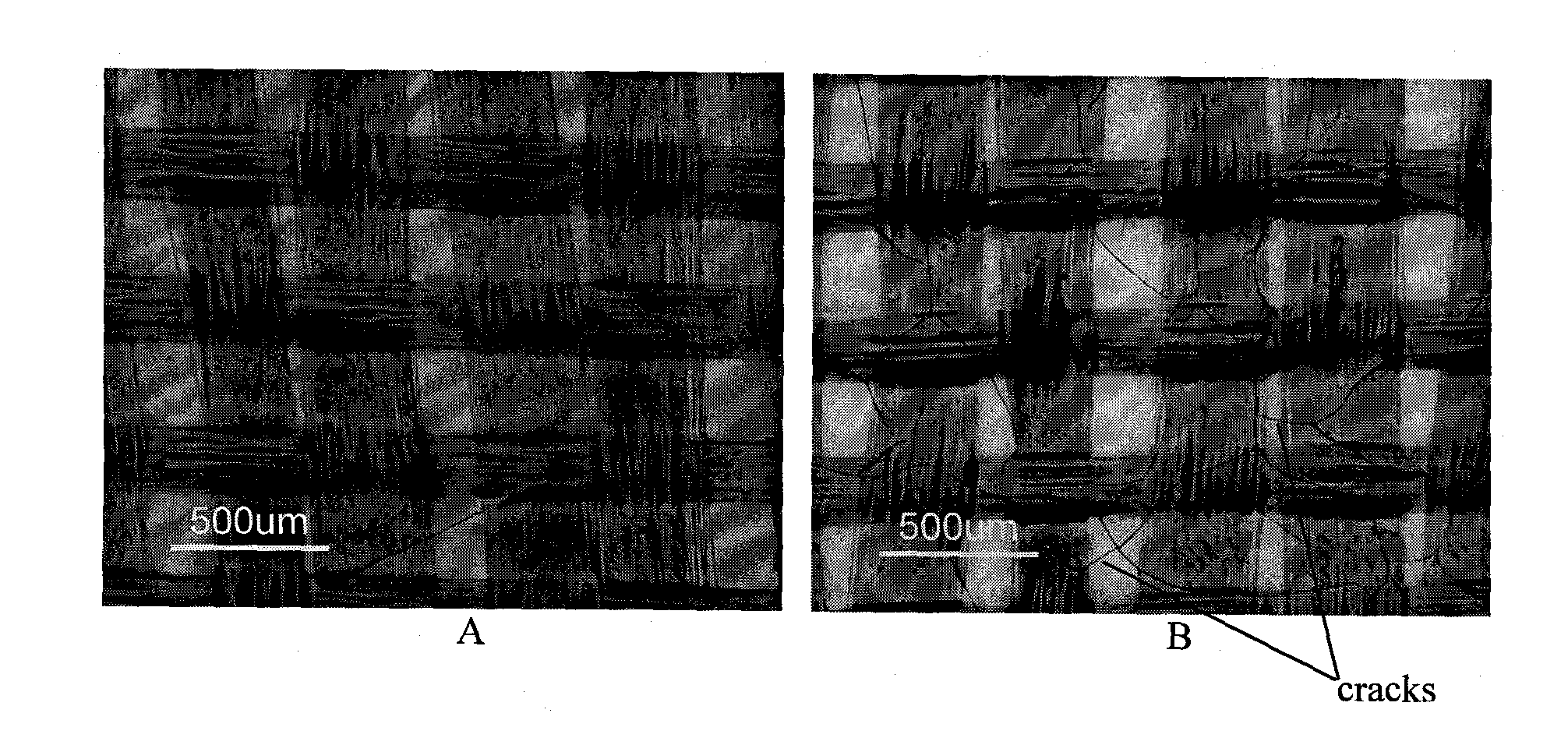
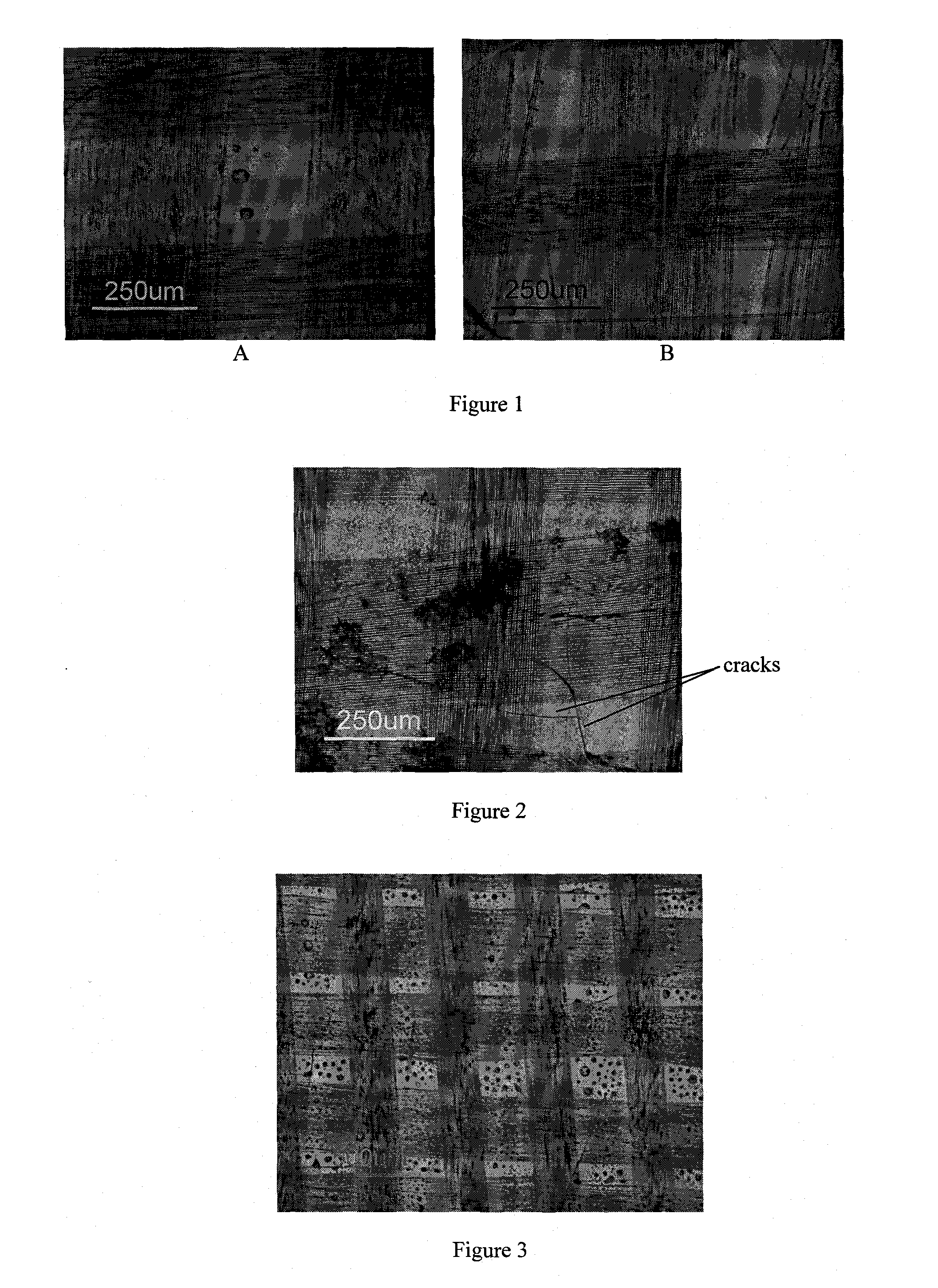
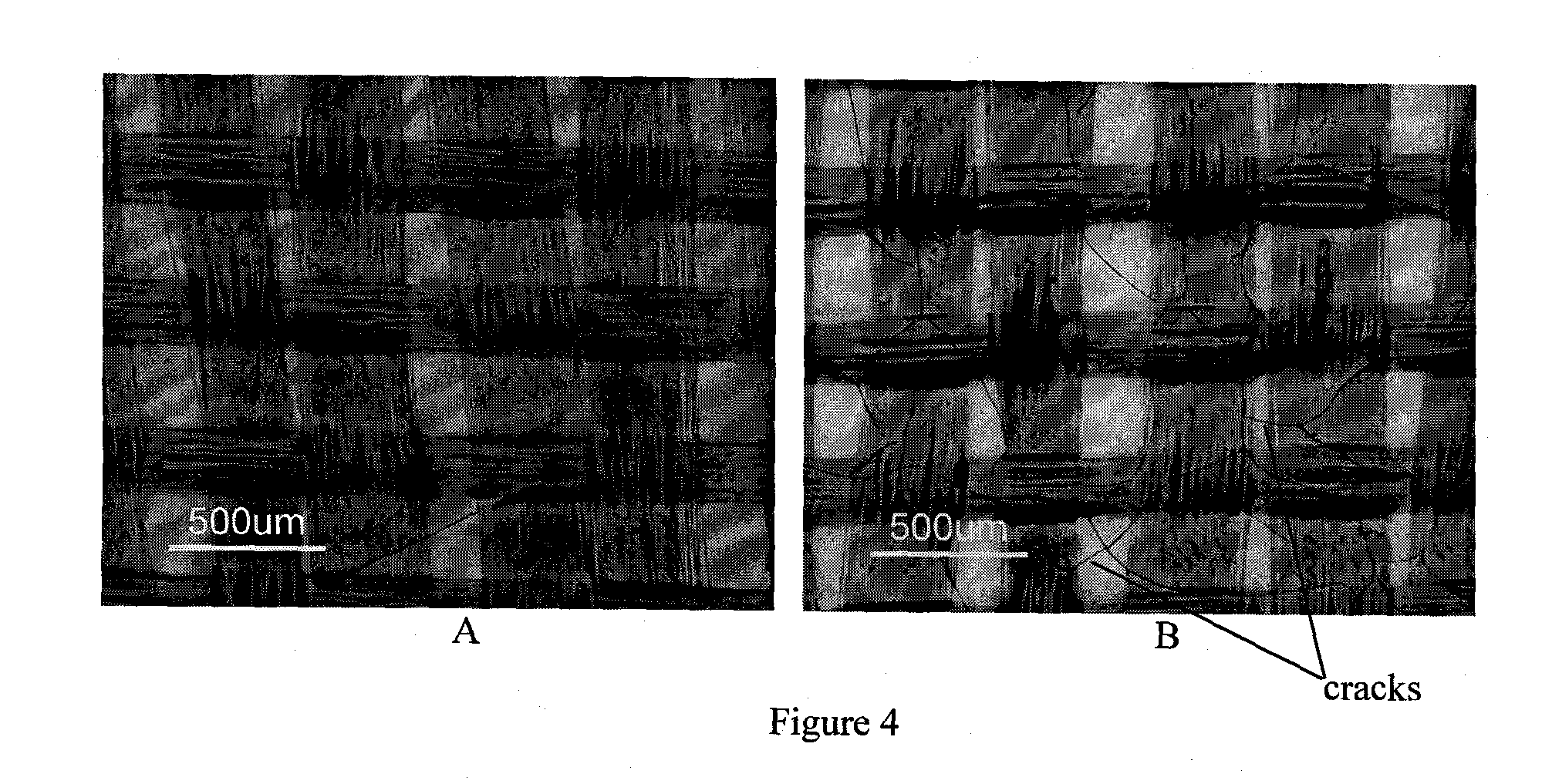
[0116]Glass fabric (38.1 cm×8.9 cm) was impregnated with the preceding composition by passing the fabric through the composition at a rate of about 5 cm / s. The impregnated fabric was then hung vertically in a fume hood at room temperature to dry, and then cured in an air-circulating oven according to the following cycle: room temperature to 75° C. at 1° C. / min., 75° C. for 1 h; 75° C. to 100° C. at 1° C. / min., 100° C. for 1 h; and 100° C. to 125° C. at 1° C / min., 125° C. for 1 h. The oven was turned off and the silicone resin film was allowed to cool to room temperature. The impregnation, drying, and curing steps were repeated to increase the thickness of t...
example 3
[0118]Pyrograf®-III carbon nanofiber (0.0.031 g) and 50.0 g of SDC MP101 Crystal Coat Resin were combined in a glass vial. The vial was placed in an ultrasonic bath for 30 min. The mixture was then subjected to centrifugation at 2000 rpm for 30 min. The supernatant composition was used to prepare a reinforced silicone resin film according to the method of Example 2.
[0119]After curing, the reinforced silicone resin film was heat-treated in an air-circulating oven under the following conditions: room temperature to 400° C. at 5° C. / min., 400° C. for 1 h. The oven was turned off and the film was allowed to cool to room temperature. A photomicrograph of the reinforced silicone resin film after heat treatment is shown in FIG. 2. The film contains cracks.
PUM
| Property | Measurement | Unit |
|---|---|---|
| temperature | aaaaa | aaaaa |
| mol % | aaaaa | aaaaa |
| mol % | aaaaa | aaaaa |
Abstract
Description
Claims
Application Information
 Login to View More