
Compound having detrusor muscle-contracting activity and urethral sphincter muscle-relaxing activity
a technology of urethral sphincter and detrusor muscle, which is applied in the field of compound having detrusor muscle contracting activity and relaxing activity of urethral sphincter, can solve the problems of affecting the function of urine collection of the bladder, affecting the function of bladder urine collection, so as to improve the function of urethral relaxation and/or bladder contraction, and prevent and/or treat underactive bladder
- Summary
- Abstract
- Description
- Claims
- Application Information
AI Technical Summary
Benefits of technology
Problems solved by technology
Method used
Image

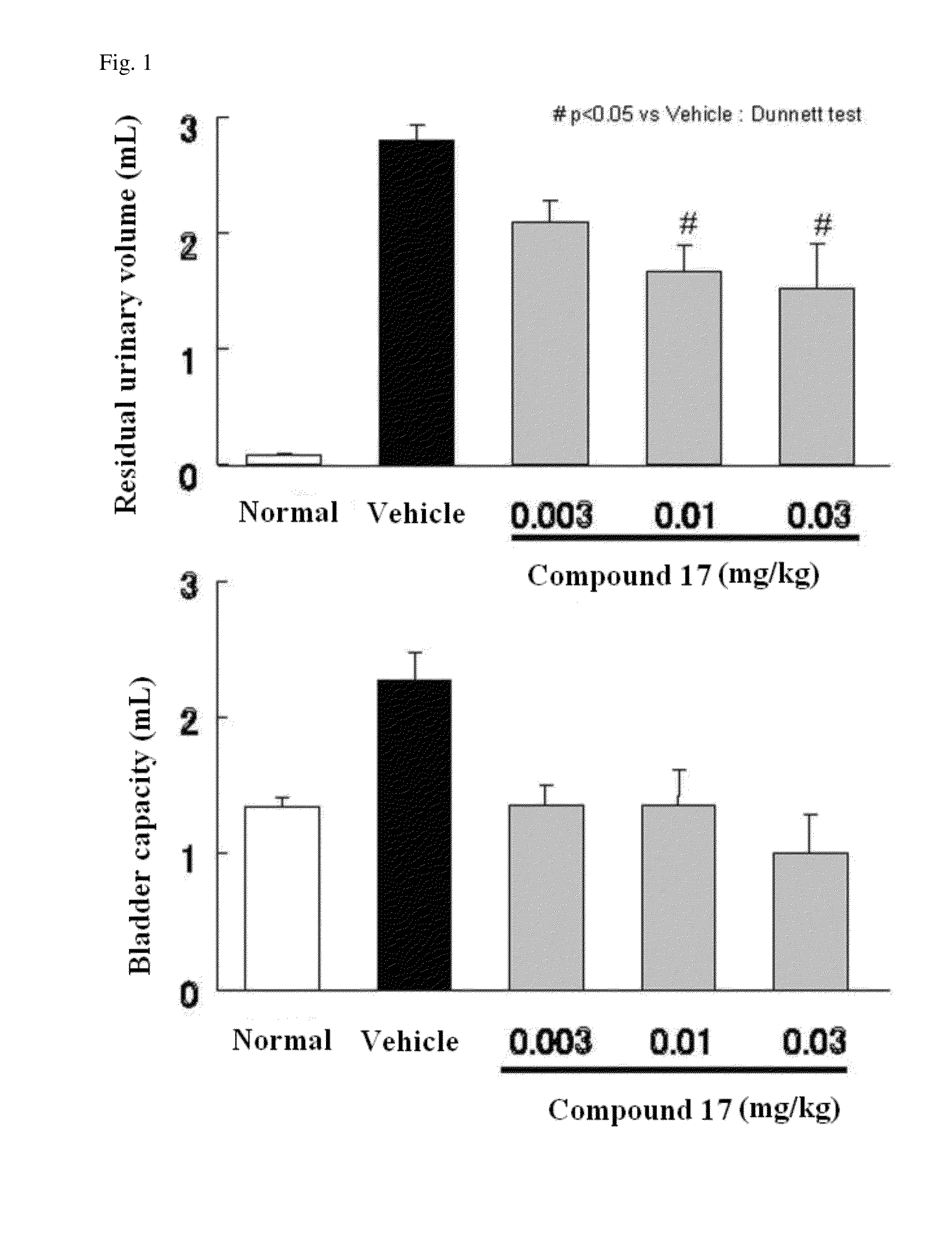
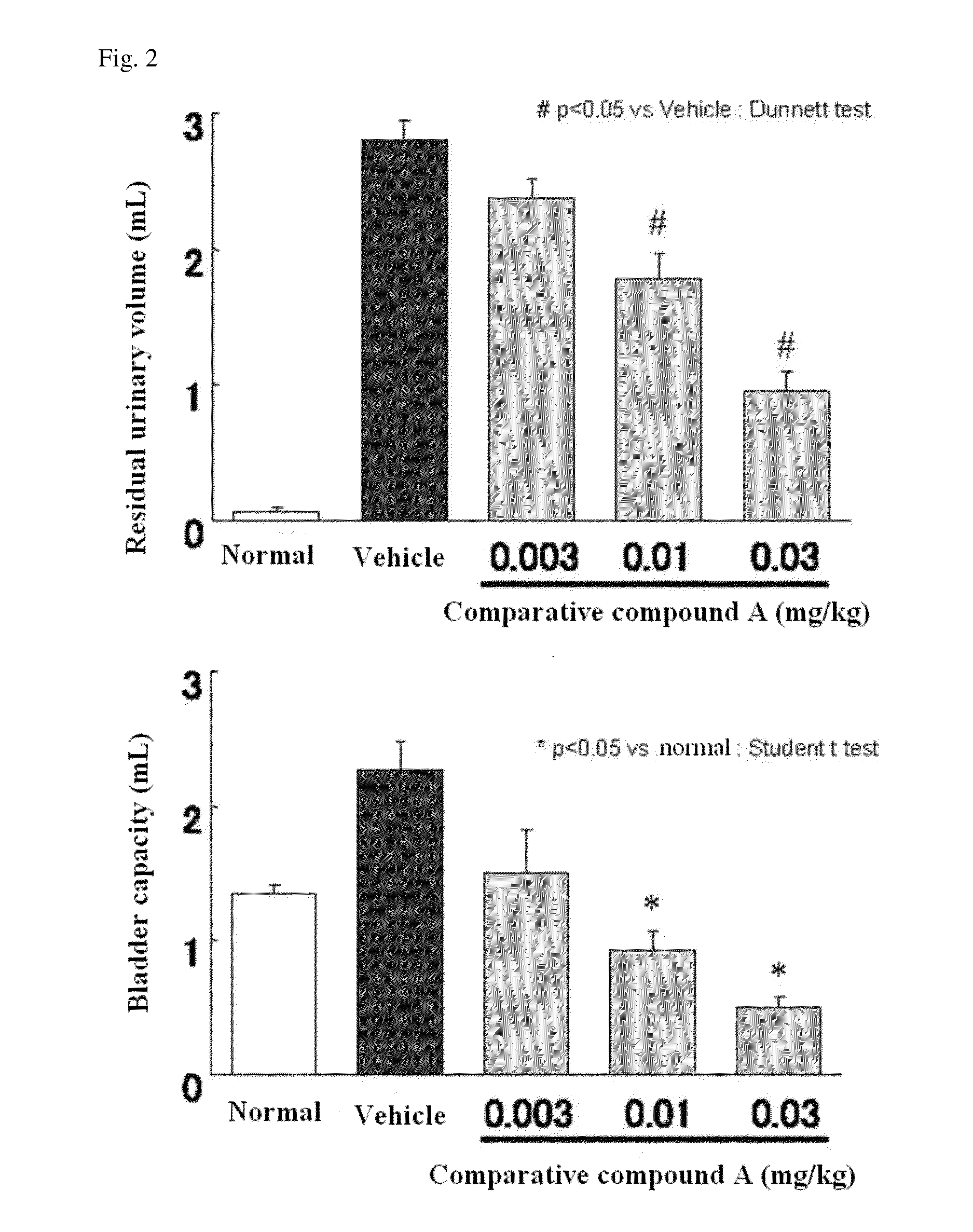
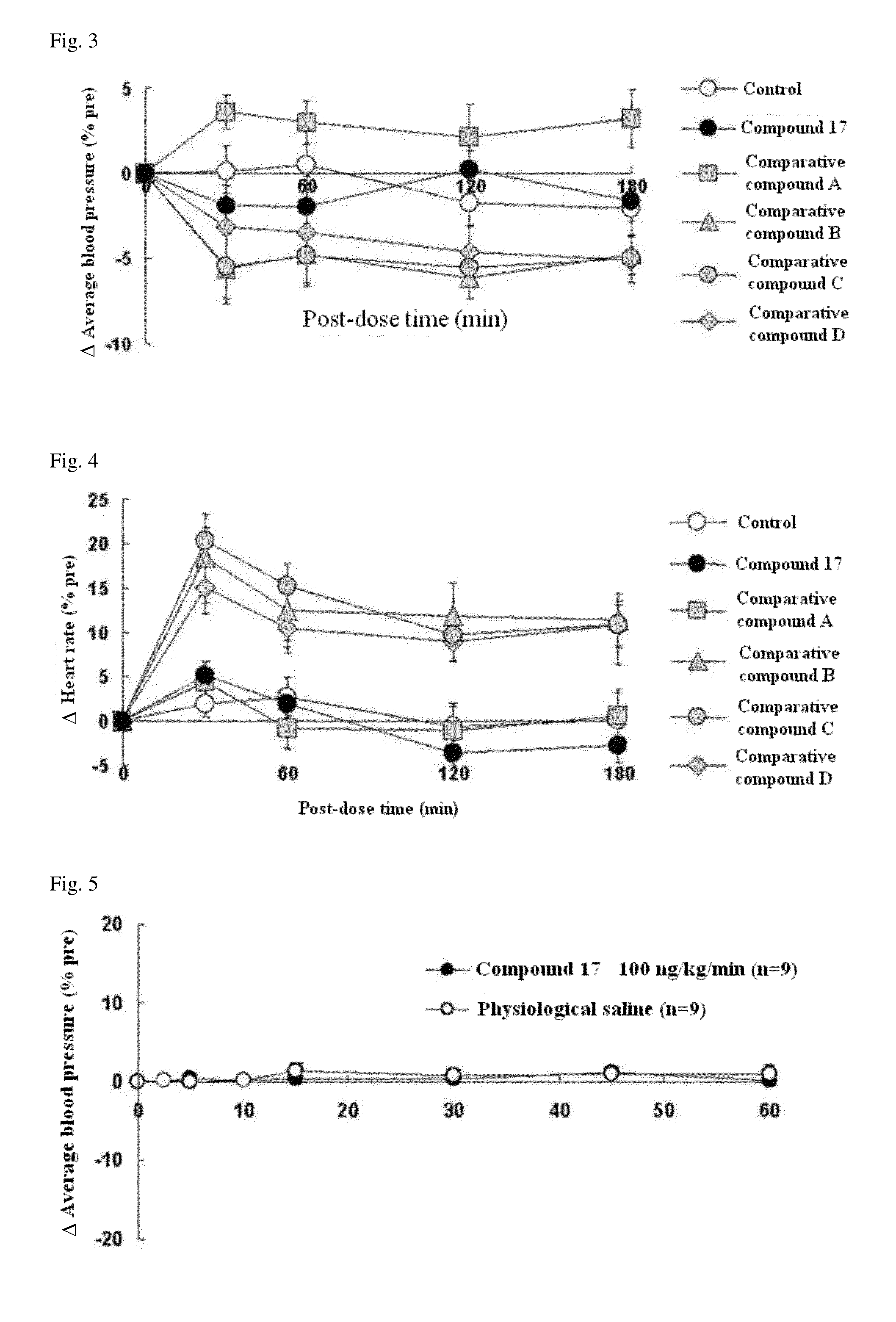
Examples
examples
[0141]The present invention will be explained in detail by Examples. However, the present invention is not limited by the Examples.
[0142]The solvents in the parenthesis indicated in the separated portion by the chromatography and TLC represent eluting or developing solvents used and their ratio is volume ratio.
[0143]NMR data are 1H-NMR data in 300 MHz unless otherwise specified. The parentheses in the NMR data represent solvents used for measurement.
[0144]The compounds used herein were named by a computer program which names chemical names according to the IUPAC rules, ACD / Name Batch (registered trademark), or according to IUPAC nomenclature. For example,
was named as 2-[(2-{(1R,5R)-2-oxo-5-[(1E,4S)-7,8,8-trifluoro-4-hydroxy-4-methyl-1,7-octadien-1-yl]cyclopentyl}ethyl)thio]-1,3-thiazole-4-carboxylic acid.
preparation examples
Example 1
4,5,5-trifluoro-N-methoxy-N-methyl-4-penteneamide (Compound 1)
[0145]N,O-dimethylhydroxyamine hydrochloride (3.5 g), 1-ethyl-3-(3-dimethylaminopropyl)carbodiimide hydrochloride (6.9 g) and triethylamine (9.2 mL) were added to a solution of 4,5,5-trifluoropent-4-enoic acid (CAS No. 110003-22-0 (5.0 g)) in methylene chloride solution (64 mL) in a cold-water bath and stirring was carried out at room temperature overnight. The reaction solution was concentrated and diluted with ethyl acetate. The dilute solution was washed with 1 N hydrochloric acid, water and saturated brine; dried with anhydrous sodium sulfate; and concentrated to obtain the title compound (6.4 g) having the following physical properties:
[0146]TLC: Rf 0.50 (ethyl acetate:hexane=1:2);
[0147]NMR (CDCl3): δ 2.51-2.77 (m, 4H), 3.19 (s, 3H), 3.69 (s, 3H).
example 2
Ethyl 6,7,7-trifluoro-3-oxo-6-heptenoate (Compound 2)
[0148]Ethyl acetate (4.8 mL) was slowly added dropwise to a lithium hexamethyldisilazide / tetrahydrofuran solution (1 M, 48 mL) at −78° C., followed by stirring for 30 min. The solution of compound 1 (6.4 g) in anhydrous tetrahydrofuran (33 mL) was slowly added dropwise to the reaction solution at the same temperature followed by stirring for 30 min. To the reaction solution, 2 N hydrochloric acid (30 mL) was added, followed by extraction with ethyl acetate. The organic layer was washed with water and saturated brine; dried with anhydrous sodium sulfate; and concentrated. The resulting residue was purified by silica gel column chromatography (hexane:ethyl acetate=20:1→15:1) to obtain the title compound (4.94 g) having the following physical properties:
[0149]TLC: Rf 0.63 (ethyl acetate:hexane=1:2);
[0150]NMR (CDCl3): δ 1.29 (t, J=7.1 Hz, 3H), 2.50-2.71 (m, 2H), 2.83 (t, J=7.2 Hz, 2H), 3.47 (s, 2H), 4.21 (q, 2H).
PUM
 Login to View More
 Abstract
Description
Claims
Application Information
 Login to View More