
Solid electrolytic capacitor element, solid electrolytic capacitor, and manufacturing method of solid electrolytic capacitor element
- Summary
- Abstract
- Description
- Claims
- Application Information
AI Technical Summary
Benefits of technology
Problems solved by technology
Method used
Image

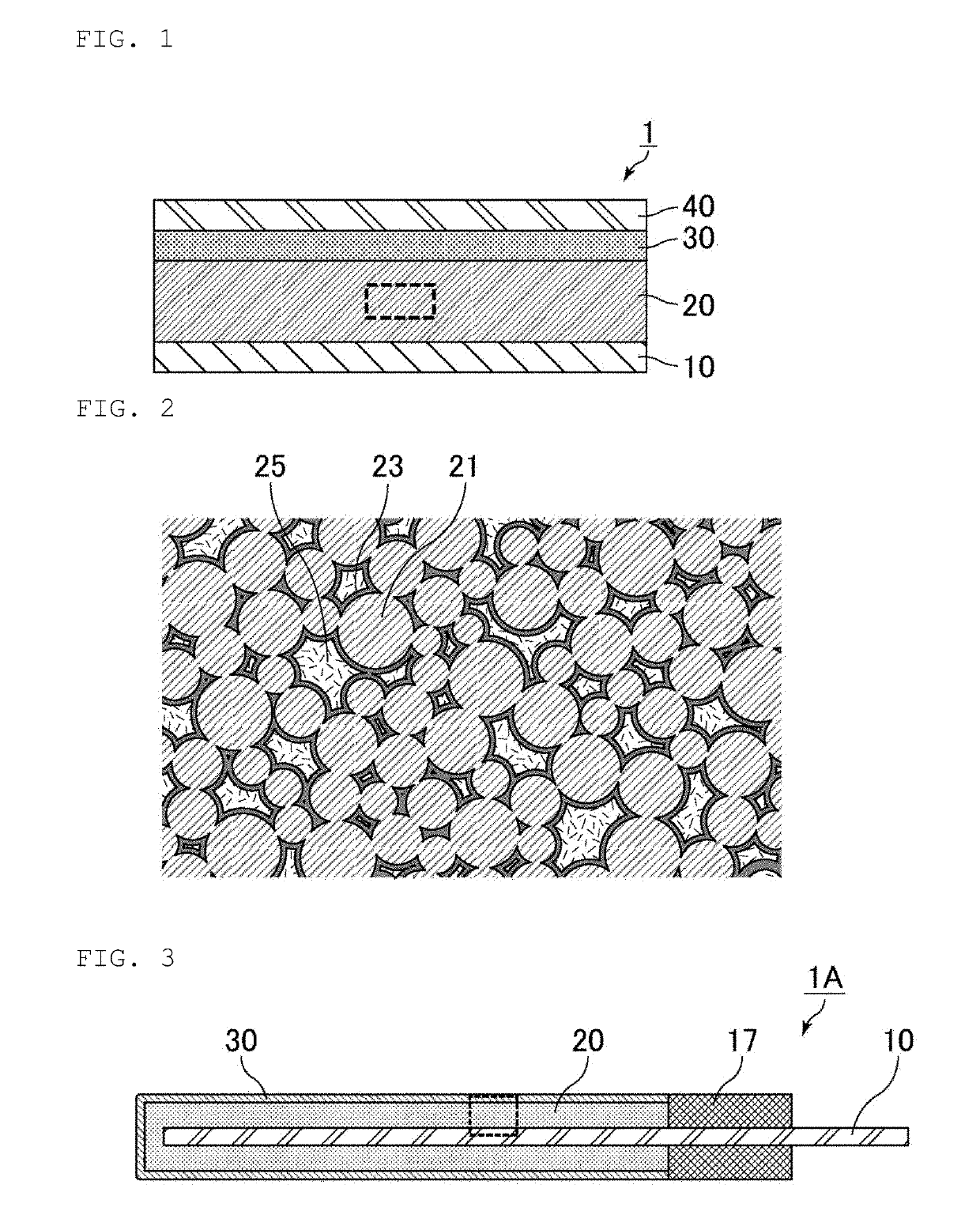
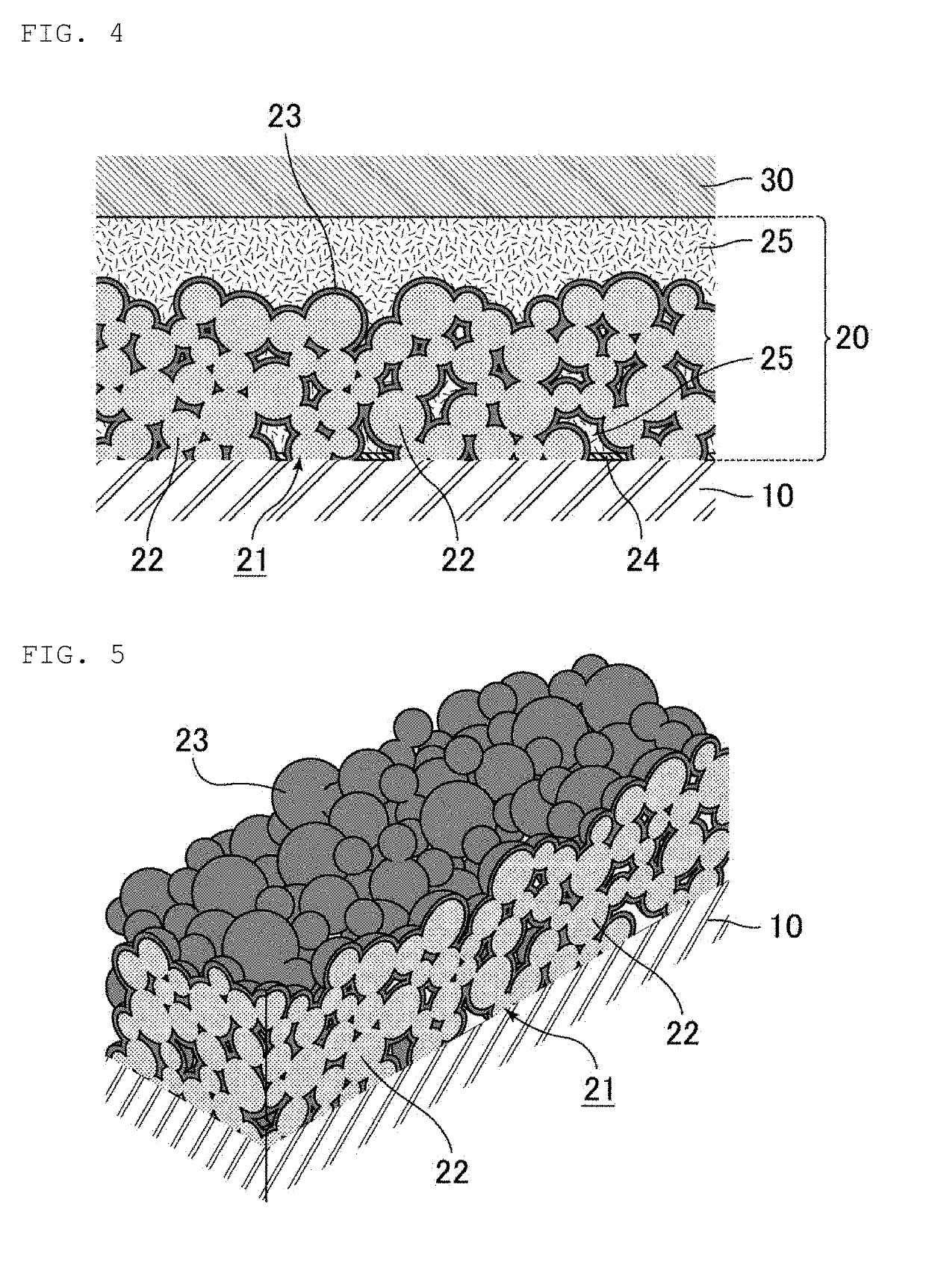
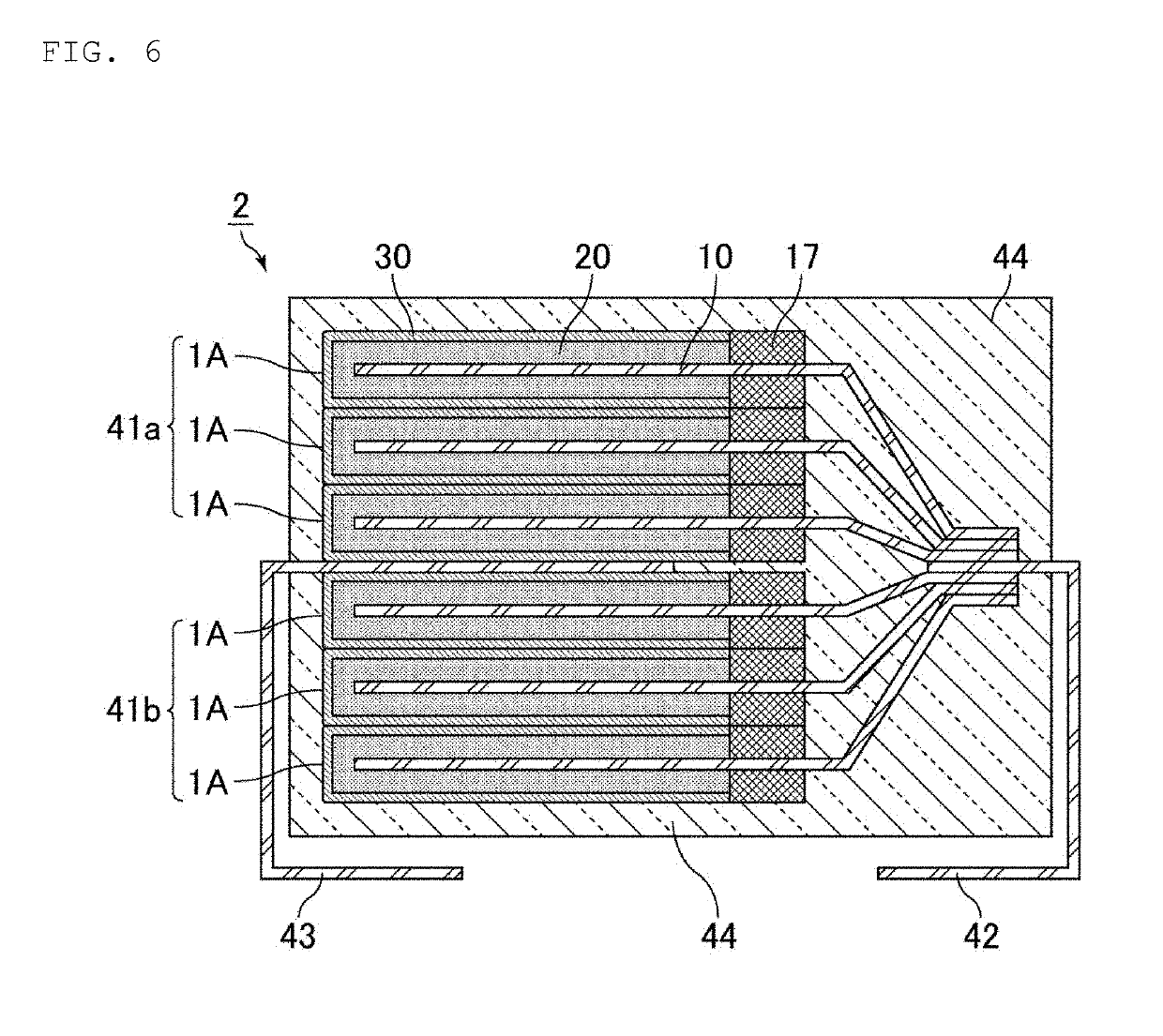
Examples
example
[0103]Examples in which solid electrolytic capacitor elements of the present invention have been disclosed more specifically are shown below. Note that the present invention is not limited only to these examples.
example a1
[0104][Production of Ti-Alloy-Containing Grain]
[0105]First, Ti-alloy-containing grains were manufactured in the following procedure. For 100 g of Si containing metal powder (base grain) with an average grain diameter of 200 nm, film formation processing was performed by sputtering for 60 minutes, whereby covered grains were obtained by forming a coat layer made from a Ti—Zr—X multicomponent alloy (X was Si) with a thickness of 50 nm on their surfaces. The covered grains were dissolved in an acidic aqueous solution, and the obtained acidic aqueous solution was analyzed by the ICP light emission spectrometry. As a result, the composition of the Ti—Zr—X multicomponent alloy was Ti: 80 atm %, Zr: 14 atm %, and X(Si): 6 atm %.
[0106][Production of Porous Body]
[0107]The covered grains were mixed with a high viscosity solvent so as to form a paste, and the paste was coated on one surface of an aluminum foil having a thickness of 50 μm such that the thickness of the coated paste became 100 μ...
example b1
[0115]Solid electrolytic capacitor elements according to Example B1 were produced in the similar procedure to that in Example A1 except that, alloy grains made from a Ti—Zr—X multicomponent alloy (Ti: 80 atm %, Zr: 14 atm %, and X(Si): 6 atm %) were used instead of the covered grains in Example A1.
PUM
 Login to View More
 Abstract
Description
Claims
Application Information
 Login to View More