
Microorganism for delivering drug for treatment of gastrointestinal disease, which expresses and secretes cystatin, and pharmaceutical composition for preventing or treating gastrointestinal disease, which includes the same
- Summary
- Abstract
- Description
- Claims
- Application Information
AI Technical Summary
Benefits of technology
Problems solved by technology
Method used
Image

Examples
example 1-1
f Promoters for Induction of Overexpression
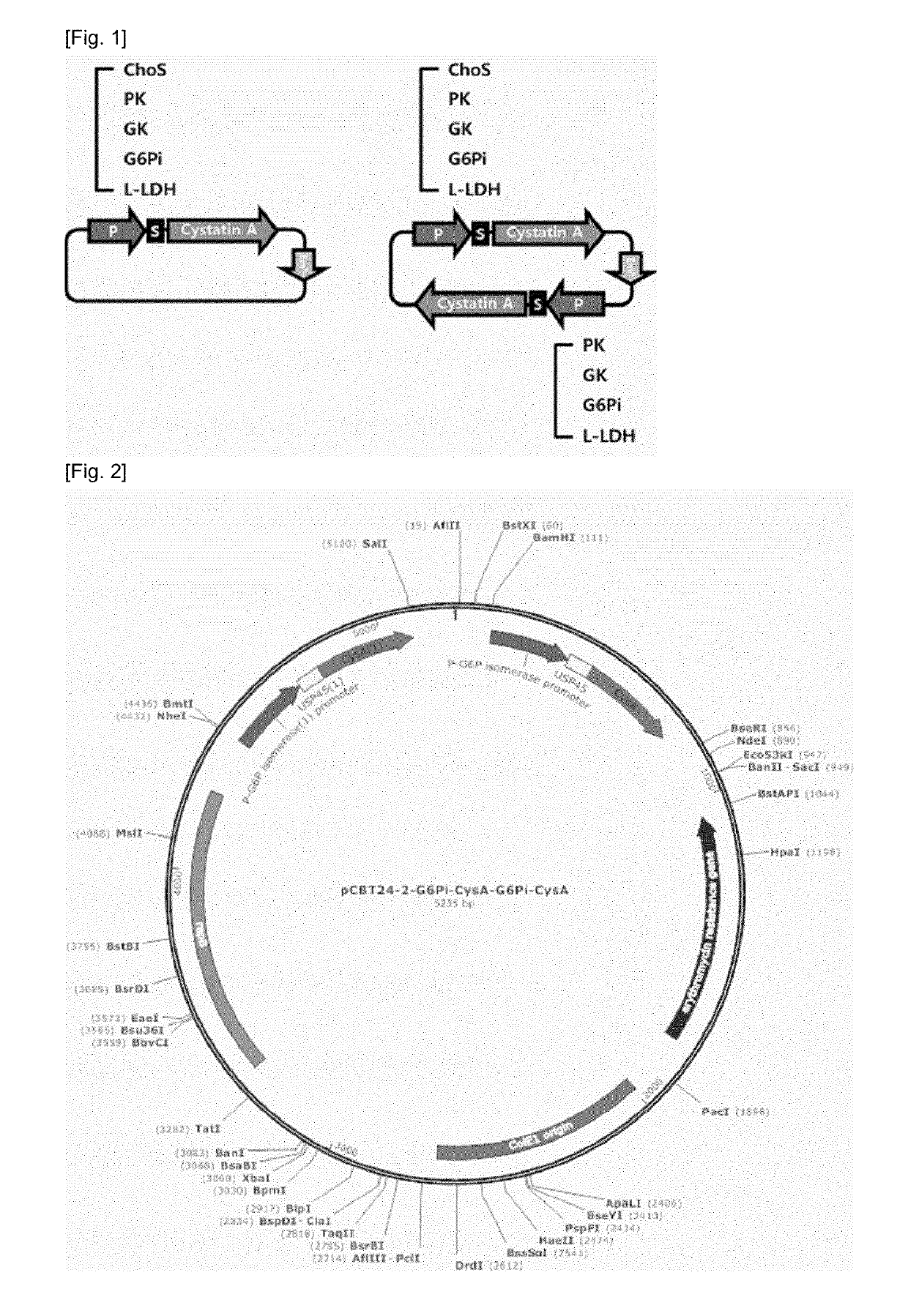
[0074]Five strong promoters (ChoS, L-carnitine, choline ABC transporter, permease protein; PK, pyruvate kinase; GK, glucokinase; G6Pi, glucose 6-phosphoate isomerase; and L-LDH, L-lactate dehydrogenase) for expression of a target protein (cystatin A) in lactic acid bacteria were selected from the glycolysis metabolic pathway. A host for expression of the target protein was Pediococcus pentosaceus SL4 (accession number: KCTC 10297BP). A previous experiment demonstrated that the glucose consumption rate of the host was very high, and HPLC analysis indicated that nearly 100% of the consumed glucose was converted to the secondary metabolite L-lactate. For this reason, of the promoters, four were selected from the glycolysis metabolic pathway, and one was selected from the secondary metabolite lactate production pathway.
example 1-2
n of System for Overexpression and Secretion of Target Protein
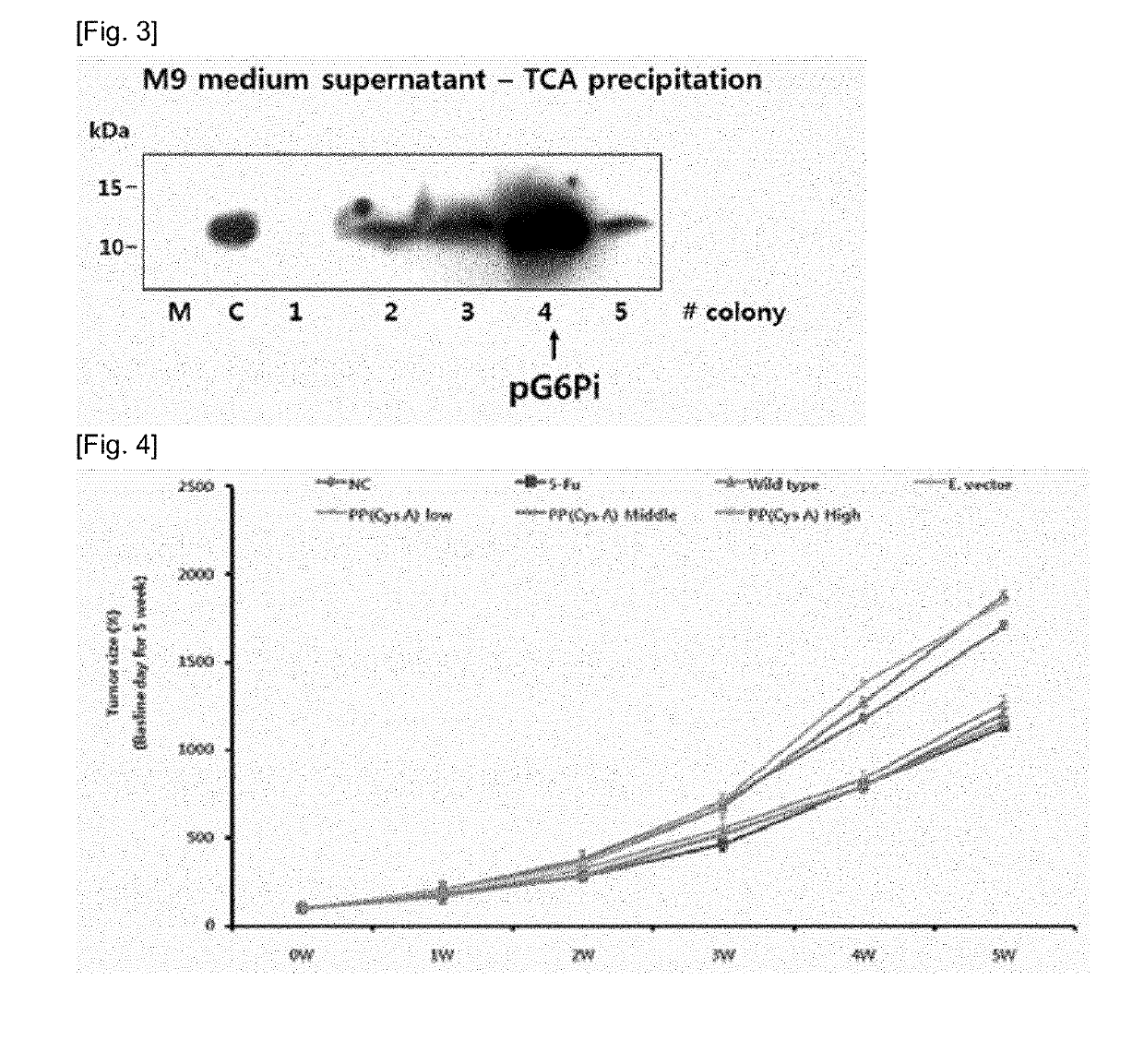
[0075]The plasmid pCBT24-2 (SEQ ID NO: 6) (KCCM12182P) was used for cloning of cystatin. The promoters selected in Example 1-1 were cloned with the DNA sequence encoding the usp45 secretion signal peptide [N-MKKKIISAILMSTVILSAAAPLSGVYA-C] derived from Lactococcus lactis, thereby constructing DNA plasmids in the form of promoter-secretion signal peptide-cystatin A (CysA). BamHI / Pstl restriction enzyme sites were inserted into each promoter ligated with the secretion signal peptide. The constructed plasmids were as follows:
[0076]pCBT24-2-ChoS-usp45-CysA,
[0077]pCBT24-2-PK-usp45-CysA,
[0078]pCBT24-2-GK-usp45-CysA,
[0079]pCBT24-2-G6Pi-usp45-CysA, and
[0080]pCBT24-2-L-LDH-usp45-CysA.
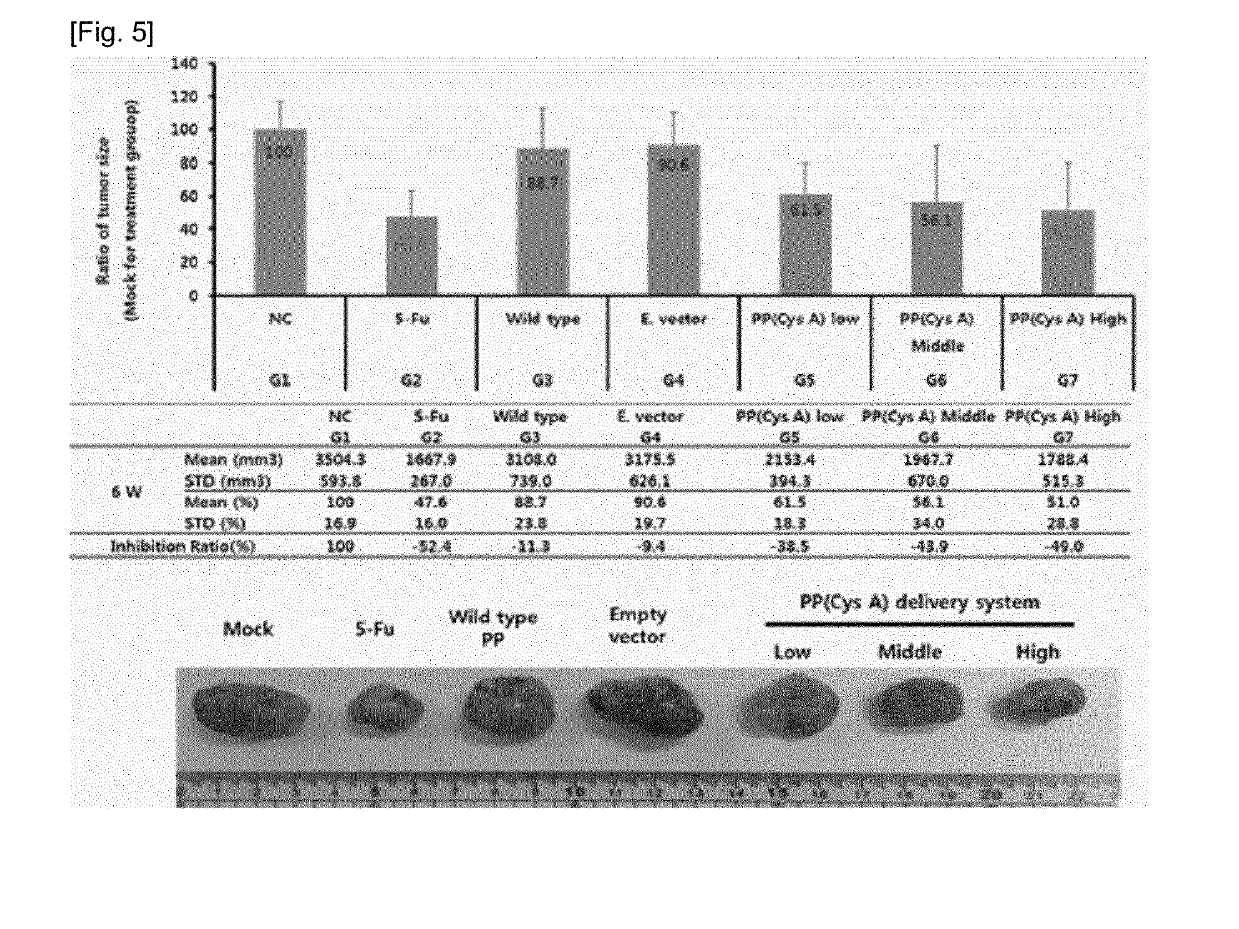
[0081]Each of the plasmids was transformed into Pediococcus pentosaceus SL4 (accession number: KCTC 10297BP). The level of expression / secretion induced by each of the promoters was measured, and then promoters showing high activities were combined with...
PUM
| Property | Measurement | Unit |
|---|---|---|
| Angle | aaaaa | aaaaa |
| Therapeutic | aaaaa | aaaaa |
| Strain point | aaaaa | aaaaa |
Abstract
Description
Claims
Application Information
 Login to View More