
Bump and fabricating process thereof
a technology of bump and fabrication process, which is applied in the direction of semiconductor devices, electrical devices, semiconductor/solid-state device details, etc., can solve the problems of increasing complexity, functionally powerful and highly personalized electronic products, and affecting the final contact with the adhesion layer b>120/b>, so as to increase the mechanical strength of the barrier layer within the bump structure and prevent the bump structure from peeling off the chip
- Summary
- Abstract
- Description
- Claims
- Application Information
AI Technical Summary
Benefits of technology
Problems solved by technology
Method used
Image

Examples
Embodiment Construction
Reference will now be made in detail to the present preferred embodiments of the invention, examples of which are illustrated in the accompanying drawings. Wherever possible, the same reference numbers are used in the drawings and the description to refer to the same or like parts.
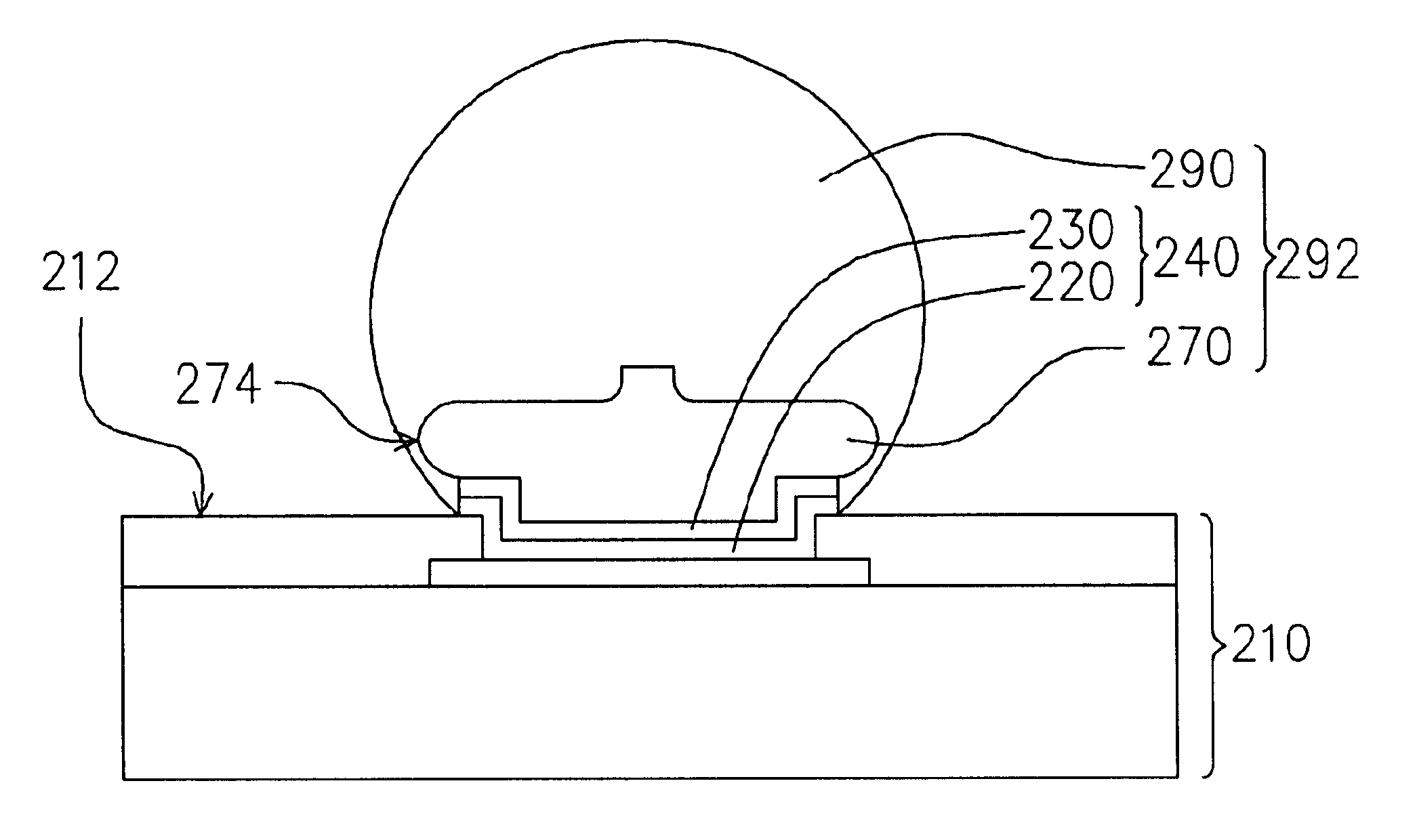
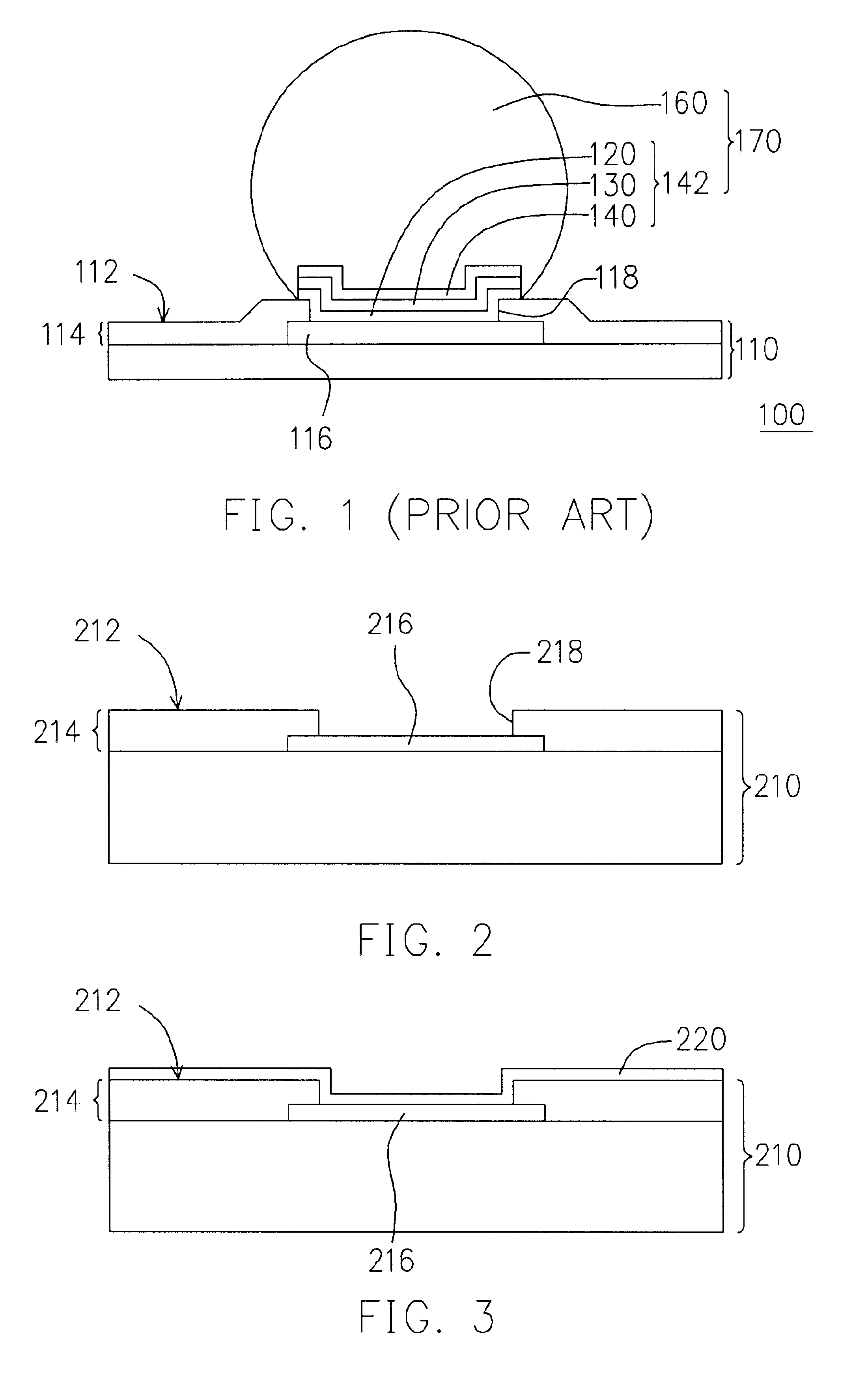
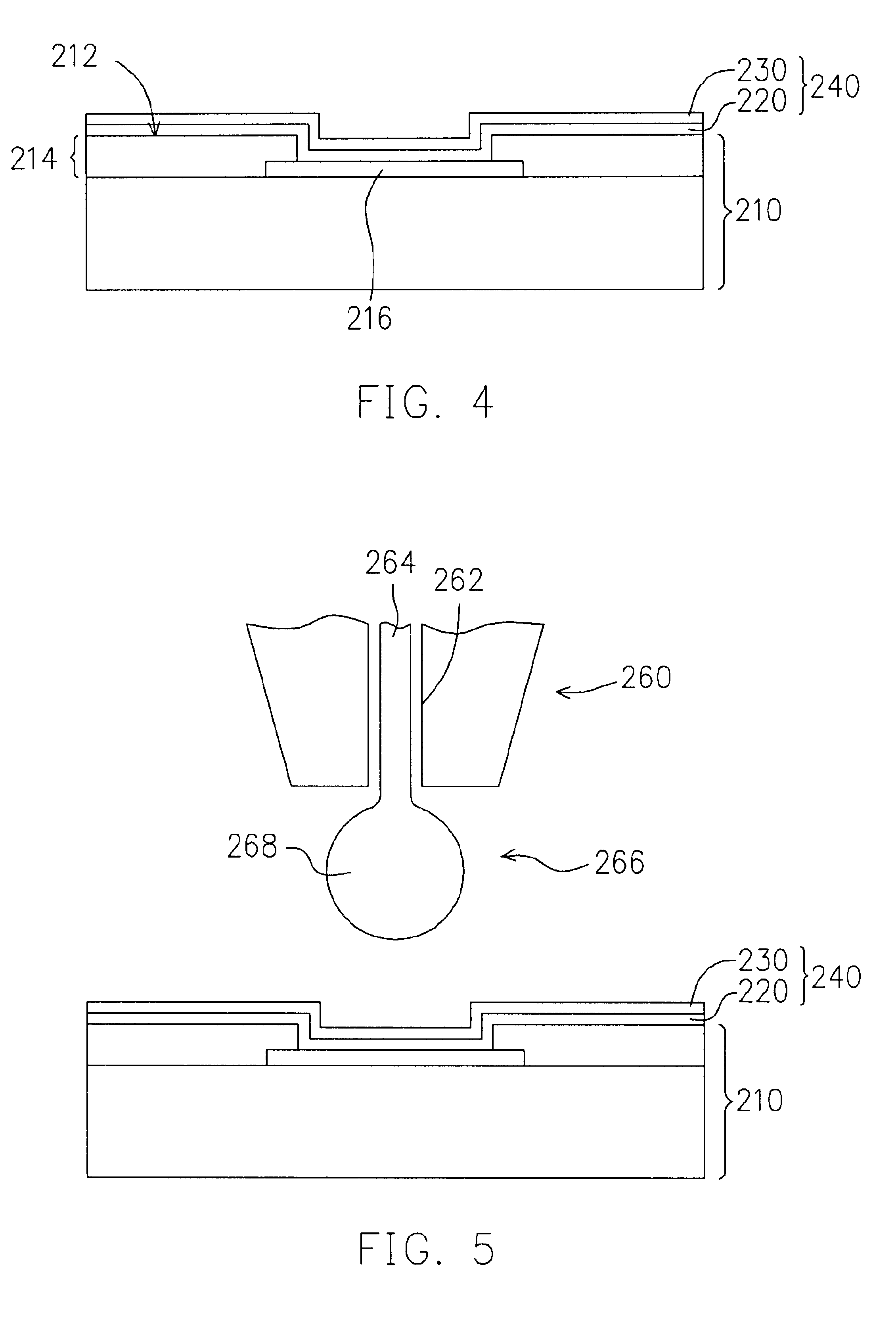
FIGS. 2 to 10 are magnified cross-sectional views showing the progression of steps for fabricating a bump structure according to one preferred embodiment of this invention. First, as shown in FIG. 2, a silicon wafer 210 is provided. The wafer 210 has an active surface 212. The active surface 212 has a passivation layer 214 and a plurality of contact pads (only one is shown in FIG. 2) thereon. The passivation layer 214 has a plurality of openings 218 each exposing a contact pad 216. The passivation layer 214 may be an inorganic compound layer such as a silicon oxide layer or a phosphosilicate glass (PSG) layer. Alternatively, the passivation layer 214 may be a composite layer comprising a stack of the afore...
PUM
 Login to View More
 Abstract
Description
Claims
Application Information
 Login to View More