
Magnetoresistance effect device
a technology of magnetoresistance and effect, which is applied in the field of magnetoresistance effect devices, can solve the problems of reducing the effect of protective film on the protection device from oxidation, reducing the rate of change of magnetoresistance of the device, and reducing the output of the head, etc., and achieves excellent characteristics and good characteristics
- Summary
- Abstract
- Description
- Claims
- Application Information
AI Technical Summary
Benefits of technology
Problems solved by technology
Method used
Image

Examples
Embodiment Construction
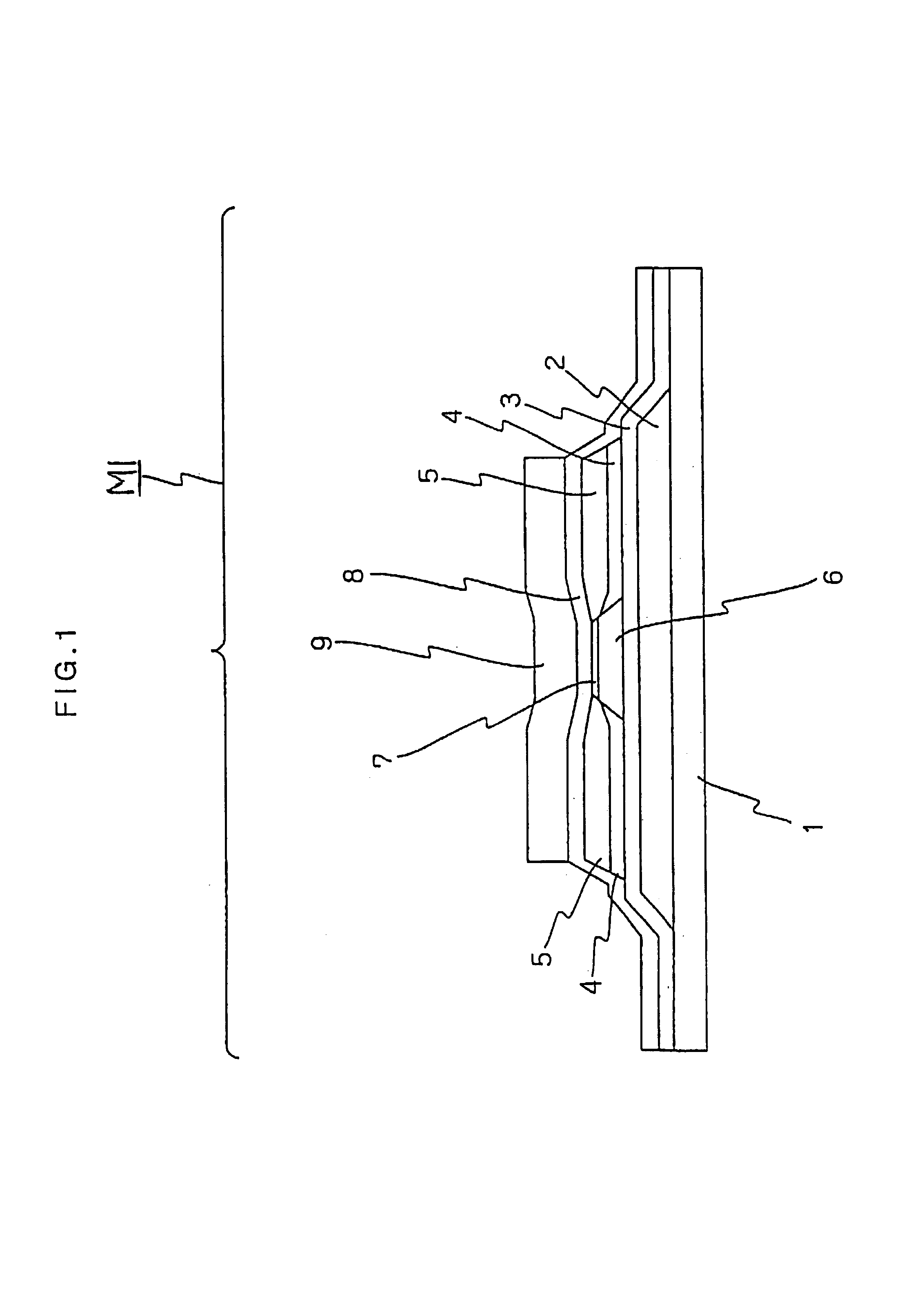
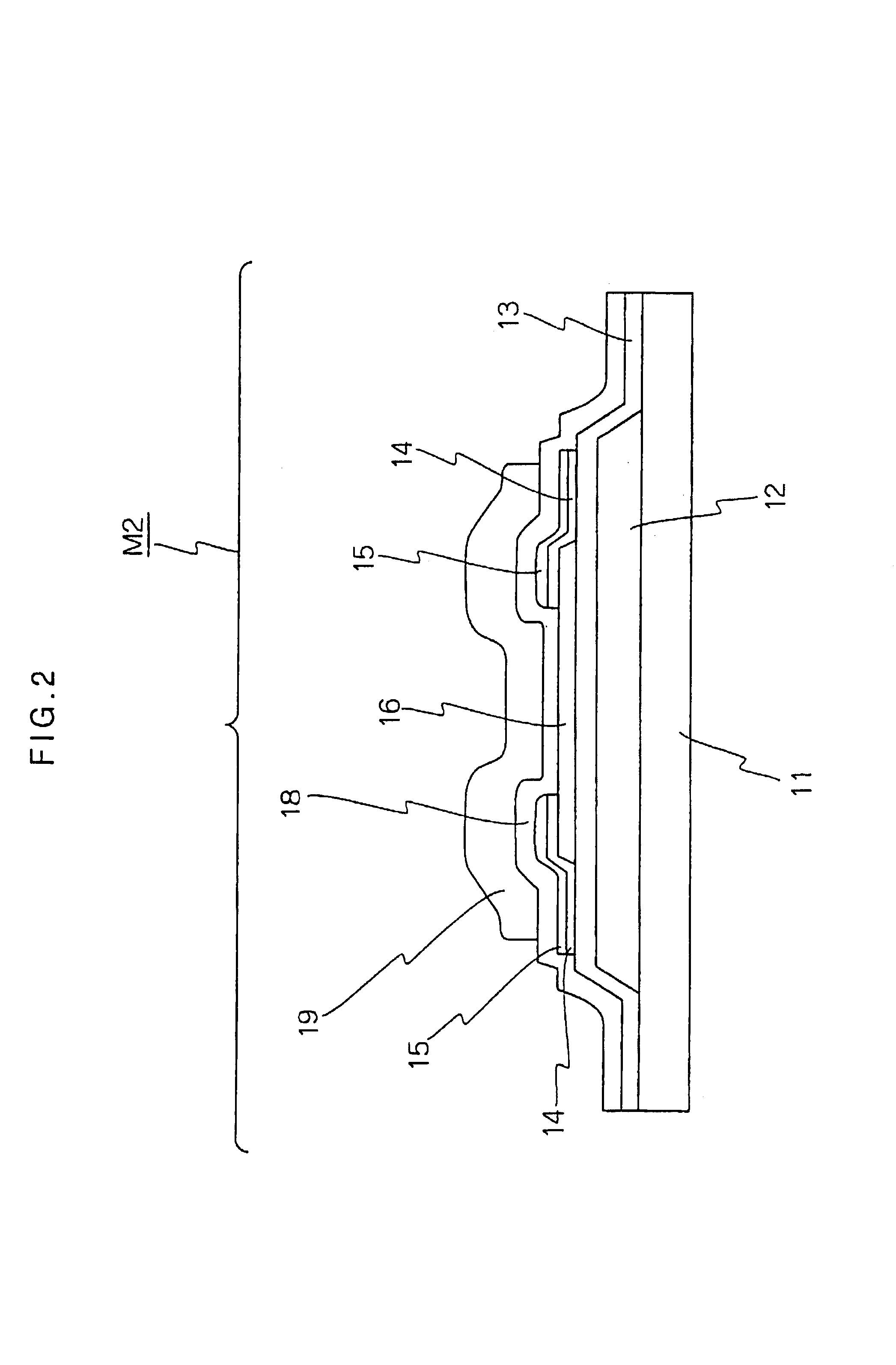
[0054]For a shielded type magnetoresistance effect sensor according to the present invention, the construction shown in FIG. 1 and FIG. 2 may be employed.
[0055]In the magnetoresistance effect sensor M1 of FIG. 1, a lower shielding layer 2, a lower gap layer 3 and a magnetoresistance effect device 6 are laminated onto a substrate 1. A gap-defining insulating layer 7 may be laminated on top of these. Lower shielding layer 2 is usually patterned to the appropriate size by a photoresist (PR) step. Magnetoresistance effect device 6 is patterned to the appropriate size and shape by a photoresist (PR) step and a vertical bias layer 4 and lower electrode layer 5 are laminated in sequence so as to join at their edges. Upper gap layer 8 and upper shielding layer 9 are laminated in sequence on top of these.
[0056]In the magnetoresistance effect sensor M2 of FIG. 2, a lower shielding layer 12, a lower gap layer 13 and a magnetoresistance effect device 16 are laminated onto a substrate 11. Lower ...
PUM
| Property | Measurement | Unit |
|---|---|---|
| thickness | aaaaa | aaaaa |
| thickness | aaaaa | aaaaa |
| atomic number ratio | aaaaa | aaaaa |
Abstract
Description
Claims
Application Information
 Login to View More