On-chip tunable artificial tank circuit
a tank circuit and artificial tank technology, applied in the field of tuned circuits, can solve the problems of low performance of inductors, difficult to minimize, and noise in electrical circuits, and achieve the effects of reducing manufacturing costs, reducing noise, and reducing on-chip layout area
- Summary
- Abstract
- Description
- Claims
- Application Information
AI Technical Summary
Benefits of technology
Problems solved by technology
Method used
Image

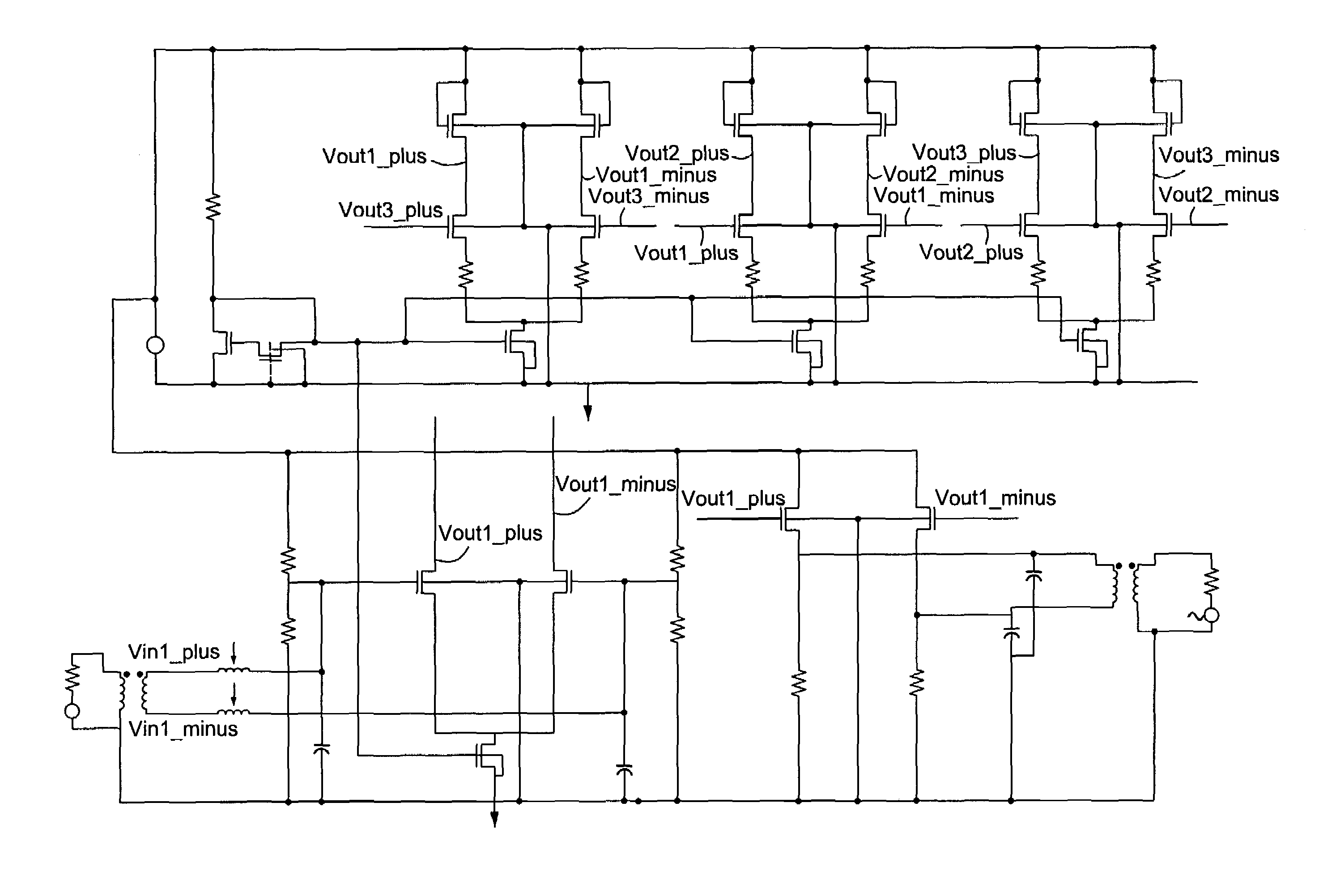
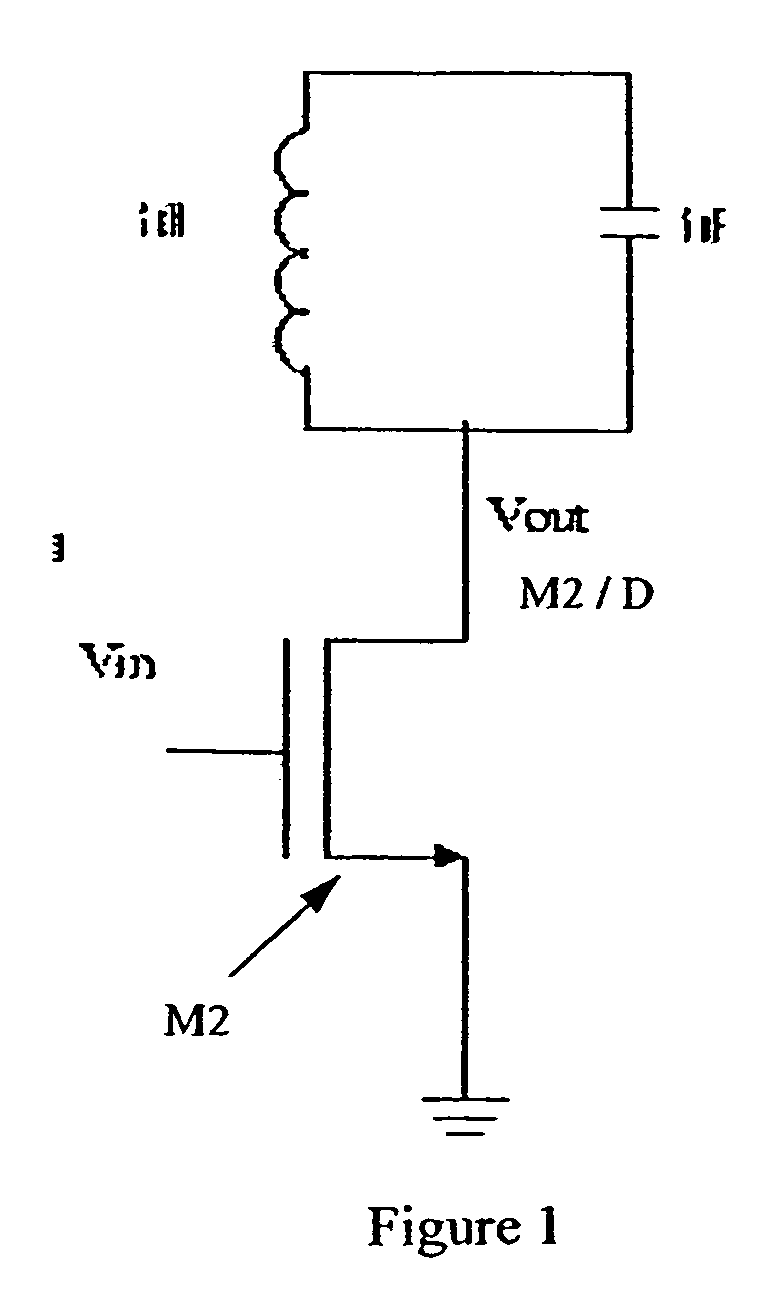
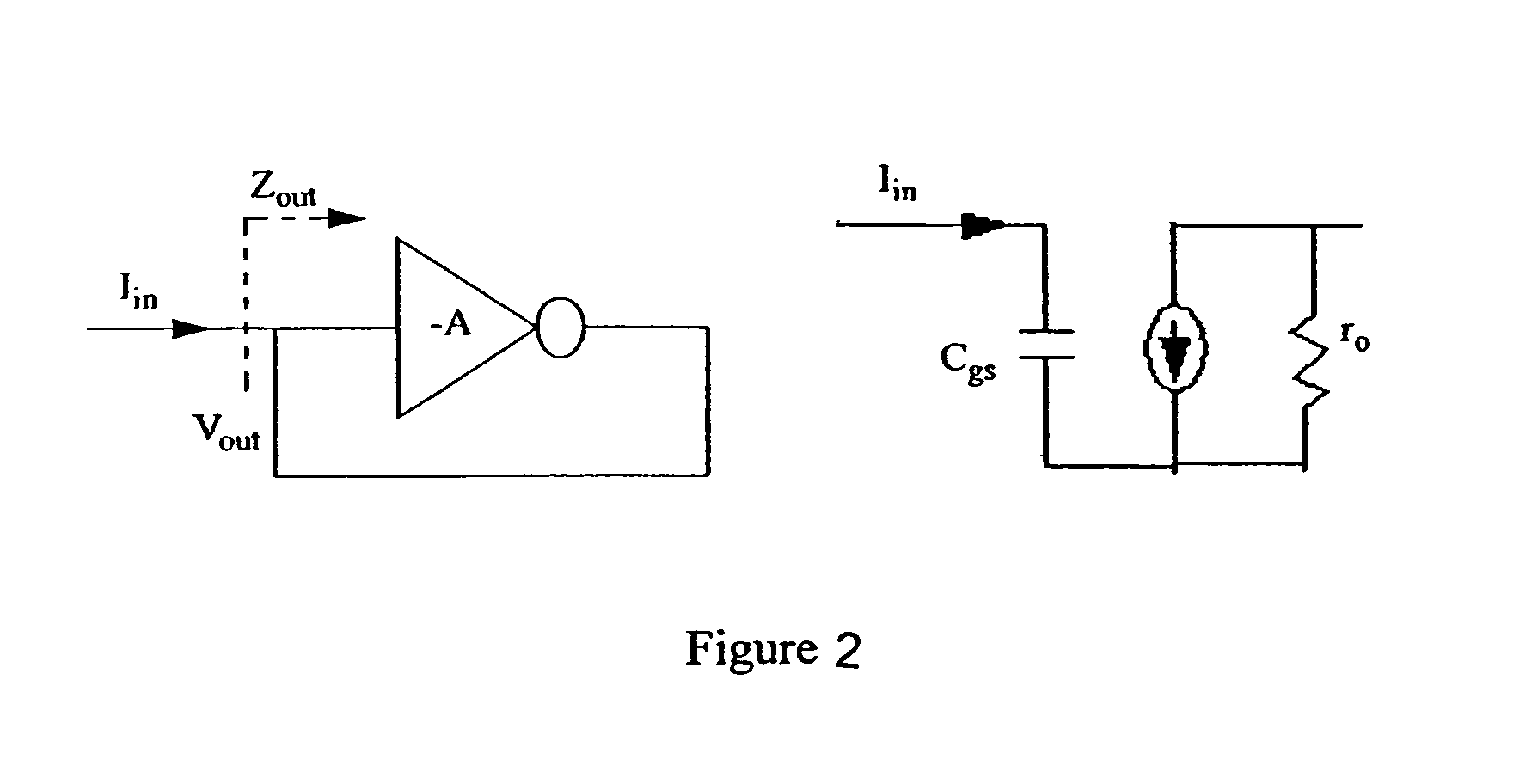
Examples
Embodiment Construction
[0054]The perfect ideal LC-tank behaves like an oscillator or a resonator because it oscillates indefinitely once a certain amount of energy is put into it via an initial current or voltage. Real LC-resonators do not store energy indefinitely: they have loss through parallel and series parasitic resistances in the inductor and the capacitor. The equivalent resistance parallel to the LC-tank is the result of two parallel resistances: the intrinsic parallel resistance of the LC-tank and the output resistance of the amplifying transistor. This is what causes the loss in the energy of the tank. In short, an LC-tank used as the load impedance for an amplifying transistor oscillates at a particular frequency when an input signal is present, and does not oscillate when there is no input signal (for stability).
[0055]Using a similar concept for the artificial tank, a device that is an oscillator by nature but does not oscillate without an input signal is used, for stability purposes. In elec...
PUM
 Login to View More
 Abstract
Description
Claims
Application Information
 Login to View More
 - R&D
- Intellectual Property
- Life Sciences
- Materials
- Tech Scout
- Unparalleled Data Quality
- Higher Quality Content
- 60% Fewer Hallucinations
Browse by: Latest US Patents, China's latest patents, Technical Efficacy Thesaurus, Application Domain, Technology Topic, Popular Technical Reports.
© 2025 PatSnap. All rights reserved.Legal|Privacy policy|Modern Slavery Act Transparency Statement|Sitemap|About US| Contact US: help@patsnap.com