
Process for determining S-nitrosothiols in biological fluids
a technology of biological fluids and s-nitrosothiols, which is applied in the field of process for determining the content of s-nitrosothiols, can solve the problems of high cost of hplc apparatuses, difficult to meet the requirements of dedicated measuring systems, and the need for each test to take a long time, etc., and achieves the effect of easy and cheap
- Summary
- Abstract
- Description
- Claims
- Application Information
AI Technical Summary
Benefits of technology
Problems solved by technology
Method used
Image

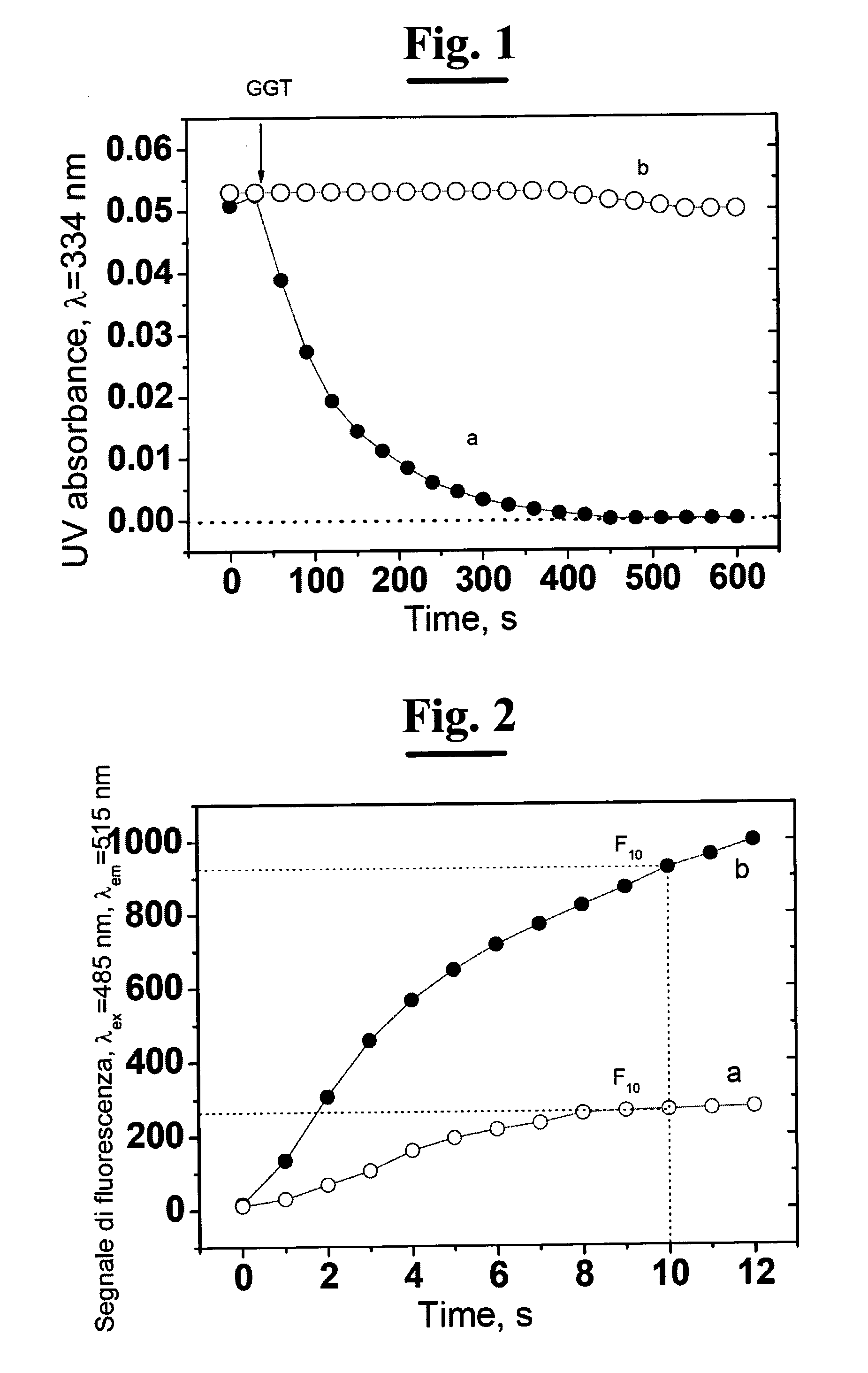
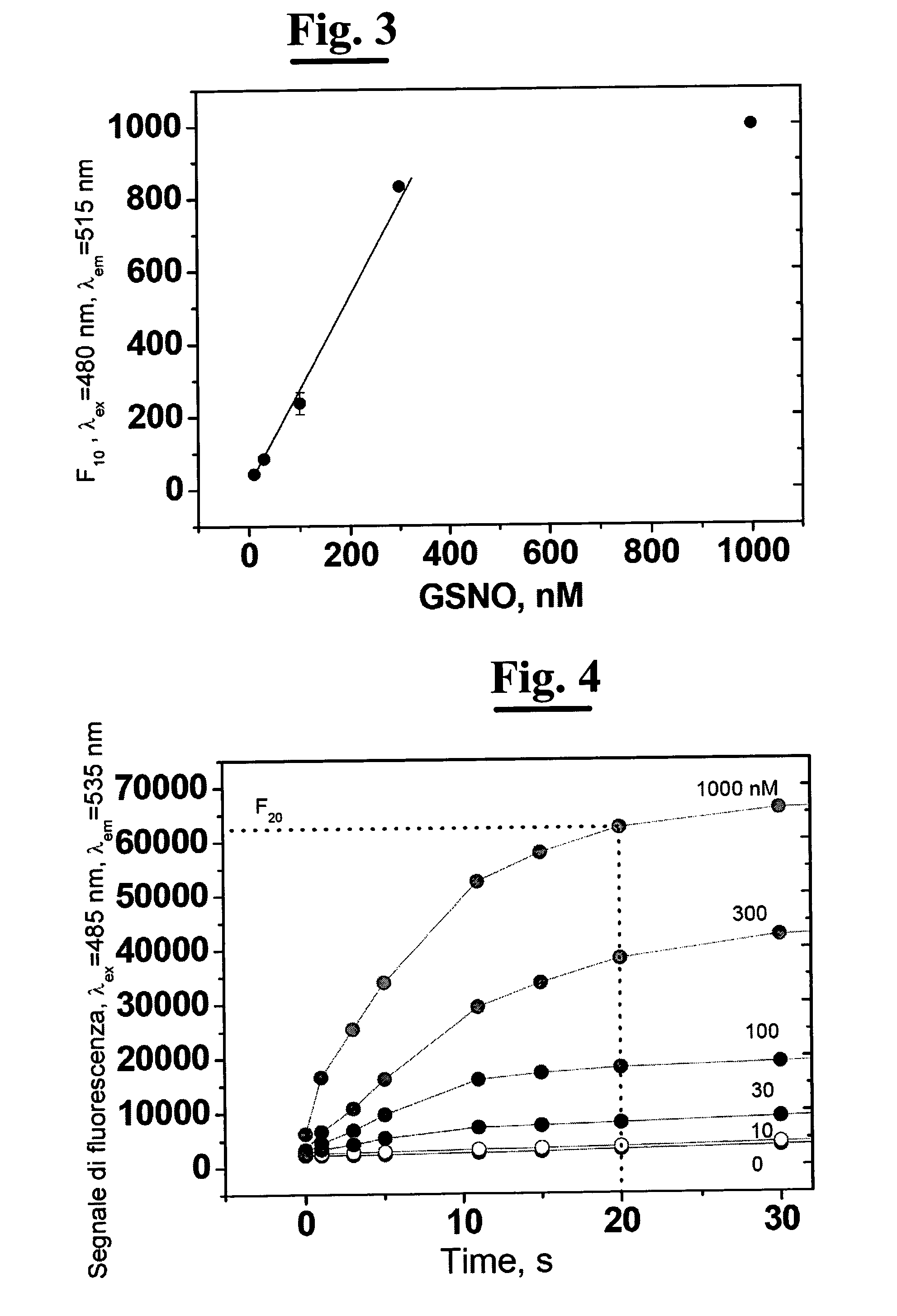
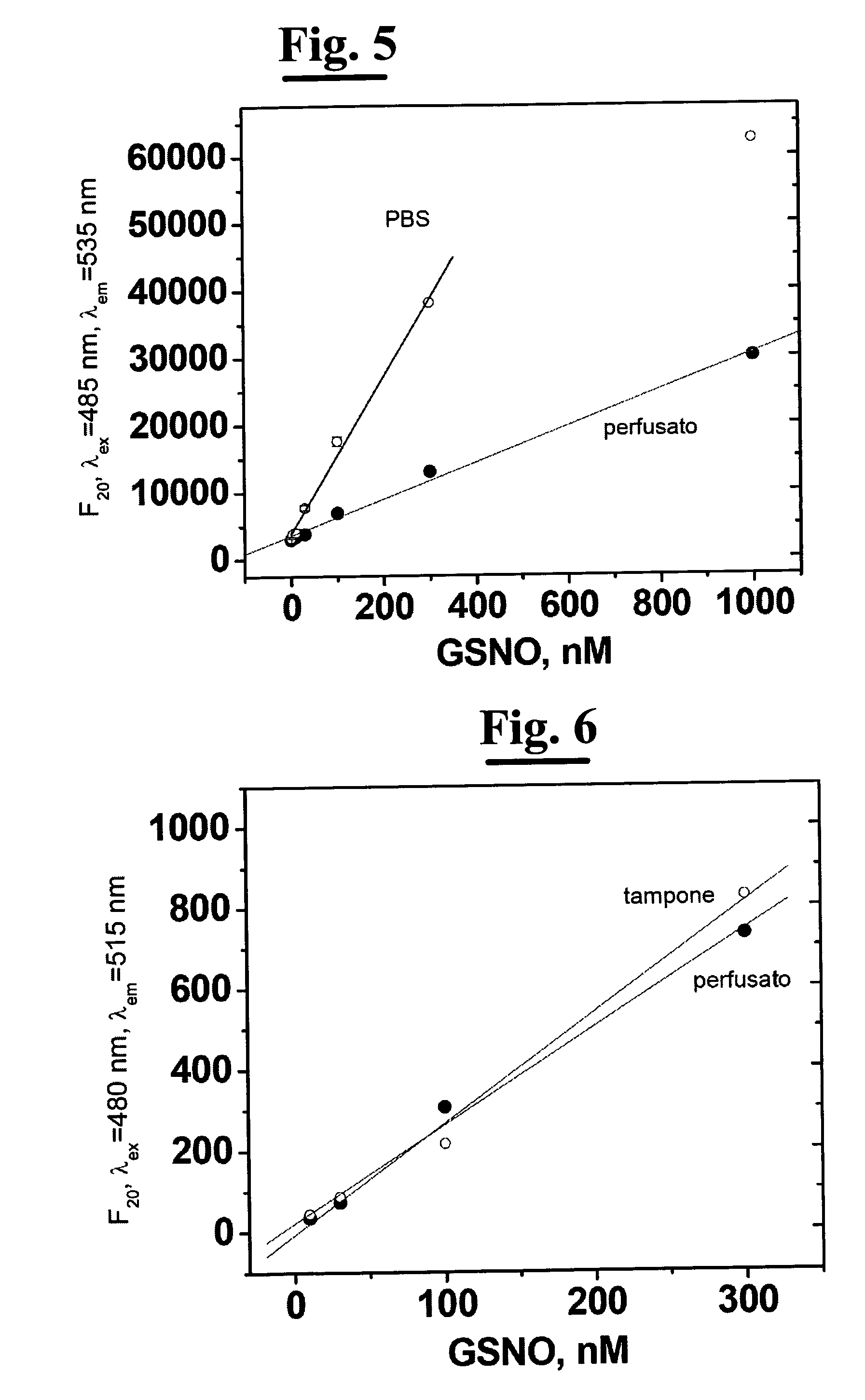
Examples
example 2
Computing Mouse Heart Perfusate Gsno By Spectrofluorimeter
A) Preparing the Standard for Calibration Curve and the Reagents
[0137]a) Preparing 1 mL of standard solutions of GSNO (1, 3, 10, 30 and 100 uM) in phosphate buffer 0.1 M, pH 8.0, 0.5 mM EDTA (ethylendiaminetetraacetic acid );[0138]b) Preparing 10 mL of solution of 200 mM GlyGly in 0.1 mM phosphate buffer and adjusting the pH to 8.0 with 0.1 M NaOH;[0139]c) Preparing a solution of 12 U / mL GGT (5 mL) in phosphate buffer 0.1 M, pH 8.0;[0140]d) Preparing a solution of 10 mM Cu(SO4) (5 mL) in bidistilled and deionized water;[0141]e) Preparing a 10 mM NEM solution (5 mL) in bidistilled and deionized water;[0142]f) Preparing a 10 uM DAF solution (1 mL) in 0.1 M, pH 8.0 phosphate buffer;
B) Preparing the Sample[0143]a) For each determination 500 uL of isolated and perfused mouse heart perfusate are needed in Langendorff system collected in 0.5 mM EDTA.[0144]b) Adding to the perfusate the mother solution in order to obtain a final conc...
example 3
Computing Gsno in Human Plasma
A) Preparing the Standard for Calibration Curve and the Reagents
[0163]a) Preparing 0.5 mL of standard solutions of GSNO (10, 30, 50, 100, 300, 500 1000nM) in phosphate buffer 0.1 M, pH 8.0;[0164]b) Preparing 10 mL of 200 mM GlyGly solution in phosphate buffer 0.1 M and adjusting the pH to 8.0 with 0.1 M NaOH;[0165]c) Preparing a solution of 100 U / mL GGT (10 mL) in 0.1 M, pH 8.0 phosphate buffer;[0166]d) Preparing a solution of 10 mM Cu(SO4) (5 mL) in bidistilled and deionized water;[0167]e) Preparing a 100 mM NEM solution (5 mL) in bidistilled and deionized water;[0168]f) Preparing a 500 uM DAF solution (5 mL) in phosphate buffer 0.1 M, pH 8.0.
B) Preparing the Chromatographic Eluent Phase and Description of the Chromatographic Separation Conditions[0169]a) Chromatographic column: reverse phase column (RPC) of type C18 with particles of 5 um diameter, length 25 cm, diameter 4.6 mm (for example Gemini Phenomenex column);[0170]b) Eluent: 20 mM phosphate bu...
PUM
| Property | Measurement | Unit |
|---|---|---|
| half life | aaaaa | aaaaa |
| pH | aaaaa | aaaaa |
| concentration | aaaaa | aaaaa |
Abstract
Description
Claims
Application Information
 Login to View More