
Catalyst for selective oxidation of sulfureted hydrogen into elemental sulfur and reaction process thereof
A catalyst, hydrogen sulfide technology, applied in the direction of metal/metal oxide/metal hydroxide catalyst, physical/chemical process catalyst, sulfur preparation/purification, etc., can solve the problems of reducing sulfur yield, complex structure and high cost , to achieve the effect of high conversion rate and good low temperature activity
Patent Information
- Authority / Receiving Office
- CN · China
- Patent Type
- Applications(China)
- Current Assignee / Owner
- Publication Date
- 2009-03-11
- Estimated Expiration
- Not applicable · inactive patent
Smart Images
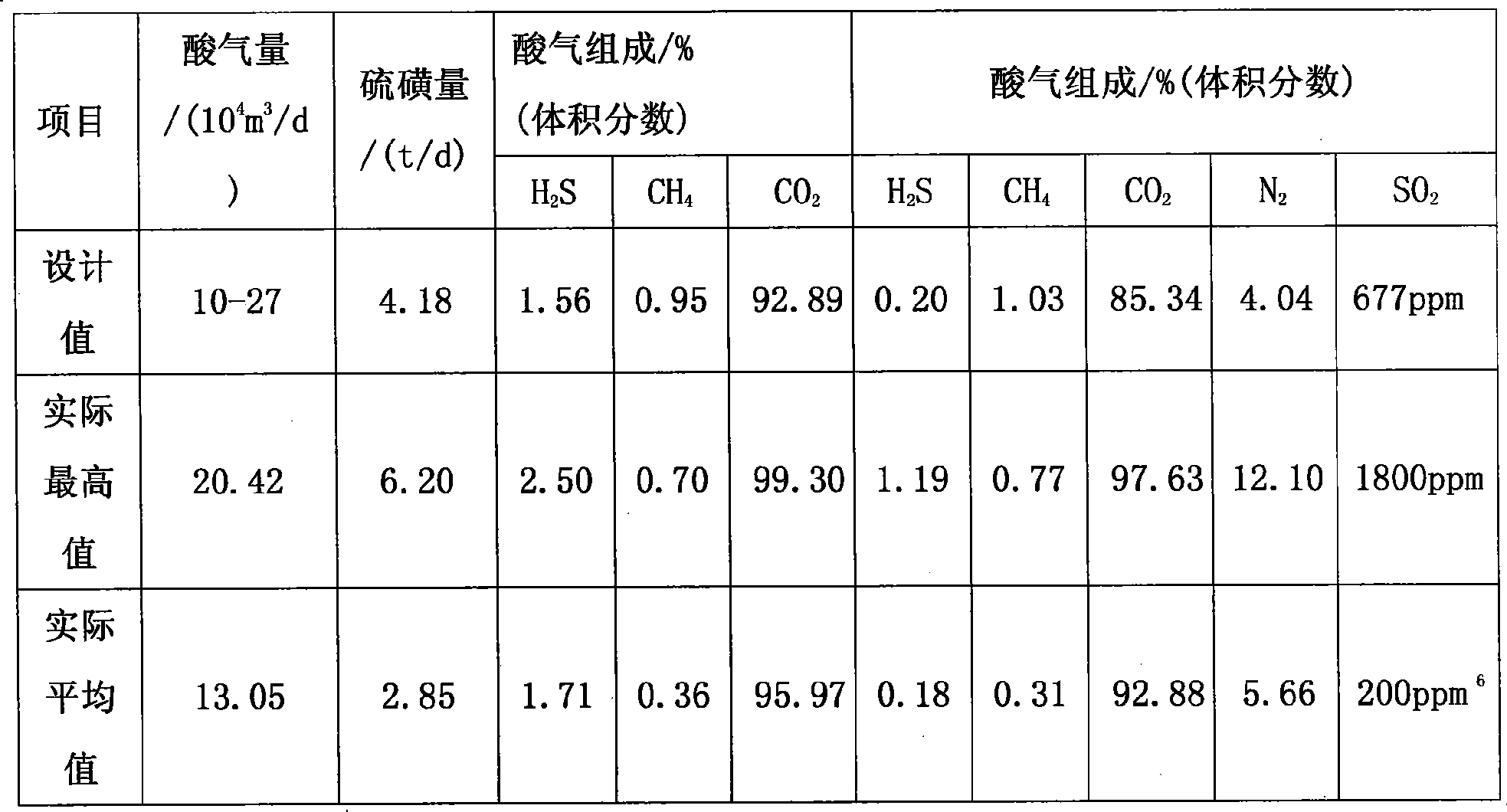
Figure 1 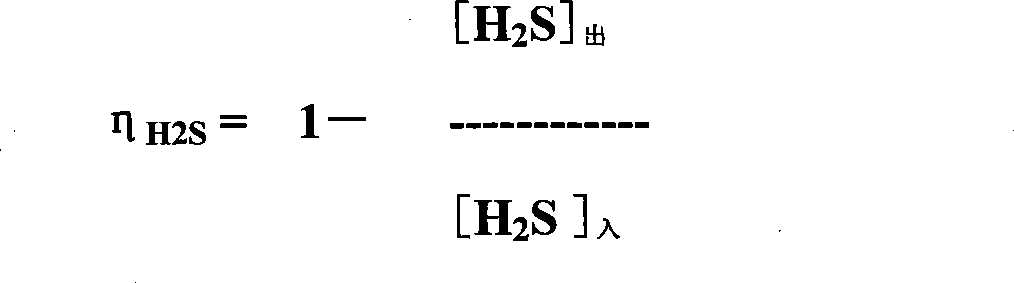
Figure 2 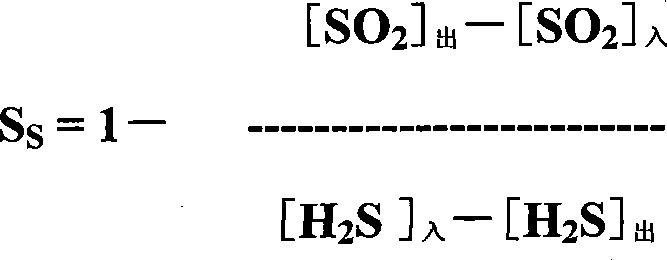
Figure 3
Abstract
Description
technical field
[0001] The invention relates to a catalyst and a reaction process for selectively oxidizing hydrogen sulfide into elemental sulfur. Background technique
[0002] Among the process technologies for treating sulfur-containing industrial gases, the well-known technology is the Claus process. i.e. using H 2 Partial combustion of S to form SO 2 , and then with the remainder of the H 2 S performs a Claus reaction. The specific chemical formula is as follows:
[0003] h 2 S+3 / 2O 2 → SO 2 +H 2 o
[0004] 2H 2 S+SO 2 →3 / n Sn+2H 2 o
[0005] Since the Claus reaction is limited by thermal equilibrium, H 2 The S conversion rate is not high, and multi-stage conversion is required. At present, the highest H in the three-stage Claus device 2 S conversion rate ≤ 98%, the tail gas still contains 1-3% H 2 S. In addition, as the development of coal chemical industry tends to be large-scale, the decarbonization and desulfurization process mostly adopts technolog...
Examples
Embodiment 1
[0035] Wash industrial metatitanic acid with deionized water to ensure that (SO 4 ) -2 ≤0.1%, dried at 120°C for 4 hours, crushed to 180 mesh. Get above-mentioned 160g of metatitanic acid and 40g of industrial activated alumina powder and 4g of turnip powder and mix evenly. Weigh 24.3g (NH 4 ) 3 Fe(·C 6 h 5 o 7 ) 2 and 5.4g Cr 2 (C 2 o 4 ) 3 4H 2 O, dissolved in distilled water, with HNO 3 After adjusting the pH value of the solution to 4-5, add it to the above powder and stir, knead, extrude into a Φ4.0mm columnar shape, dry naturally at room temperature for 8 hours, dry at 120°C for 2 hours and roast at 450°C for 4 hours. The catalyst sample A was obtained. Its chemical composition is: TiO 2 81.2% (m / m), containing iron, 8.1% chromium oxide, the measured specific surface area of the sample is 128m 2 / g, crushing strength 134N / cm, activity results are shown in Table 1.
Embodiment 2
[0037] The catalyst prepared in Example 1 is broken into 20 mesh-10 mesh particle size, and 10ml of sample is packed into a stainless steel reactor with an internal diameter of Φ18mm, and a layer of quartz sand with a thickness of 4cm is placed on it to ensure that the reactor is evenly mixed and reacted. The inlet gas contains H 2 S1% (V), O 2 0.8% (V), H 2 O10% (V), the rest is N 2 . The activity of the catalysts was evaluated using a small laboratory setup.
[0038] All tests are carried out under typical conditions of 180, 200, 220, 240°C and 2000h-1 high space velocity. Gas volume composition H 2 S: 1.0%, CO 2 :98,O 2 :0.8%. h 2 S conversion rate η H2s %, selectivity S s % and sulfur yield S% are calculated as follows:
[0039]
[0040]
[0041]