Protective method for hearth of vanadium titano-magnetite rotary hearth furnace used for coal-based direct reduction

A rotary hearth furnace bottom, vanadium-titanium magnetite technology, applied in the manufacture of converters, etc., can solve the problems of worn out discharge spiral, titanium slag pollution, titanium slag pollution, etc., achieve simple manufacturing and maintenance, and prolong service life , easy maintenance effect

CN101514383AActive Publication Date: 2009-08-26SICHUAN LOMON MINING & METALLURGY
1 Cites 5 Cited by

Patent Information

Authority / Receiving Office
CN · China
Patent Type
Applications(China)
Current Assignee / Owner
Publication Date
2009-08-26

Smart Images

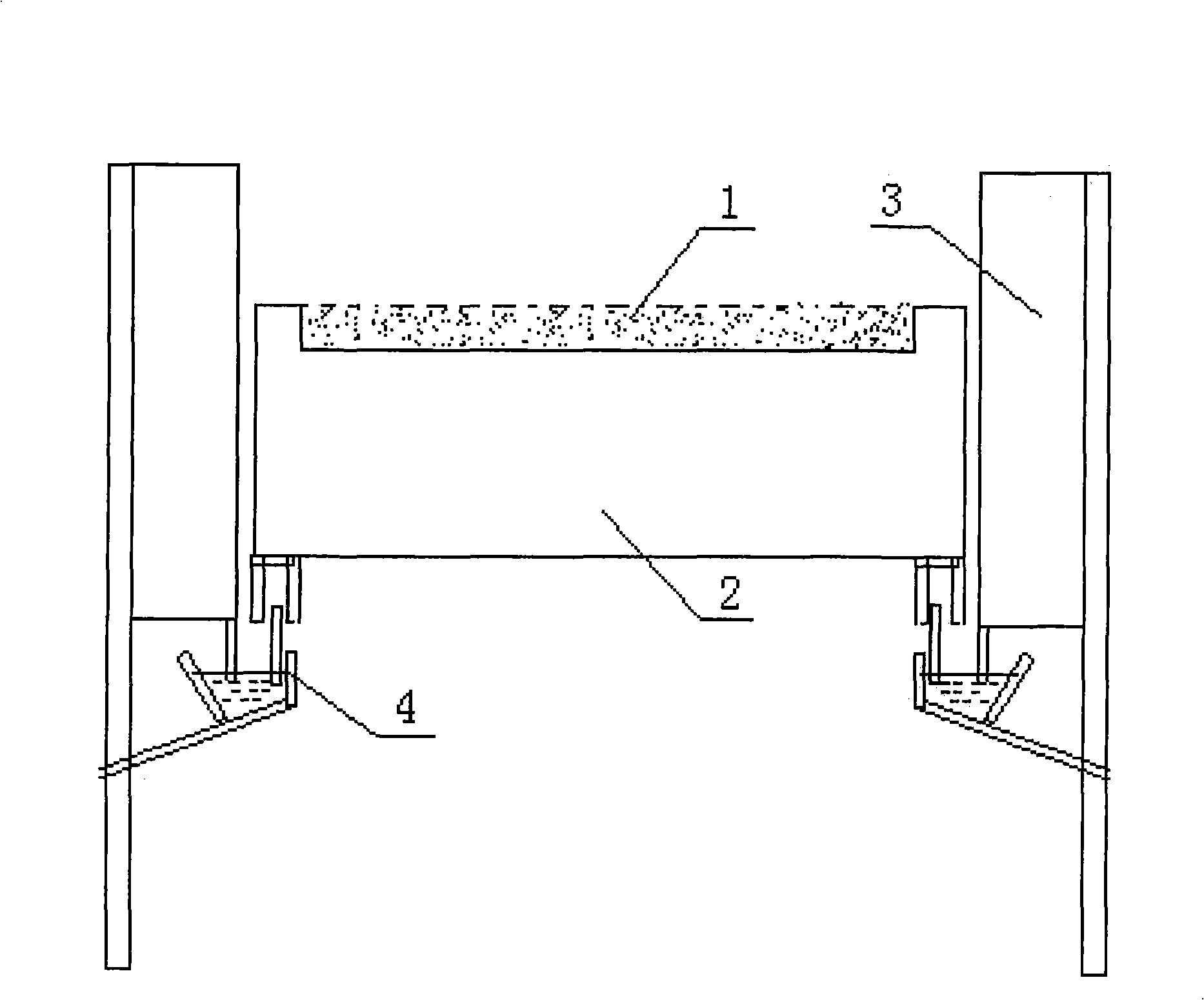
  • Figure 1
    Figure 1
Patent Text Reader

Abstract

The invention discloses a protective method for the hearth of a rotary hearth furnace used for the direct reduction of the vanadium titano-magnetite. A common refractory material is laid on the lower part of the hearth of the rotary hearth furnace; titanium slag obtained from a directly reduced metallic pellet which is subjected the electric furnace fusion and separation is crushed to 2 to 10mm and is laid on the refractory material on the surface of the hearth of the rotary hearth furnace. A soft hearth working surface is formed by the titanium slag between the refractory material on the surface of the hearth of the rotary hearth furnace and the reduced furnace charge; and then the preset thickness of the soft hearth working surface is reduced due to the loss, and the crushed titanium slag can be loaded into the hearth of the rotary hearth furnace. As the titanium slag has a higher fusion point, the vanadium titano-magnetite can be prevented from being atomized and sticking to the hearth in the 1,300 to 1,400 DEG C direct reduction process during use. As the hearth is a loose and soft hearth, the vanadium titano-magnetite does not stick to the hearth even with expansion. Therefore, the method has the advantages of protecting the hearth and a screw discharger, protecting the titanium slag from being polluted by the refractory material, bringing about the cycle use of the titanium slag, reducing the furnace maintenance cost, and having obvious economic and social benefits.
Need to check novelty before this filing date? Find Prior Art

Description

technical field

[0001] The invention relates to a furnace protection method for a rotary hearth furnace used for coal-based direct reduction, in particular to a method for protecting the bottom of a rotary hearth furnace where vanadium-titanium magnetite is made of titanium slag obtained by melting in an electric furnace . Background technique

[0002] The life of the rotary hearth furnace is an important indicator of the production of various metal elements in the direct reduction and comprehensive recovery of vanadium-titanium magnetite. According to our production practice, the cracking and damage of the bottom of the furnace are the decisive factors affecting the life of the rotary hearth furnace.

[0003] When the rotary hearth furnace directly reduces ordinary iron ore, since only iron is recycled and other elements are not recovered, the rotary hearth furnace mainly reduces iron oxides to metallic iron. This reduced iron is also called sponge iron. In the next step, ...

Examples

Embodiment Construction

[0020] Accompanying drawing is the furnace bottom schematic diagram of rotary hearth furnace. After reducing the vanadium-titanium magnetite through the rotary hearth furnace, all the reduced charge enters the electric furnace for melting, and after melting, the liquid titanium slag 1 from the electric furnace is broken to a certain particle size, and spread in the rotary hearth furnace made of refractory materials. On the surface layer of the furnace bottom 2, they are in direct contact with the charge. Below the titanium slag, the furnace bottom is built with ordinary refractory materials, and the vanadium-titanium magnetite lumps are laid on the titanium slag to form a "soft furnace bottom". Because the bottom of the furnace is "soft", it can avoid the phenomenon that the bottom of the furnace rises due to the expansion and bonding of the bottom of the refractory material, which plays a role in protecting the bottom of the furnace. As shown in the figure, since the furnace...