

Resin composition for urethane optical lens having excellent thermal resistance and reactivity
A resin composition and optical lens technology, applied in optics, optical components, instruments, etc., can solve the problems of reducing reactivity, lens whitening, liquid leakage, etc., to reduce the reaction temperature, solve the problem of bubbles at the edge, and solve the problem of whitening Effect
- Summary
- Abstract
- Description
- Claims
- Application Information
AI Technical Summary
Problems solved by technology
Method used
Image

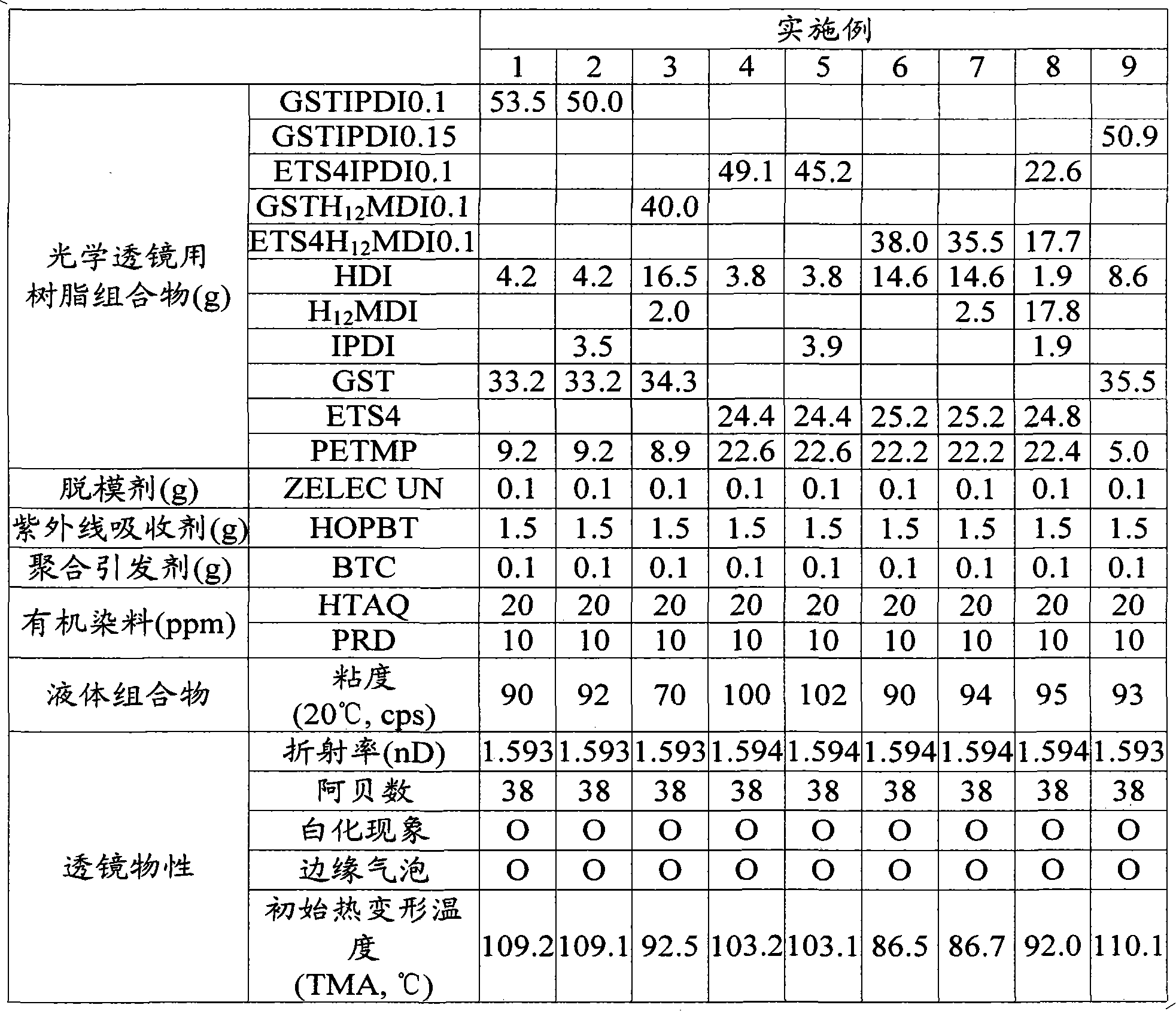
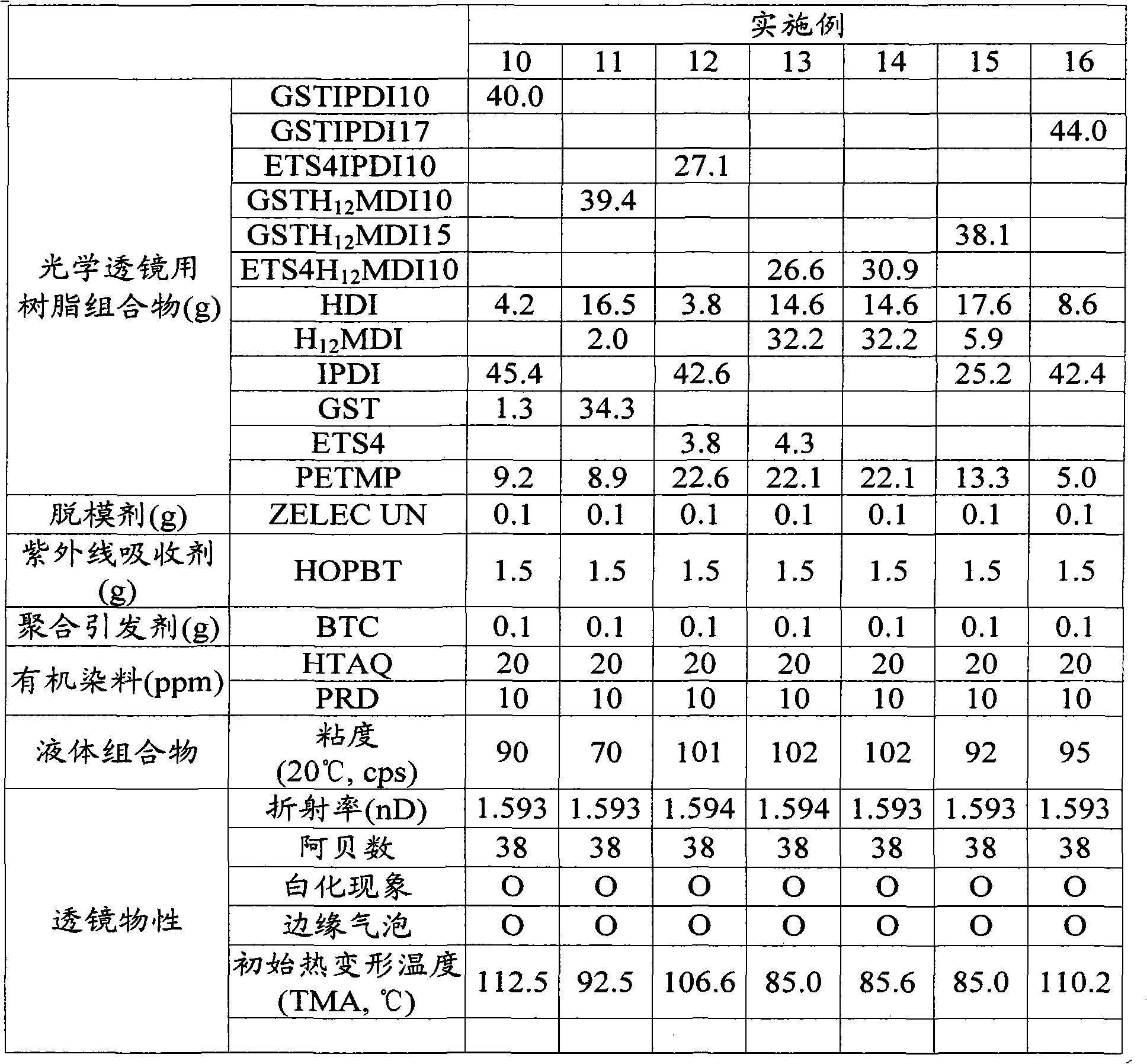
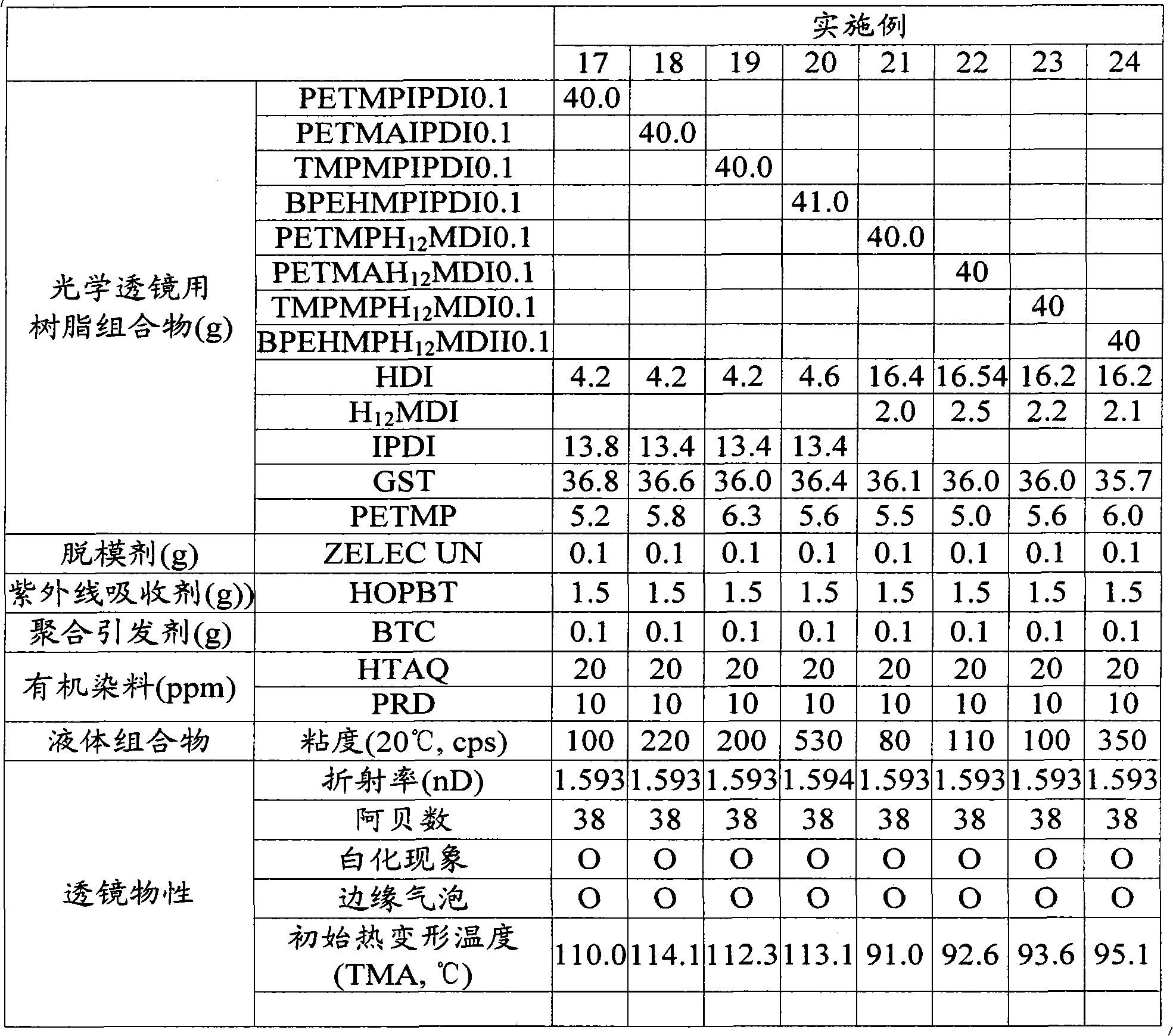
Examples
Embodiment 1
[0049] Resin composition for optical lens
[0050]To 49.6 g of isophorone diisocyanate (isophorone diisocyanate) was added 3.9 g of 2,3-bis(2-mercaptoethylthio)propane-1-thiol (2,3-bis(2-mercaptoethylthio) propane -1-thiol) and 0.01g of dibutyltin chloride (dibutyltindichloride), and under nitrogen reflux conditions with 80 ° C for 8 hours to prepare the optical resin prepolymer of GSTIPDI0.1 and after cooling at room temperature, 4.2 g of 1,6-hexamethylene-1,6-diisocyanate, 33.2 g of 2,3-bis(2-mercaptoethylthio)propane-1-thiol ( 2,3-bis (2-mercaptoethylthio)propane-1-thiol) and 9.2g of pentaerythritol tetrakismercaptopropionate (pentaerythritoltetrakismercaptopropionate) to prepare a resin composition for optical lenses.
[0051] manufacture lens
[0052] (1) Put the resin composition for optical lens prepared as above into a mixing container capable of vacuum defoaming and stirring and maintain a temperature of 15° C., mix 0.1 g of ZELEC UN, 1.5 g of 2-( 2-hydroxy-5-t...
Embodiment 2~24
[0063] Using the same method as in Example 1, the respective compositions and lenses were prepared with the compositions shown in Tables 1-3, and physical property tests were performed, and the test results are recorded in Tables 1-3.
PUM
 Login to View More
 Abstract
Description
Claims
Application Information
 Login to View More