Novel heterocyclic derivatives and pharmaceutical composition containing same
What is AI technical title?
AI technical title is built by Patsnap AI team. It summarizes the technical point description of the patent document.
A composition and medicine technology, applied in the field of novel heterocyclic derivatives and pharmaceutical compositions containing the same, can solve the problems of no record of analgesic receptor antagonism, no record of receptor antagonism, etc.
Inactive Publication Date: 2013-06-05
SHIONOGI & CO LTD
View PDF16 Cites 15 Cited by
Summary
Abstract
Description
Claims
Application Information
AI Technical Summary
This helps you quickly interpret patents by identifying the three key elements:
Problems solved by technology
Method used
Benefits of technology
Problems solved by technology
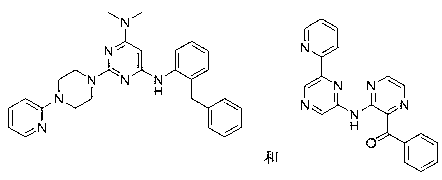
[0010] In Patent Documents 8, 9, 10, and 11, compounds having a structure similar to the compound of the present invention are described, but the analgesic effect and P2X 3 or P2X 2 / 3 Receptorantagonism Not documented
In addition, Non-Patent Document 8 describes a compound that has a structure similar to the compound of the present invention and exhibits analgesic activity, but for P2X 3 or P2X 2 / 3 Receptorantagonism not documented
Method used
the structure of the environmentally friendly knitted fabric provided by the present invention; figure 2 Flow chart of the yarn wrapping machine for environmentally friendly knitted fabrics and storage devices; image 3 Is the parameter map of the yarn covering machine
View more
Image
Smart Image Click on the blue labels to locate them in the text.
Viewing Examples
Smart Image
Click on the blue label to locate the original text in one second.
Reading with bidirectional positioning of images and text.
Smart Image
Examples
Experimental program
Comparison scheme
Effect test
Embodiment 1
[1843] Preparation of 1-(4-chlorobenzyl)-3-ethylamino-6-(4-isopropoxyphenylamino)benzene (I-071)
[1844] [chemical 120]
[1845]
[1846] To a mixture of 3-bromo-4-fluoro-1-nitrobenzene (1.0 g, 4.6 mmol) and DMSO (5 mL), potassiumcarbonate (1.01 mg, 7.3 mmol) and 4-isopropoxyaniline ( 1.03g, 6.8mmol), stirred at 100°C for 0.5 hours. Water (20 mL) was added to the reaction solution, followed by extraction with ethyl acetate (30 mL×2). The extract was washed with saturated brine (20 mL), dried over anhydroussodiumsulfate, and concentrated under reduced pressure. The obtained residue was purified by silica gelcolumn chromatography (ethyl acetate / hexane), and the obtained target product was solidified with ethyl acetate and hexane to obtain 3-bromo-4-(4-isopropoxy Phenylamino)-1-nitrobenzene (0.55g, yield: 35%).
[1857] Preparation of 1-(4-chlorobenzyl)-3-dimethylamino-6-(3-fluoro-4-isopropoxyphenylamino)benzene (I-123)
[1858] [chemical 122]
[1859]
[1860] To a mixture of 3-bromo-1-dimethylaminobenzene (0.3g, 1.5mmol) and THF (3mL), add 4-chlorobenzylzinc chloride (0.5MTHF solution, 6mL, 3mmol), triphenyl Phosphine (39.3mg, 0.15mmol) and palladium(II) acetate (17mg, 0.08mmol), stirred under reflux for 2 hours. Water (200 mL) was added to the reaction liquid, followed by extraction with ethyl acetate (200 mL). The extract was washed with saturated brine (100 mL), dried over anhydrousmagnesiumsulfate, and concentrated under reduced pressure. The resulting residue was purified by silica gelcolumn chromatography (ethyl acetate / hexane) to obtain 1-(4-chlorobenzyl)-3-dimethylaminobenzene (0.32 g, yield: 87 %).
[1862]To a mixture of 1-(4-chlorobenzyl)-3-dimethylaminobenzene (120mg, 0.5m...
Embodiment 3
[1867] Preparation of 1-(4-chlorobenzyl)-3-(3-hydroxypropyloxy)-6-(3-fluoro-4-isopropoxyphenylamino)benzene (I-076)
[1868] [chem 123]
[1869]
[1870] To the mixed solution of 5-hydroxyl-2-nitrobenzaldehyde (3.0g, 18mmol) and DMF (10mL), add potassiumcarbonate (3.23g, 23.3mmol) and (3-bromopropoxyl (tert-butyl) Dimethylsilane (5.56g, 21.5mmol), stirred overnight at room temperature. Add water (200mL) to the reaction solution, and extract with ethyl acetate (200mL×2). The extract is washed with saturated brine (200mL), washed with Dry over anhydroussodiumsulfate, then concentrate under reduced pressure.The resulting residue is purified by silica gelcolumn chromatography (ethyl acetate / hexane) to obtain 5-[3-(tert-butyldimethylsilane) in the form of light yellow oil Oxy)propyloxy]-2-nitrobenzaldehyde (3.0 g, yield: 49%).
the structure of the environmentally friendly knitted fabric provided by the present invention; figure 2 Flow chart of the yarn wrapping machine for environmentally friendly knitted fabrics and storage devices; image 3 Is the parameter map of the yarn covering machine
Login to View More
PUM
Login to View More
Abstract
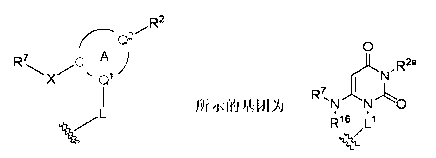
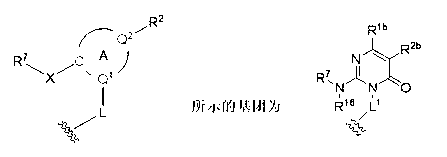
Disclosed is a novel compound that acts as an antagonist for P2X3 and / or P2X2 / 3 receptors. Also disclosed is a pharmaceutical composition that acts as an antagonist for P2X3 and / or P2X2 / 3 receptors, said composition containing: a compound represented by formula (I), a pharmacologically permitted salt thereof, or a solvate of either. In the formula, ring A represents a substituted or unsubstituted five-to-seven-membered cycloalkane, a substituted or unsubstituted five-to-seven-membered cycloalkene, or the like; C represents a carbon atom; -X- represents -N(R16)- or the like; R16 represents hydrogen, a substituted or unsubstituted alkyl, or the like; R7 represents a substituted or unsubstituted five- or six-membered heteroaryl or a substituted or unsubstituted six-to-ten-membered aryl; each of Q1 and Q2 independently represents a carbon atom or a nitrogen atom; -L- represents -O-, -S-, or the like; R6 represents a substituted or unsubstituted cycloalkyl, a substituted or unsubstituted cycloalkenyl, or the like; and R2 represents hydrogen, hydroxyl, or the like.
Description
technical field [0001] The present invention relates to compounds useful in the treatment of P2X receptors, in particular P2X 3 and / or P2X 2 / 3 Compounds for receptor-associated diseases or conditions, and pharmaceutical compositions containing the compounds. Background technique [0002] Adenosine triphosphate (ATP) is known as an intracellularenergy source and a phosphorylation substrate. On the other hand, it is also known to function as an extracellularinformation transmission substance. Furthermore, it is known that ATP is released extracellularly from various stimuli such as cell injury, inflammation, aggressive stimulation, and decrease in blood oxygen concentration, and is released from primary sensory nerve endings together with other neurotransmitters. ATP released extracellularly transmits various extracellular information through ATP receptors (Non-Patent Document 4, Non-Patent Document 5). [0003] ATP receptors are broadly classified into ion channel-type ...
Claims
the structure of the environmentally friendly knitted fabric provided by the present invention; figure 2 Flow chart of the yarn wrapping machine for environmentally friendly knitted fabrics and storage devices; image 3 Is the parameter map of the yarn covering machine
Login to View More
Application Information
Patent Timeline
Application Date:The date an application was filed.
Publication Date:The date a patent or application was officially published.
First Publication Date:The earliest publication date of a patent with the same application number.
Issue Date:Publication date of the patent grant document.
PCT Entry Date:The Entry date of PCT National Phase.
Estimated Expiry Date:The statutory expiry date of a patent right according to the Patent Law, and it is the longest term of protection that the patent right can achieve without the termination of the patent right due to other reasons(Term extension factor has been taken into account ).
Invalid Date:Actual expiry date is based on effective date or publication date of legal transaction data of invalid patent.



 Login to View More
  Login to View More