
Catalyst for preparing alcohol through hydrogenation of acetic acid and preparation method
A catalyst, a technology for producing ethanol, applied in chemical instruments and methods, preparation of hydroxyl compounds, preparation of organic compounds, etc., can solve the problems of large hydrogen-acid ratio, high reaction temperature and high reaction pressure
Patent Information
- Authority / Receiving Office
- CN · China
- Current Assignee / Owner
- Publication Date
- 2013-10-02
Smart Images
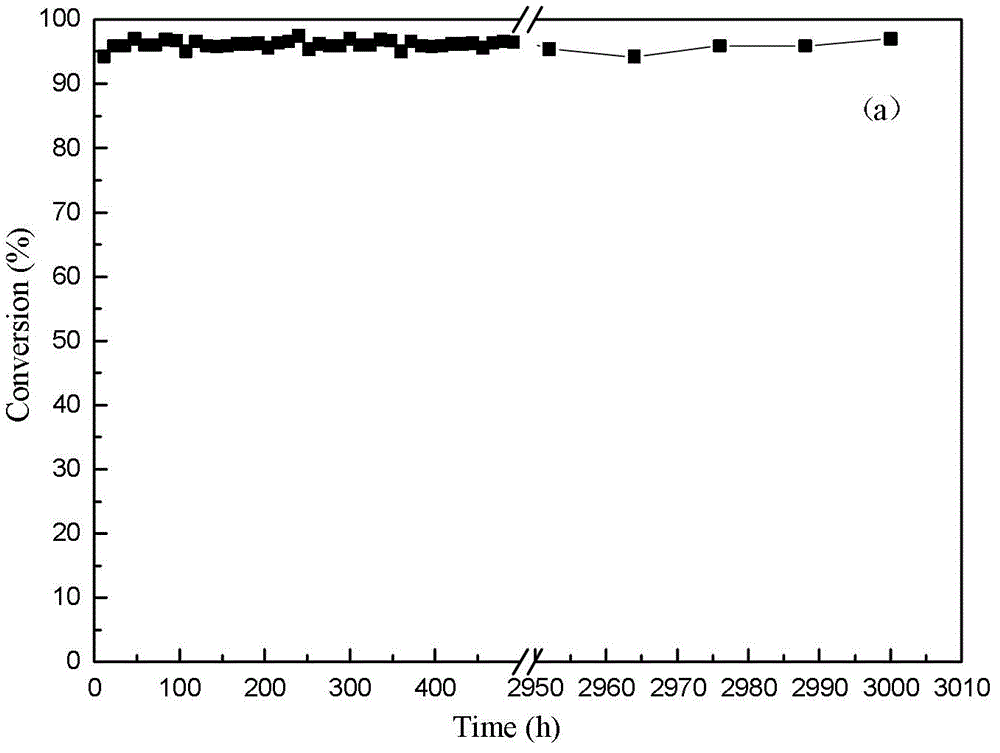
Figure 1 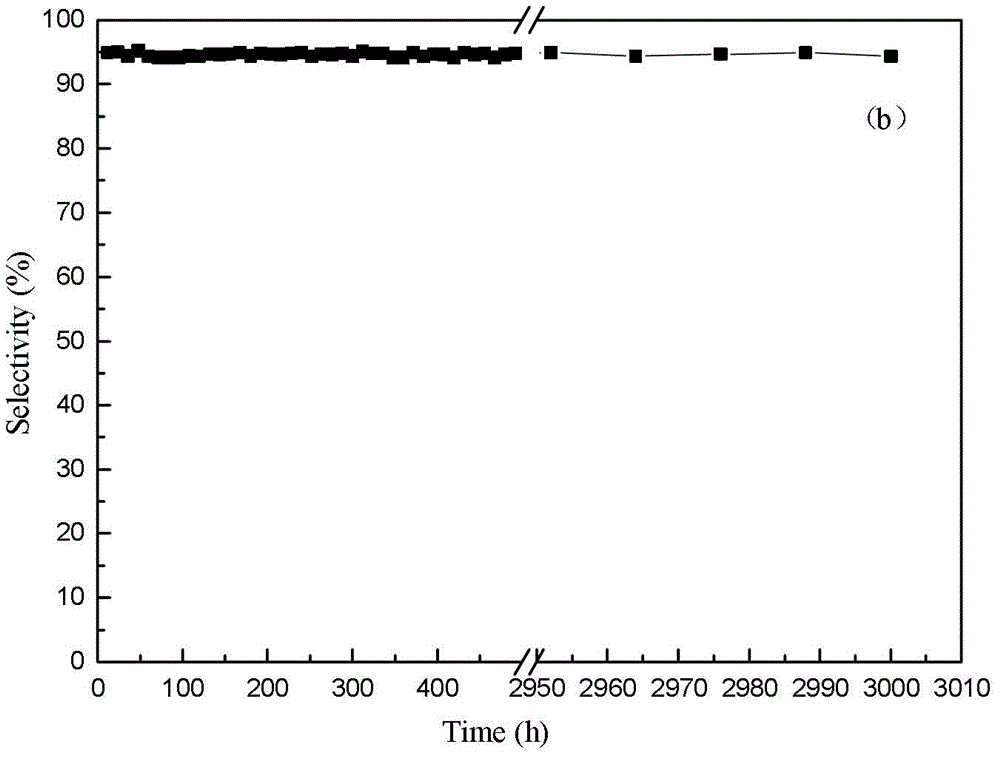
Figure 2
Abstract
Description
technical field
[0001] The invention belongs to the field of catalysts, and relates to a catalyst and a preparation method for hydrogenating acetic acid to produce ethanol. Background technique
[0002] Ethanol is one of the important chemical raw materials, it is widely used in medicine, food, chemical industry, military industry and other fields. In recent years, as a vehicle fuel, the demand for ethanol has been increasing. The United States has sold ethanol gasoline for more than 20 years, and 40% of light vehicles in Brazil use ethanol fuel. The current demand for industrial ethanol in China is about 3 million tons per year, and the annual growth rate is expected to be between 8% and 10%. The demand for fuel ethanol for vehicles is also growing. It is estimated that the number of automobiles in my country will reach 160 million to 180 million in 2015. If all ethanol gasoline is used, the demand for fuel ethanol will reach 10 million tons. The total ethanol production i...
Examples
Embodiment 1
[0027] 1) Add 1.0g SiO 2 With Ca(NO 3 ) 2 The solution (0.67ml, 3.0M) was soaked overnight, baked at 100°C for 12h, and roasted at 400°C for 2h.
[0028] 2) The sample obtained in 1) was treated with SnCl 2 The solution (1.0ml, 0.05M) was impregnated overnight, baked at 100°C for 12h, and calcined at 400°C for 2h.
[0029] 3) The sample obtained in 2) was treated with H 2 PtCl 6 The solution (1.0ml, 0.05M) was impregnated overnight, baked at 100°C for 12h, and calcined at 400°C for 2h.
Embodiment 2
[0031] 1) Add 1.0g SiO 2 With Ca(NO 3 ) 2 The solution (2.0ml, 1.0M) was impregnated overnight, baked at 100°C for 12h, and baked at 400°C for 2h.
[0032] 2) The sample obtained in 1) was treated with SnCl 2 The solution (1.0ml, 0.05M) was impregnated overnight, baked at 100°C for 12h, and calcined at 400°C for 2h.
[0033] 3) The sample obtained in 2) was treated with H 2 PtCl 6 The solution (1.0ml, 0.05M) was impregnated overnight, baked at 100°C for 12h, and calcined at 400°C for 2h.
Embodiment 3
[0035] 1) Add 1.0g SiO 2 With Ca(CH 3 COO) 2 The solution (0.67ml, 3.0M) was soaked overnight, baked at 100°C for 12h, and roasted at 400°C for 2h.
[0036] 2) The sample obtained in 1) was treated with SnCl 2 The solution (1.0ml, 0.05M) was impregnated overnight, baked at 100°C for 12h, and calcined at 400°C for 2h.
[0037] 3) The sample obtained in 2) was treated with H 2 PtCl 6 The solution (1.0ml, 0.05M) was impregnated overnight, baked at 100°C for 12h, and calcined at 400°C for 2h.