

Method for preparing novel polyethylene wood-plastic composite material
A wood-plastic composite material and polyethylene technology, which is applied in the field of building materials, can solve the problems of polyethylene-based wood-plastic composite materials such as insufficient anti-corrosion performance, shortened service life, and performance degradation, so as to eliminate weak boundary effects and improve uniformity. Sexuality, the effect of increasing the degree of response
- Summary
- Abstract
- Description
- Claims
- Application Information
AI Technical Summary
Problems solved by technology
Method used
Image

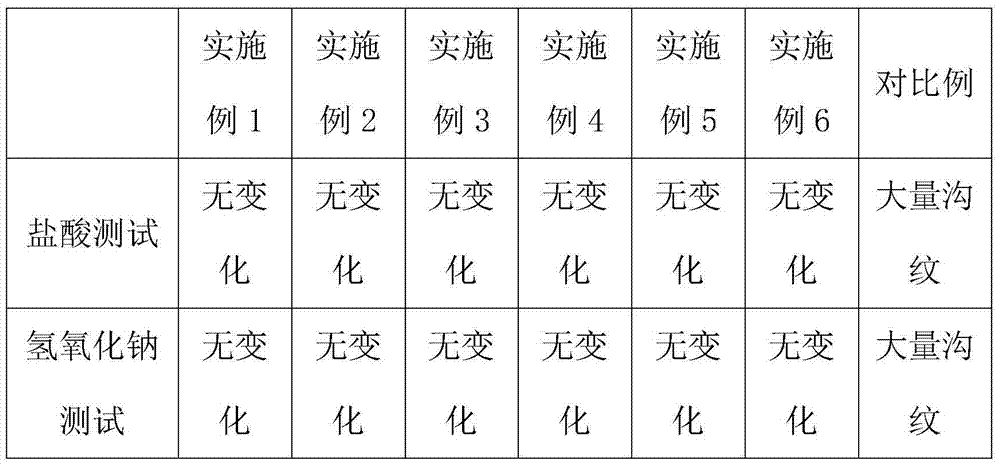
Examples
Embodiment 1
[0027] A preparation method of a novel polyethylene wood-plastic composite material, the steps are as follows:
[0028] (1) Add rapeseed straw, cotton straw and cotton straw with a weight ratio of 1:2:1 to a pulverizer for 3 hours and put them in a drying oven at 120°C for 12 hours to obtain the following wood with a water content of 5%. powder, soak the wood powder in a NaOH solution with a mass fraction of 20% and ultrasonically treat it for 40 minutes, the weight ratio of the wood powder to the NaOH solution is 1:2, take it out, wash it with deionized water, and dry it in an oven at 90°C for 20 minutes Sieve after 1 hour, and the particle size is 70-80 mesh alkalized wood flour;
[0029] (2) Put polyethylene, maleic anhydride, rare earth oxide, and DCP in a weight ratio of 100:4:1:2 into a mixer and knead at 140°C for 15 minutes, cool naturally to room temperature, and pulverize to obtain a rare earth phase Toner;
[0030] (3) Add phenolic resin and rare earth chloride wi...
Embodiment 2
[0034] A preparation method of a novel polyethylene wood-plastic composite material, the steps are as follows:
[0035] (1) Add rapeseed straw, cotton straw and cotton straw with a weight ratio of 1:2:1 to a pulverizer for 3 hours and put them in a drying oven at 120°C for 12 hours to obtain the following wood with a water content of 5%. powder, soak the wood powder in a NaOH solution with a mass fraction of 20% and ultrasonically treat it for 40 minutes, the weight ratio of the wood powder to the NaOH solution is 1:2, take it out, wash it with deionized water, and dry it in an oven at 90°C for 20 minutes Sieve after 1 hour, and the particle size is 70-80 mesh alkalized wood flour;
[0036] (2) Put polyethylene, maleic anhydride, rare earth oxide, and DCP in a weight ratio of 100:4:1:2 into a mixer and knead at 140°C for 15 minutes, cool naturally to room temperature, and pulverize to obtain a rare earth phase Toner;
[0037] (3) Add phenolic resin and rare earth chloride wi...
Embodiment 3
[0041]A preparation method of a novel polyethylene wood-plastic composite material, the steps are as follows:
[0042] (1) Add rapeseed straw, cotton straw and cotton straw with a weight ratio of 1:2:1 to a pulverizer for 3 hours and put them in a drying oven at 120°C for 12 hours to obtain the following wood with a water content of 5%. powder, soak the wood powder in a NaOH solution with a mass fraction of 20% and ultrasonically treat it for 40 minutes, the weight ratio of the wood powder to the NaOH solution is 1:2, take it out, wash it with deionized water, and dry it in an oven at 90°C for 20 minutes Sieve after 1 hour, and the particle size is 70-80 mesh alkalized wood flour;
[0043] (2) Put polyethylene, maleic anhydride, rare earth oxide, and DCP in a weight ratio of 100:4:1:2 into a mixer and knead at 140°C for 15 minutes, cool naturally to room temperature, and pulverize to obtain a rare earth phase Toner;
[0044] (3) Add phenolic resin and rare earth chloride wit...
PUM
| Property | Measurement | Unit |
|---|---|---|
| particle size (mesh) | aaaaa | aaaaa |
| quality score | aaaaa | aaaaa |
Abstract
Description
Claims
Application Information
 Login to View More