

A method and device for measuring distance between multiple interfaces of eyes
A measuring device and multi-interface technology, applied in eye testing equipment, medical science, gonioscope, etc., can solve the problems of defocusing, affecting the measurement of cornea and lens, and low accuracy of corneal thickness visual axis length, etc. System signal-to-noise ratio, the effect of improving detection sensitivity and increasing intensity
- Summary
- Abstract
- Description
- Claims
- Application Information
AI Technical Summary
Problems solved by technology
Method used
Image

Examples
Embodiment 1
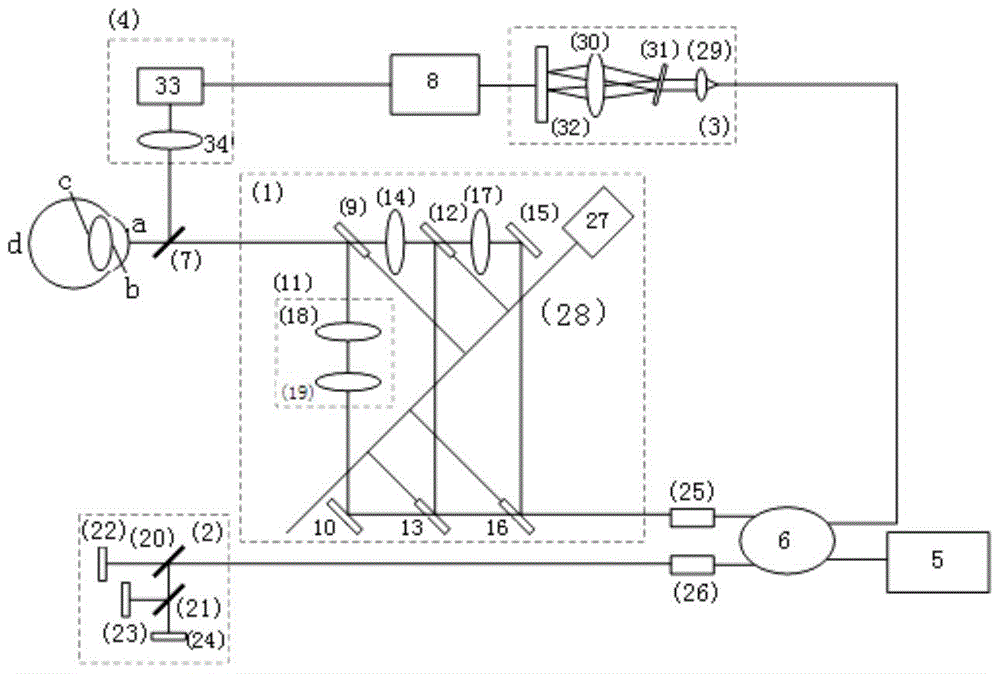
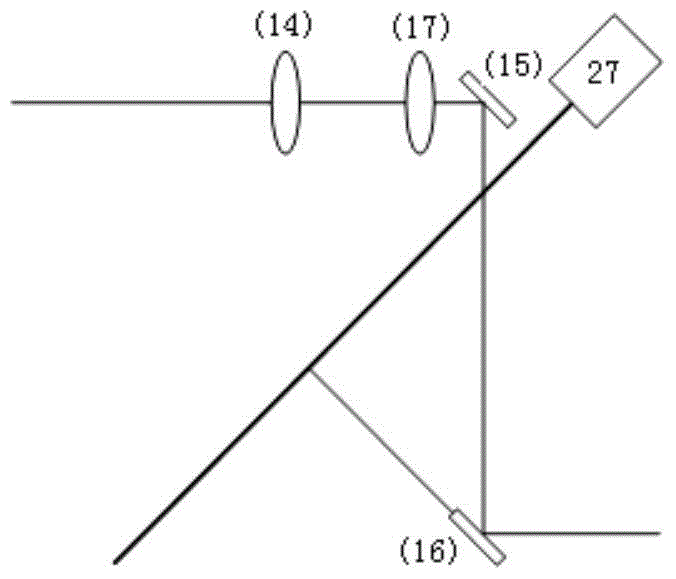
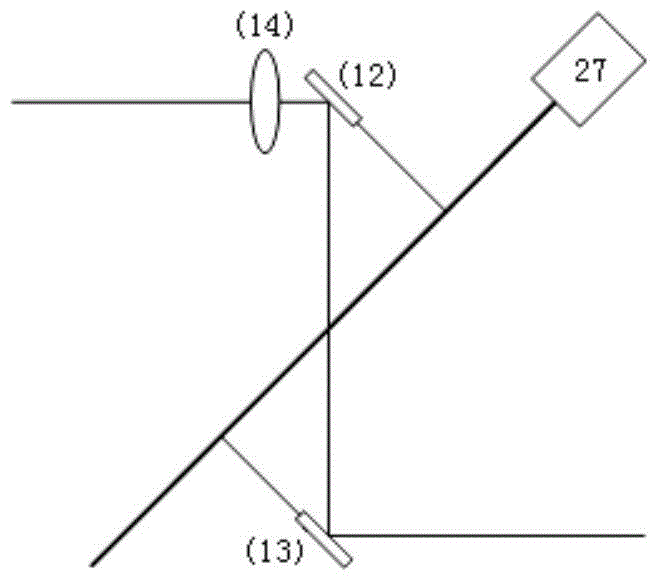
[0032] Embodiment 1 of the present invention: a method for measuring the distance between multiple interfaces of the eye, comprising the following steps: dividing the short coherent light into two paths, one path is used as the probe light and enters the fast zoom system 1, and the fast zoom system 1 switches three light paths to measure the eyes respectively The front and rear surfaces of the cornea, the front and rear surfaces of the lens, and the surface of the retina, and the other as a reference light enters the multi-optical path reference system 2 for corresponding reference light path compensation, realizing the continuity of the front and rear surfaces of the cornea, the front and rear surfaces of the lens, and the retina Detection: record the interference spectrum information of the front and rear surfaces of the cornea, the front and rear surfaces of the lens, and the retinal surface, and perform FFT transformation on the spectral information to obtain the front surfa...
Embodiment 2
[0034] Embodiment 2: A method for measuring the distance between multiple interfaces of the eye, comprising the following steps: dividing the short coherent light into two paths, one path enters the fast zoom system 1 as the probe light, and the fast zoom system 1 switches 3 light paths to measure the front and back of the cornea of the eye respectively surface, the front and rear surfaces of the lens, and the surface of the retina, and the other as a reference light enters the multi-optical path reference system 2 for corresponding reference light path compensation, realizing continuous detection of the front and rear surfaces of the cornea, the front and rear surfaces of the lens, and the retinal surface; record The interference spectrum information of the front and rear surfaces of the cornea, the front and rear surfaces of the lens, and the surface of the retina is subjected to FFT transformation to obtain the front surface of the cornea, the back surface of the cornea, th...
Embodiment 3
[0036] Embodiment 3: A method for measuring the distance between multiple interfaces of the eye, comprising the following steps: dividing the short coherent light into two paths, one path enters the fast zoom system 1 as the probe light, and the fast zoom system 1 switches 3 light paths to measure the front and back of the cornea of the eye respectively surface, the front and rear surfaces of the lens, and the surface of the retina, and the other as a reference light enters the multi-optical path reference system 2 for corresponding reference light path compensation, realizing continuous detection of the front and rear surfaces of the cornea, the front and rear surfaces of the lens, and the retinal surface; record The interference spectrum information of the front and rear surfaces of the cornea, the front and rear surfaces of the lens, and the surface of the retina, and the spectral information is transformed by FFT, that is, the front surface of the cornea, the back surface ...
PUM
 Login to View More
 Abstract
Description
Claims
Application Information
 Login to View More