

Intelligent high-safety lithium-on battery with polymer skeleton
A technology of lithium-ion batteries and smart polymers, applied in battery electrodes, secondary batteries, circuits, etc., to achieve the effects of avoiding thermal volatilization and decomposition, small internal resistance, and superior electrochemical performance
- Summary
- Abstract
- Description
- Claims
- Application Information
AI Technical Summary
Problems solved by technology
Method used
Image

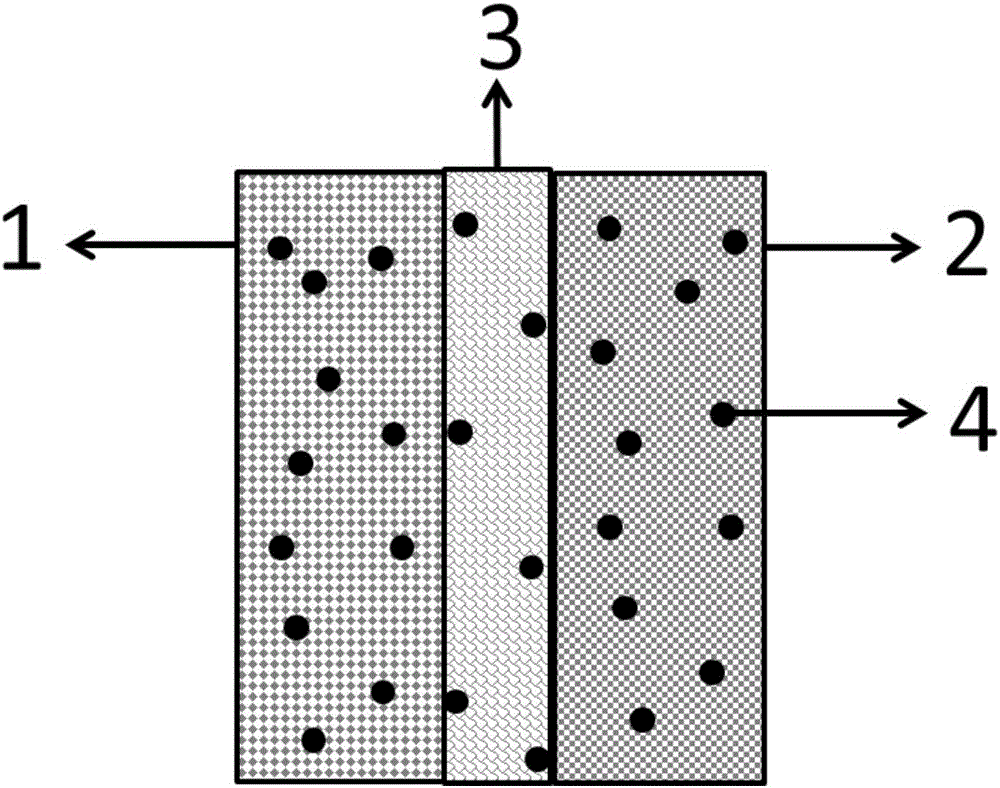
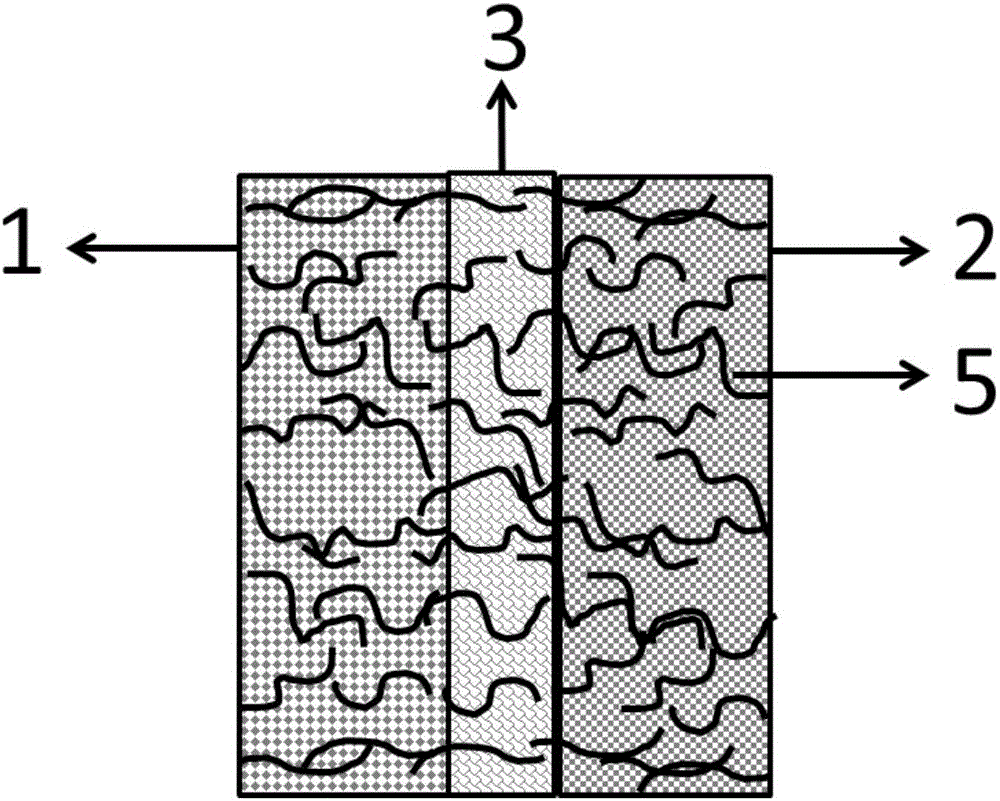
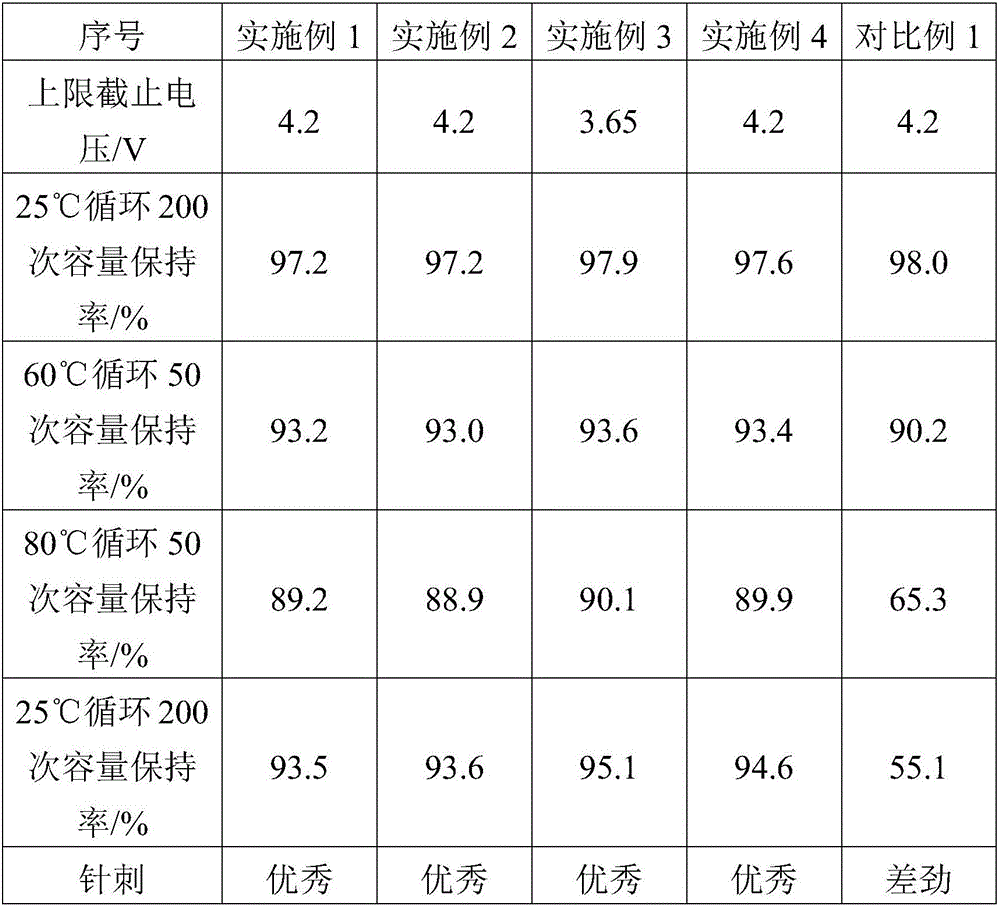
Examples
Embodiment 1
[0022] The positive temperature temperature-sensitive polymer particles in this example are polysulfodimethylammonium isobutylene ester particles with a weight-average molecular weight of 100,000 and a particle size of 0.5 μm. The positive electrode is composed of nickel-cobalt-manganese ternary, polysulfodimethylammonium isobutylene ester particles, polyvinylidene fluoride, and super P in a weight percentage of 92:1:3.5:3.5. The negative electrode is composed of artificial graphite, polysulfodimethylammonium isobutylene ester particles, hydroxymethyl cellulose, styrene-butadiene rubber, and super P according to the weight percentage of 92.5:1:2:3:1.5. The diaphragm is composed of porous polypropylene membrane surface coated with 2um thick polysulfodimethylammonium isobutylene ester particles. The electrolyte is composed of EC (ethylene carbonate): EMC (ethyl methyl carbonate): DEM (diethyl carbonate) according to the ratio of 1:1:1.2, and dissolves 1mol / L lithium hexafluoroph...
Embodiment 2
[0024] The positive temperature-type temperature-sensitive polymer particles in this example are polysulfobetaine particles with a weight-average molecular weight of 100,000 and a particle size of 0.4 μm. The positive electrode is composed of nickel-cobalt-manganese ternary, polysulfobetaine particles, polyvinylidene fluoride, and super P according to the weight percentage of 93:1.5:3:2.5. The negative electrode is composed of graphene, silicon monoxide, polysulfobetaine particles, hydroxymethylcellulose, styrene-butadiene rubber, and super P in a weight percentage of 80:10:2:2:3:3. The separator consists of a porous polyethylene membrane coated with 1.5um thick polysulfobetaine particles. The electrolyte is composed of EC (ethylene carbonate): EMC (ethyl methyl carbonate): DEM (diethyl carbonate) according to the ratio of 1:1.5:1, and dissolves 1.2mol / L lithium hexafluorophosphate. The positive electrode sheet, diaphragm, and negative electrode sheet are stacked in sequence ...
Embodiment 3
[0026] The positive temperature temperature-sensitive polymer particles in this example are poly(N-isopropylacrylamide) particles with a weight average molecular weight of 50,000 and a particle size of 10 μm. The positive electrode is composed of lithium iron phosphate, poly(N-isopropylacrylamide) particles, polyvinylidene fluoride, and superP according to the weight percentage of 93:1.5:3:2.5. The negative electrode is composed of graphene, silicon monoxide, poly(N-isopropylacrylamide) particles, hydroxymethyl cellulose, styrene-butadiene rubber, and super P in a weight percentage of 85:5:2:2:3:3. The diaphragm consists of a porous polyvinylidene fluoride membrane coated with 1 μm thick poly(N-isopropylacrylamide) particles. The electrolyte is composed of EC (ethylene carbonate): EMC (ethyl methyl carbonate): DEM (diethyl carbonate) according to the ratio of 1:1:1, and dissolves 1mol / L lithium hexafluorophosphate. The positive electrode sheet, diaphragm, and negative electro...
PUM
| Property | Measurement | Unit |
|---|---|---|
| Size | aaaaa | aaaaa |
| Particle size | aaaaa | aaaaa |
| Particle size | aaaaa | aaaaa |
Abstract
Description
Claims
Application Information
 Login to View More