
Preparation method of bamboo nanocellulose/reduced graphene oxide composite carbon aerogel and application of preparation method
A nanocellulose and graphene composite technology, applied in the preparation/purification of carbon, can solve the problems of fragile skeleton, easy aggregation, poor mechanical properties, etc., and achieve the effect of reducing preparation cost, high adsorption capacity, and improving mechanical properties
- Summary
- Abstract
- Description
- Claims
- Application Information
AI Technical Summary
Problems solved by technology
Method used
Image

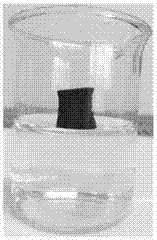
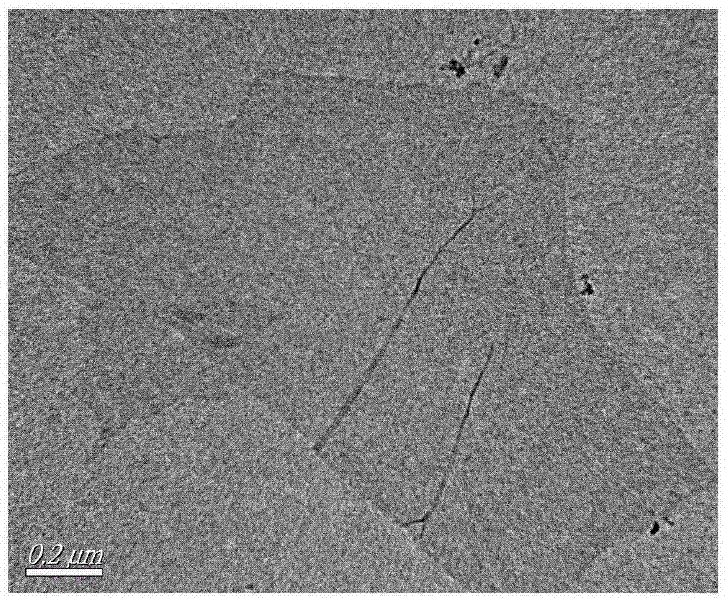
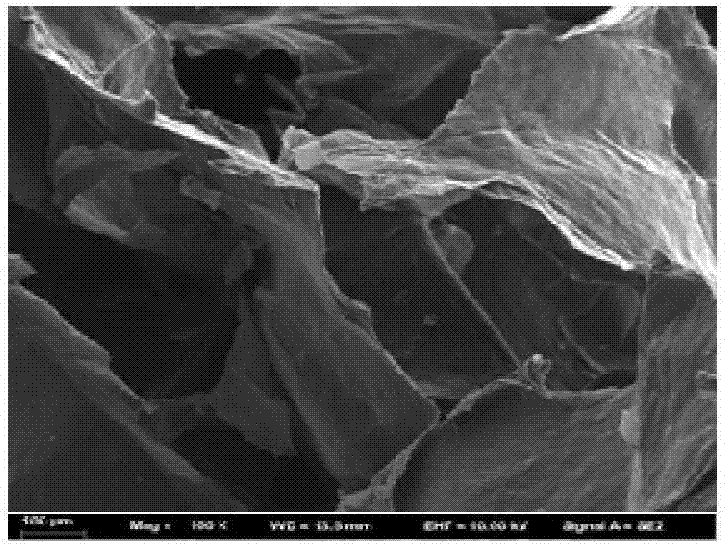
Examples
Embodiment 1
[0039] 1. Preparation of nanocellulose
[0040] (1) Bamboo is cut into fritters, washed and dried, and then crushed by a pulverizer and passed through a 40-mesh sieve to make bamboo powder; get 2.0g of bamboo powder and wrap it with filter paper, place it in a Soxhlet extractor, Use 150 mL of toluene and ethanol mixture with a volume ratio of 2:1 to wash repeatedly at 90 ° C for 10 h, and dry the sample to remove the residual toluene and ethanol.
[0041] (2) Take 2.0 g of the above-mentioned dried sample and add it to 100 mL of sodium chlorite solution with a concentration of 1.4% and a pH of 5.0, react at a temperature of 75°C for 1 hour, and repeat 5 times. After the reaction is completed, wash and dry Dry. Take 2.0g of the dried sample and add it to 100mL of 2% potassium hydroxide solution, react at 90°C for 4h, after the reaction is completed, react with 1% hydrochloric acid solution at 80°C for 2h, wash the sample to neutral, tumble dry.
[0042] (3) Take 1.0 g of the...
Embodiment 2
[0050] 1. Preparation of nanocellulose
[0051] (1) Bamboo is cut into fritters, washed and dried, then crushed by a pulverizer and passed through a 60-mesh sieve to make bamboo powder; get 2.0g of bamboo powder and wrap it with filter paper, place it in a Soxhlet extractor, Use 100 mL of toluene and ethanol mixture with a volume ratio of 2:1 to wash repeatedly at 90 ° C for 16 h, and dry the sample to remove the residual toluene and ethanol.
[0052] (2) Take 2.0 g of the above-mentioned dried sample and add it to 200 mL of sodium chlorite solution with a concentration of 1.4% and a pH of 5.0, react at a temperature of 75°C for 1 hour, and repeat 3 times. After the reaction is completed, wash and dry Dry. Take 2.0g of the dried sample and add it to 150mL of 2% potassium hydroxide solution, react at 95°C for 2h, after the reaction is completed, react with 1% hydrochloric acid solution at 80°C for 2h, wash the sample to neutral, tumble dry.
[0053] (3) Take 1.0 g of the sam...
Embodiment 3
[0061] 1. Preparation of nanocellulose
[0062] (1) Bamboo is cut into fritters, washed and dried, and then crushed by a pulverizer and passed through a 40-mesh sieve to make bamboo powder; get 2.0g of bamboo powder and wrap it with filter paper, place it in a Soxhlet extractor, Use 200mL of toluene and ethanol mixture with a volume ratio of 2:1 to wash repeatedly at 90°C for 24h, and dry the sample to remove the residual toluene and ethanol.
[0063] (2) Take 2.0 g of the above-mentioned dried sample and add it to 150 mL of sodium chlorite solution with a concentration of 1.4% and a pH of 5.0, react at a temperature of 75°C for 1 hour, and repeat 6 times. After the reaction is completed, wash and dry Dry. Take 2.0g of the dried sample and add it to 200mL of 2% potassium hydroxide solution, react at 85°C for 2h, after the reaction is completed, react with 1% hydrochloric acid solution at 80°C for 2h, wash the sample to neutral, tumble dry.
[0064] (3) Take 1.0 g of the sam...
PUM
| Property | Measurement | Unit |
|---|---|---|
| size | aaaaa | aaaaa |
Abstract
Description
Claims
Application Information
 Login to View More