
A kind of preparation method of high flux reverse osmosis membrane and obtained high flux reverse osmosis membrane
A reverse osmosis membrane, high-flux technology, applied in osmosis/dialysis water/sewage treatment, semi-permeable membrane separation, chemical instruments and methods, etc., can solve the problem of the limited flux-enhancing capacity of reverse osmosis membranes and the difficulty of industrialized production. , the preparation method is cumbersome and other problems, to achieve the effect of reducing water conduction resistance, conducive to adsorption, and improving roughness
- Summary
- Abstract
- Description
- Claims
- Application Information
AI Technical Summary
Problems solved by technology
Method used
Image

Examples
Embodiment 1
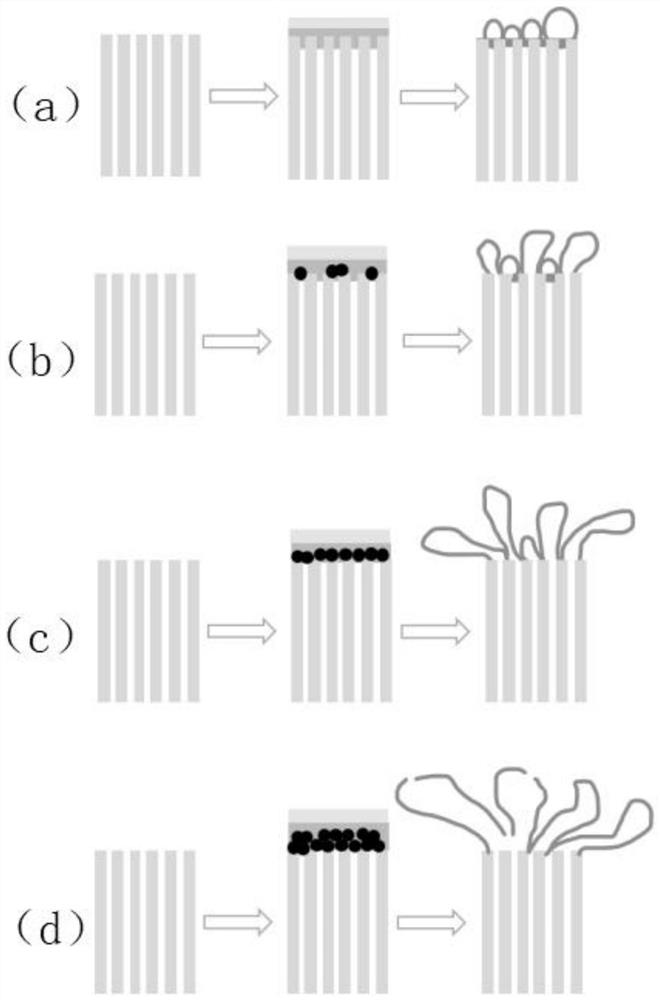
[0032] A preparation method of a reverse osmosis membrane, the reverse osmosis membrane is a high flux reverse osmosis membrane, specifically comprising the following steps:
[0033]Step 1. Preparation of support structure: prepare 18wt% polysulfone solution, filter to remove undissolved impurities, and after vacuum degassing, use a scraper to evenly coat the polymer solution on the non-woven fabric, and then place it in a pure water coagulation bath at 15°C Transform into a membrane after 1 minute in the middle, and obtain a porous support membrane after washing;
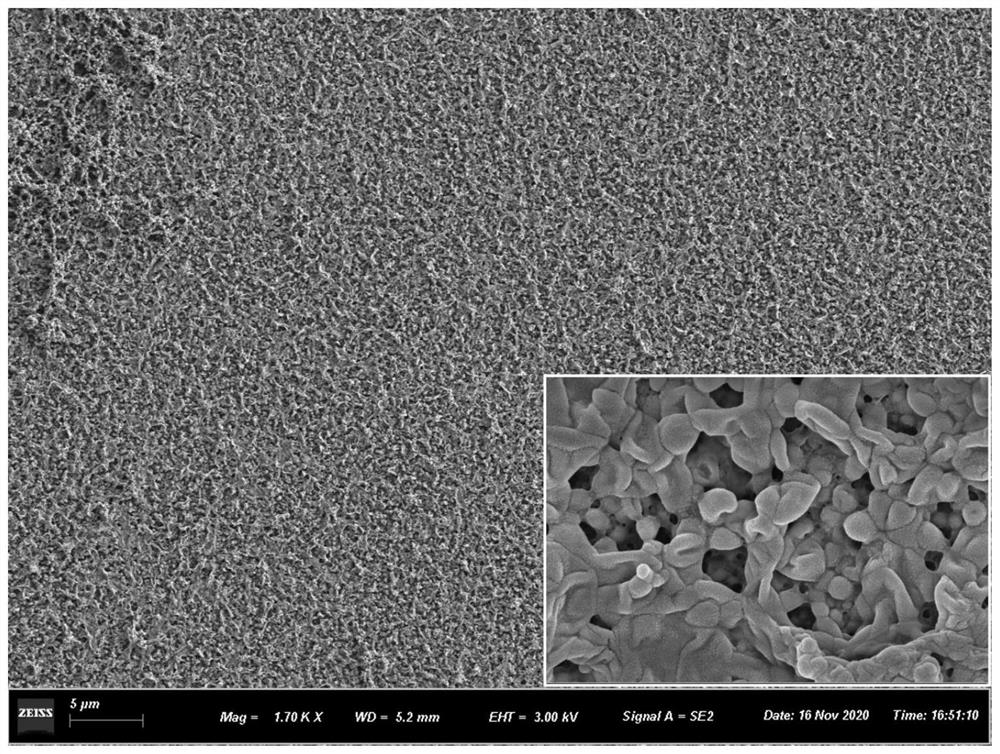
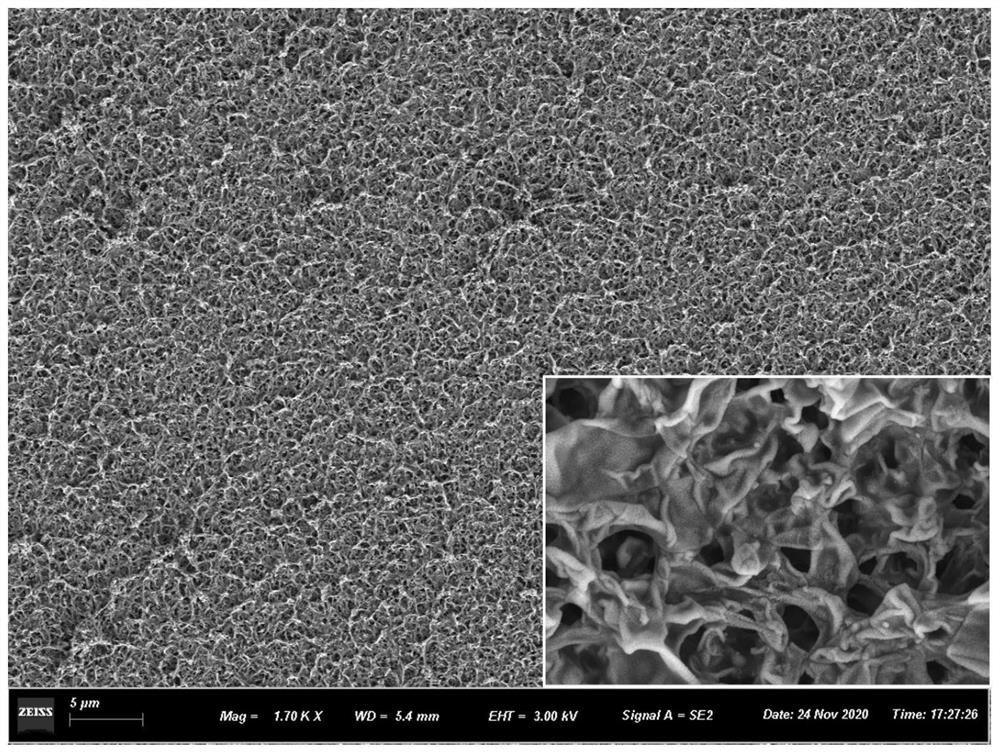
[0034] Step 2, in-situ deposition of nano-calcium carbonate: soak the support structure prepared in step 1 in CaCl with a concentration of 0.1mol / L 2 After a period of time in the aqueous solution (specifically 3min), it was transferred to 0.1mo / L Na 2 CO 3 In the aqueous solution, after washing three times with pure water, the support structure with nano-calcium carbonate deposited in situ was obtained;
[0035...
Embodiment 2
[0042] The difference between embodiment 2 and embodiment 1 is: in the step 2, CaCl 2 and Na 2 CO 3 The concentrations of the aqueous solutions are all 0.05mol / L, and the others remain unchanged.
Embodiment 3
[0043] The difference between embodiment 3 and embodiment 1 is: in the step 2, CaCl 2 and Na 2 CO 3 The concentrations of the aqueous solutions are all 0.6mol / L, and the others remain unchanged.
PUM
| Property | Measurement | Unit |
|---|---|---|
| salt rejection rate | aaaaa | aaaaa |
Abstract
Description
Claims
Application Information
 Login to View More