[0003] The commonly used collectors for associated fluorite flotation in floating tungsten tailings are mainly
oleic acid fatty acid collectors, and there are other types of fluorite collectors, such as
alkyl sulfuric acid or
sulfonic acid collectors, amine Collectors and phosphonic acid collectors, but the most widely used collectors in industry are
oleic acid collectors. The outstanding advantages of
oleic acid collectors are wide sources and strong collection ability, but the
disadvantage is poor selectivity. Severe foam inclusions, especially poor low
temperature resistance, easy to solidify at low temperature, difficult to dissolve in water, poor dispersibility
[0004] The associated fluorite flotation inhibitors in floating tungsten tailings mainly include inorganic inhibitors and organic inhibitors. Inorganic inhibitors mainly include water glass and
sodium hexametaphosphate, of which water glass is the most commonly used effective inhibitor, organic Inhibitors mainly include
tannin extract,
starch,
dextrin, and lignosulfonate. In production practice, a combination of inorganic inhibitors and organic inhibitors is often used to enhance the
selective inhibition performance of the inhibitor. For example, for the symbiotic ore of
quartz and fluorite , the use of
sodium lignosulfonate as an inhibitor can achieve better results, polyphosphonate,
tannin and its derivatives can effectively inhibit
calcite in fluorite sorting,
starch and
modified starch in the separation of fluorite and barite The selection has a good effect. Generally speaking, for the fluorite ore beneficiation of the complex mineral
system associated with fluorite ore in floating tungsten tailings, the use of combined drugs or the development of new agents with strong inhibitory ability and good selectivity will be the best way to improve the fluorite ore. An important research direction of flotation separation. In the flotation process of traditional floating tungsten tailings associated fluorite, in the process of fluorite beneficiation, the selected middle ore generally adopts the sequential return method. With the development of fluorite beneficiation technology, especially It is aimed at the separation of low-grade fluorspar ore. In order to obtain high-quality fluorspar concentrate, the return method of the selected middle ore has been studied. Some of them adopt the full open-circuit selection process, but extensively consult the current domestic and foreign fluorspar
mineral processing technology. In related literature, almost all single suppression technology is used in fluorite beneficiation. This technology may have a better separation effect for fluorite ore beneficiation with relatively simple
gangue mineral composition, but for fluorite with complex
gangue mineral
system Ore beneficiation will make it difficult to effectively separate fluorite from various gangue minerals, resulting in poor recovery index of associated fluorite and low recovery rate of fluorite in guided floating tungsten tailings.
Tungsten polymetallic tailings in China generally contain abundant fluorite The associated fluorspar resources are limited by the current technical level. At present, only a few enterprises in Shizhuyuan have carried out comprehensive recycling, but the overall selection index is low. The associated fluorspar resources in other tungsten tailings have not yet been recycled.
[0005] In the existing fluorite recovery process, since the tungsten tailings contain not only fluorite but also
calcite,
quartz, and iron-containing
silicate gangue minerals, the ore components are complex, and the effective separation and extraction of fluorite is very difficult. Because the
buoyancy of fluorite and
calcium-containing minerals is similar, the higher the
calcium carbonate content in fluorite, the more difficult it is to separate it. The surface of stone minerals is seriously polluted, fluorite is strongly inhibited and difficult to activate, and conventional fluorite flotation reagents have weak resistance to low temperature and acid and alkali, and weak selectivity and collection capacity, resulting in large fluctuations in production indicators. In winter, the dosage of chemicals is large, the adaptability is poor, and it is difficult to effectively remove the residual
silicate and
carbonate impurities in the fluorite concentrate. Meet the quality requirements of
fluorine chemical products. The quality requirements of
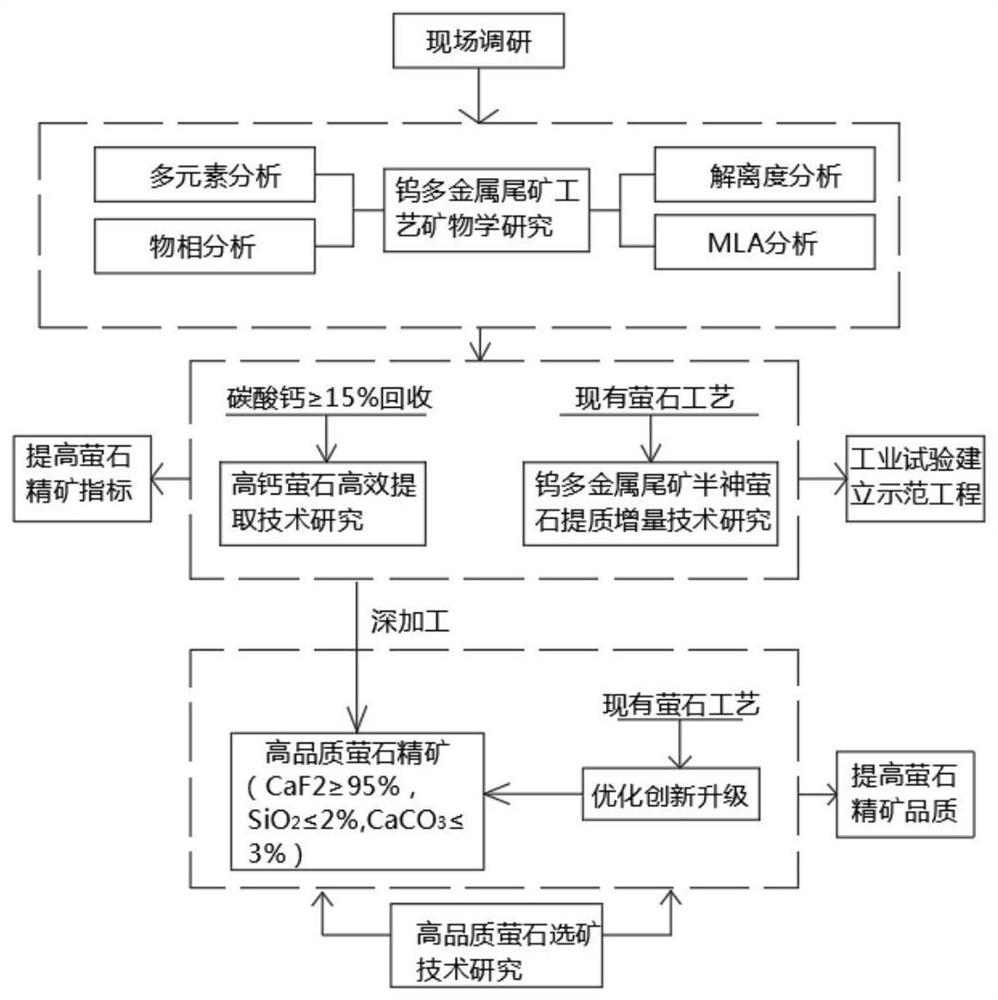
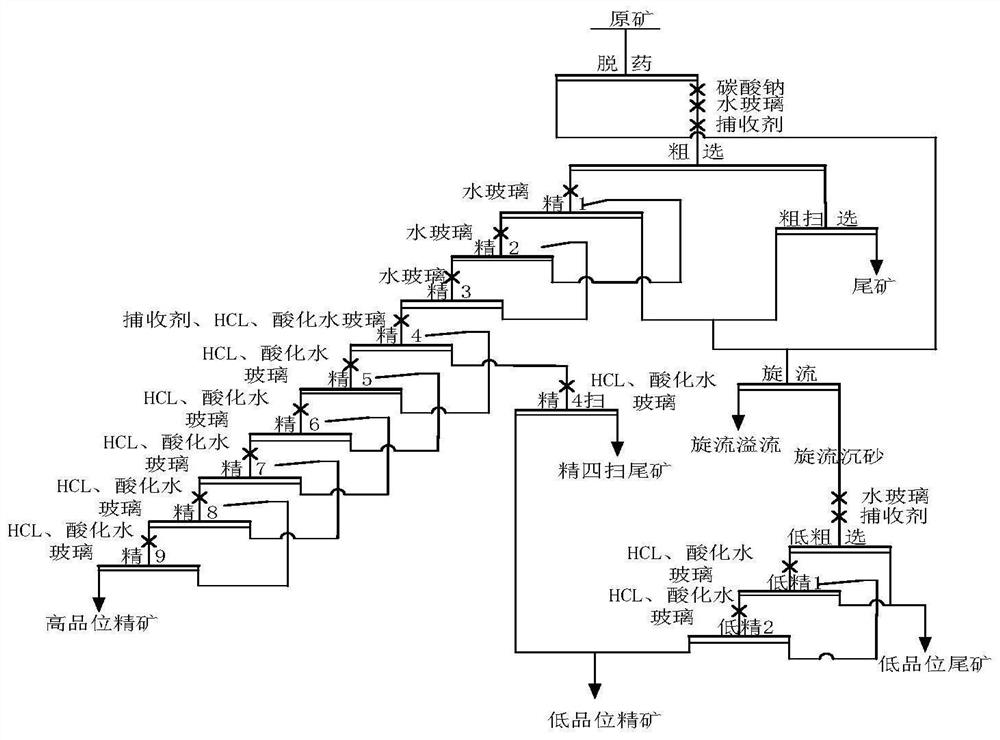
fluorine chemical products are fluorite concentrate grade ≥ 97%, and the added value of the product needs to be improved. For this reason, we propose a beneficiation process for associated fluorite flotation in floating tungsten tailings



 Login to View More
  Login to View More