

High efficiency deep ultraviolet light-emitting diode
A light-emitting diode, deep ultraviolet technology, applied in electrical components, circuits, semiconductor devices, etc., can solve problems such as P-type conduction difficulties, and achieve the effects of increasing luminous efficiency, improving luminous efficiency, and improving reliability.
- Summary
- Abstract
- Description
- Claims
- Application Information
AI Technical Summary
Problems solved by technology
Method used
Image


Examples
Embodiment Construction
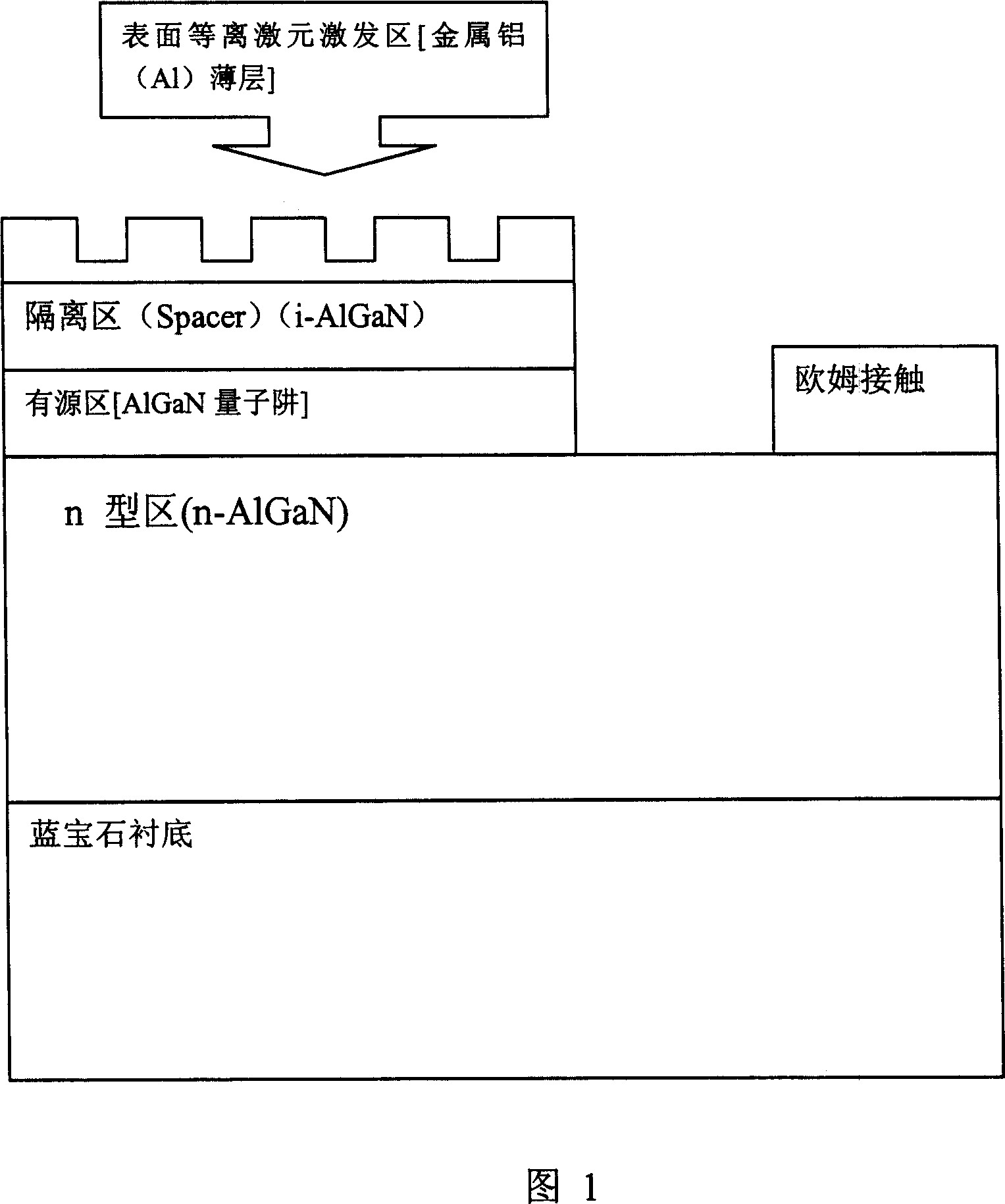
[0038] The specific implementation method of the preparation of the device structure in Figure 1: (taking AlGaN as an example)
[0039] 1) First grow n-type AlGaN several microns thick on the sapphire substrate;
[0040] 2) Then grow the intrinsic quantum well active region on it, (such as Al 0.8 Ga 0.2 N / Al 0.18 Ga 0.82 N multiple quantum wells);
[0041] 3) On the multiple quantum wells, an intrinsic AlGaN isolation layer (spacer) with a thickness of several to tens of nanometers (nm) is grown. Electron recombination coupling to periodic structure electrodes to excite surface plasmons);
[0042] 4) Etching away a part of AlGaN and quantum well until the bottom n-AlGaN is exposed;
[0043] 5) making ohmic contact electrodes on the exposed n-AlGaN surface;
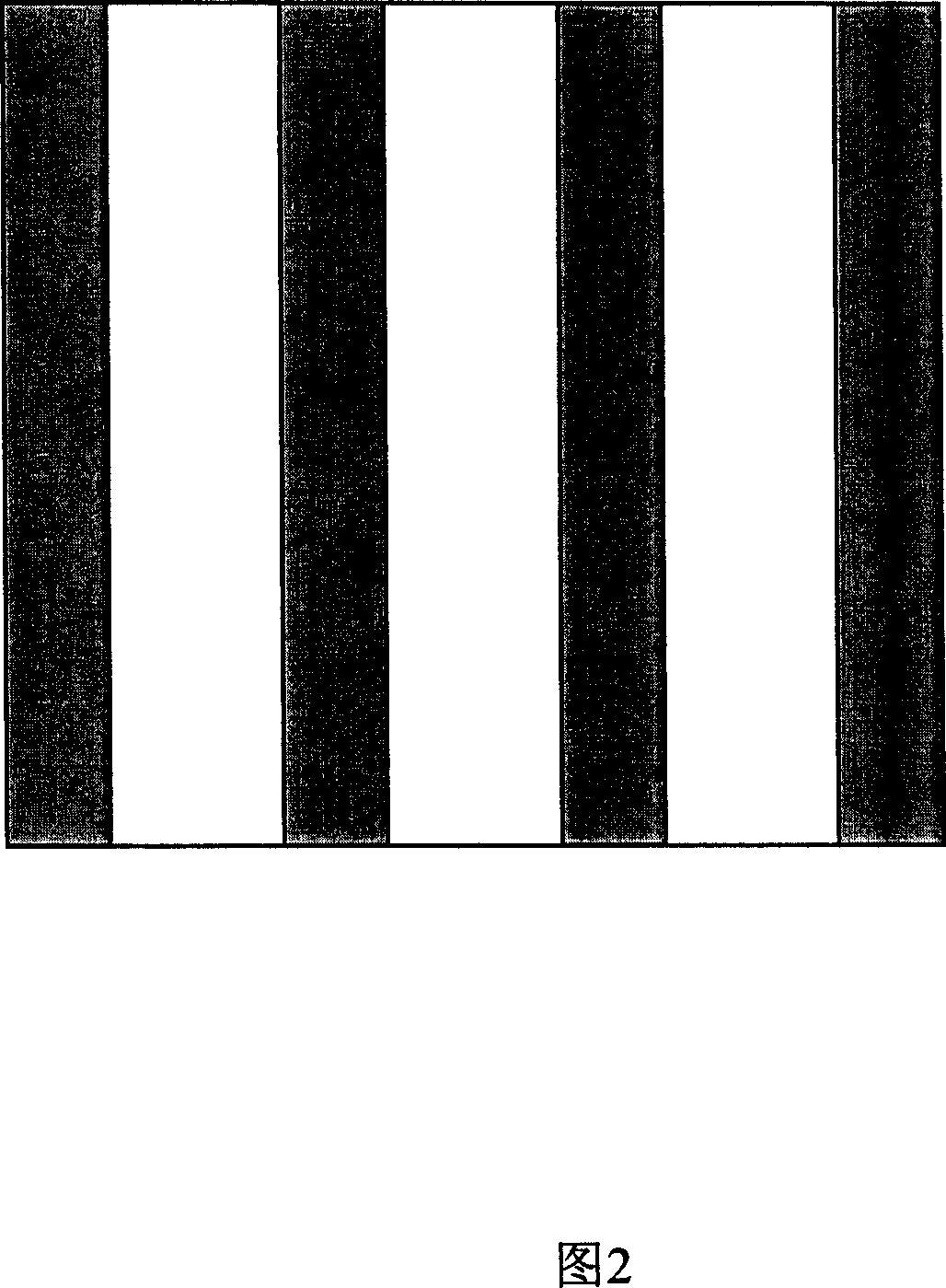
[0044] 6) On the surface of the remaining AlGaN isolation layer, use aluminum (Al) to make a grid-shaped electrode as shown in Figure 2 (it can also be a two-dimensional structure such as a ring, grid, and periodic is...
PUM
 Login to View More
 Abstract
Description
Claims
Application Information
 Login to View More