
Fgfr binding peptides
a technology of binding peptides and peptides, which is applied in the field of peptide compounds, can solve problems such as disturbances that drive the development of brain pathology
- Summary
- Abstract
- Description
- Claims
- Application Information
AI Technical Summary
Benefits of technology
Problems solved by technology
Method used
Image

Examples
example 1
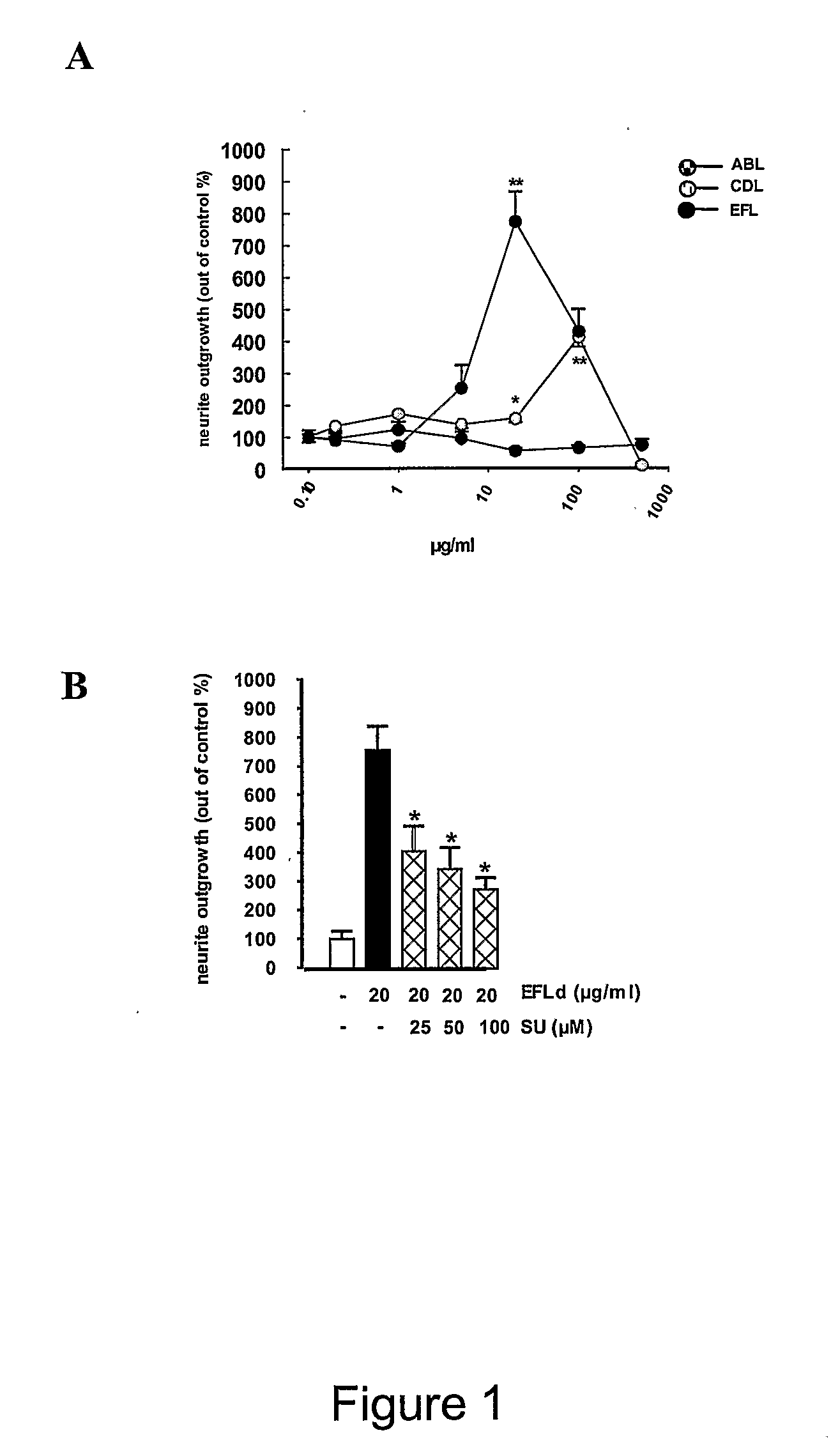
Stimulation of Neurite Outgrowth
[0380]Cerebellar granule neurons (CGN) were prepared from postnatal day seven Wistar rats largely as previously described (Neiiendam et al, (2004) J. Neurochem. 91(4):920-35). Cerebellar tissue was dissected in modified Krebs-Ringer solution kept on ice, and treated as described for the hippocampal neurons above. All cell cultures were incubated at 37° C. in a humidified atmosphere containing 5% CO2. All animals were handled in accordance with the national guidelines for animal welfare.
[0381]Dissociated cells were plated at a density of 10,000 cells / cm2 on uncoated 8-well permanox Lab-Tek chamber slides in Neurobasal medium supplemented with 0.4% (w / v) bovine serum albumin (BSA; Sigma-Aldrich), 2% (v / v) B27 Neurobasal supplement, 1% (v / v) glutamax, 100 U / ml penicillin, 100 μg / ml streptomycin and 2% 1 M HEPES (all from Gibco, BRL). Peptide solutions without or with inhibitors of various signal transduction pathways were added to a total volume of 300 μ...
example 2
Stimulation of Survival of Neurons
Survival assay
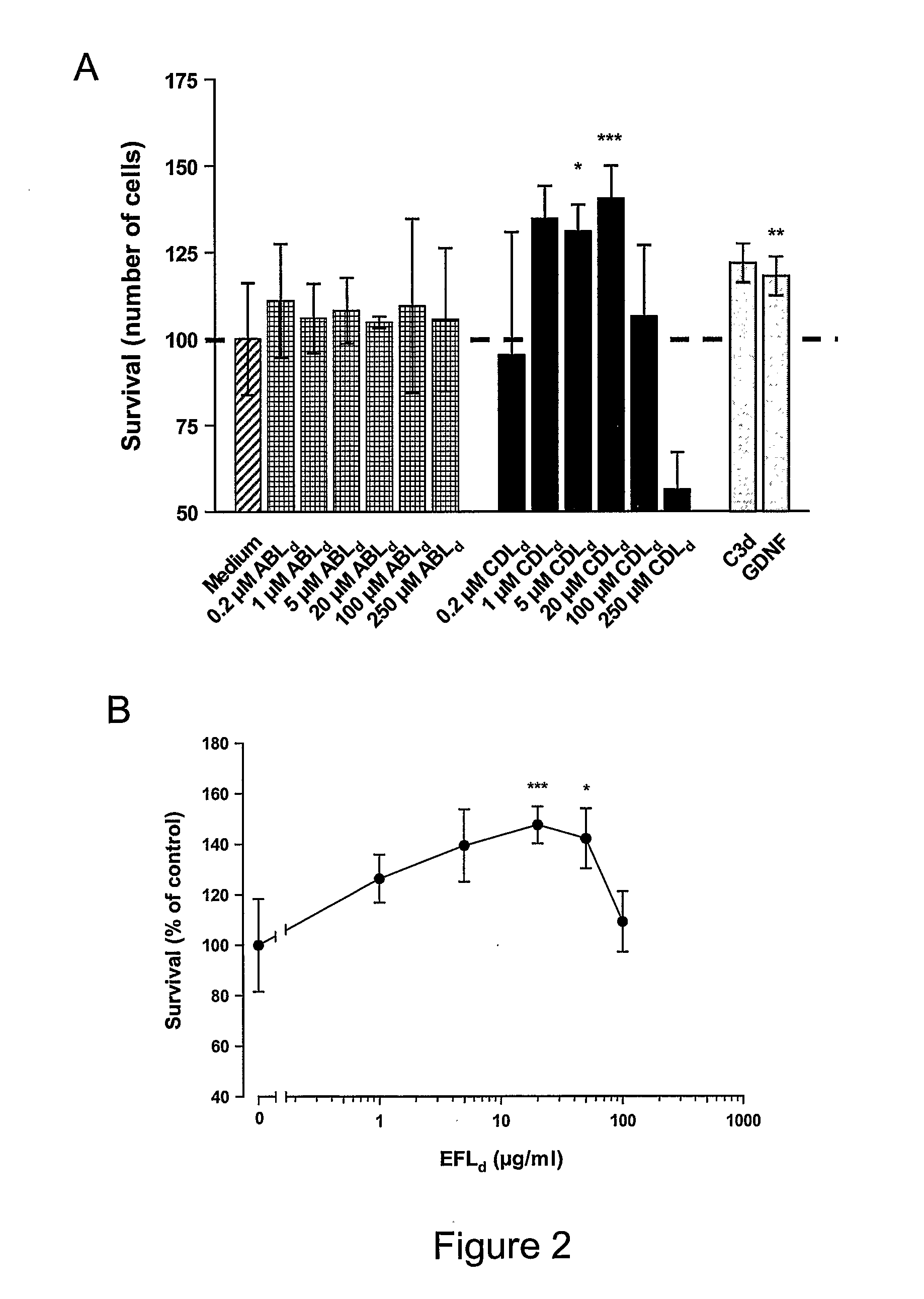
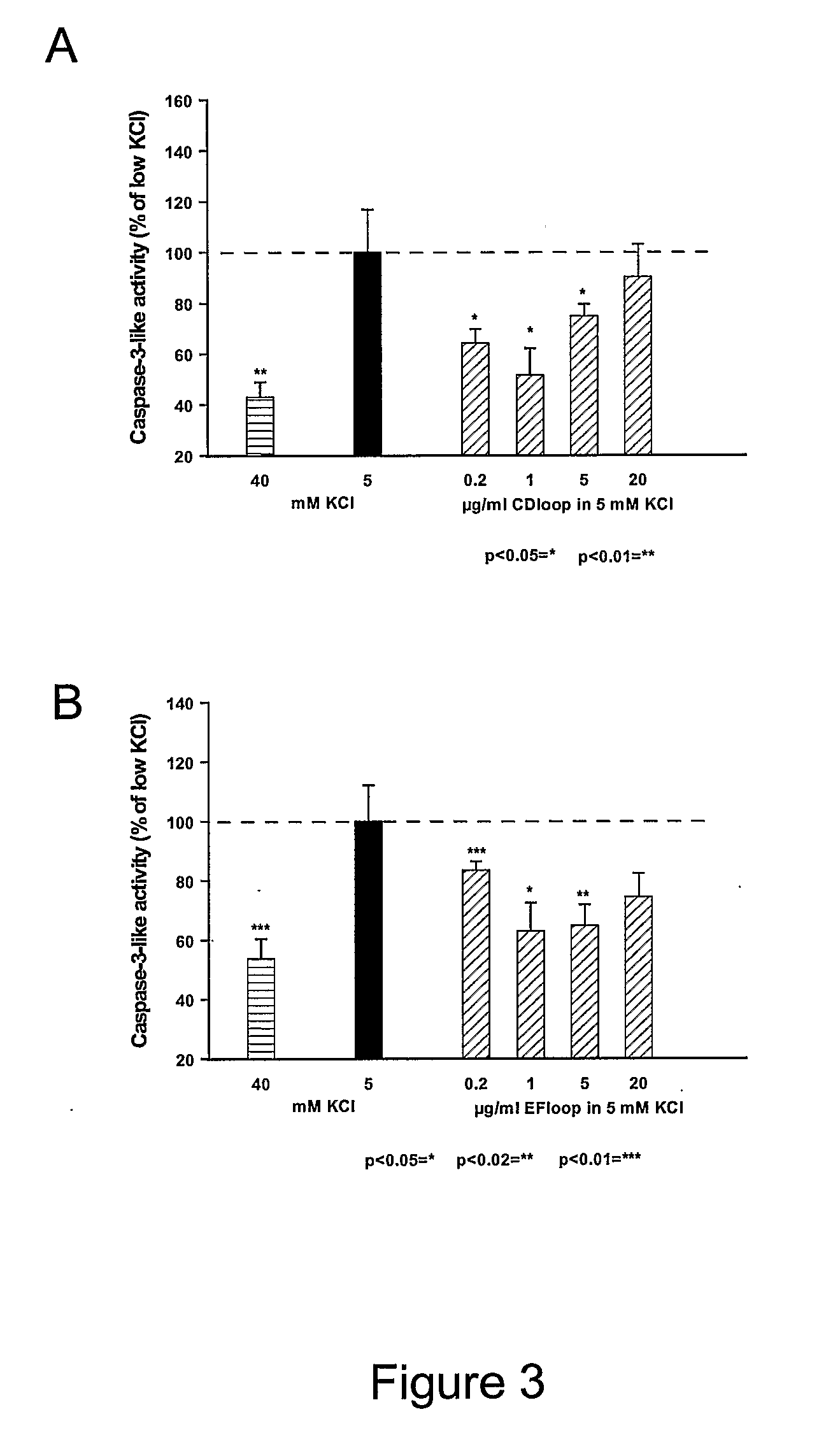
[0383]Primary cultures of CGN were plated at a density of 100,000 cells / cm2 on poly-L-lysine coated 8-well permanox slides in Neurobasal-A medium (Gibco, BRL) supplemented with 2% (v / v) B27, 0.5% (v / v) glutamax, 100 U / ml penicillin, 100 μg / ml streptomycin and KCl, making the final concentration of KCl in the medium 40 mM. 24 hours after plating, cytosine-β-D-arabinofuranoside (Ara-C; Sigma-Aldrich) was added to a final concentration of 10 μM to avoid proliferation of glial cells, after which the neurons were allowed to differentiate for further six days at 37° C. Apoptotic cell death was induced by washing twice and changing the medium to Basal Medium Eagle (BME; Gibco BRL) supplemented with 1% (v / v) glutamine, 100 U / ml penicillin and 100 μg / ml streptomycin, 3.5 g D-glucose / l and 1% (v / v) sodium pyruvate (Gibco BRL) together with various concentrations of peptide. Thereby the concentration of potassium in the cultures was reduced to 5 ...
example 4
Binding of Fragments of NCAM F3, 1 to FGFR1
[0389]Different peptide fragments representing all “strand-loop-srtand” structural domains of NCAM F3, 1 (AB-A strand-loop-B strand (corresponds to the ABL peptide SEQ ID NO: 2); CD-C strand-loop-D strand (corresponds to the CDL peptide SEQ ID NO: 1); EF-E strand-loop-F strand (corresponds to the EFL peptide SEQ ID NO: 5); BC-B strand-loop-C strand; DE-D strand-loop-E strand; FG-F strand-loop-G strand) have been prepared synthetically.
[0390]The FGFR Ig module 3 and modules 2, 3 were expressed in Drosophila S2 cells (Invitrogen, USA) according to the manufacturer's instructions. All the proteins were purified by affinity chromatography using Ni2+-NTA resin (Qiagen, USA) and / or ion exchange chromatography and gel filtration.
[0391]Binding analysis was performed using a BIAcoreX instrument (Biosensor AB) at 25° C. using 10 mM sodium phosphate pH 7.4, 150 mM NaCl as running buffer. The flow-rate was 5 μl / min. Data were analysed by non-linear cur...
PUM
| Property | Measurement | Unit |
|---|---|---|
| hydrophobic | aaaaa | aaaaa |
| length | aaaaa | aaaaa |
| neuronal plasticity | aaaaa | aaaaa |
Abstract
Description
Claims
Application Information
 Login to View More