High Efficiency Multicycle Internal Combustion Engine With Waste Heat Recovery

a multi-cycle, internal combustion engine technology, applied in the direction of machines/engines, combination engines, combination engines, etc., can solve the problems of inefficiency of the system for recovering waste exhaust heat and waste heat from the combustion chamber coolant in a dual-cycle engine, and achieve the effects of improving operating efficiency, reducing specific fuel consumption, and high efficiency
US20090293480A1Active Publication Date: 2009-12-03THERMAL POWER RECOVERY

Patent Information

Authority / Receiving Office
US ยท United States
Current Assignee / Owner
THERMAL POWER RECOVERY
Publication Date
2009-12-03

Smart Images

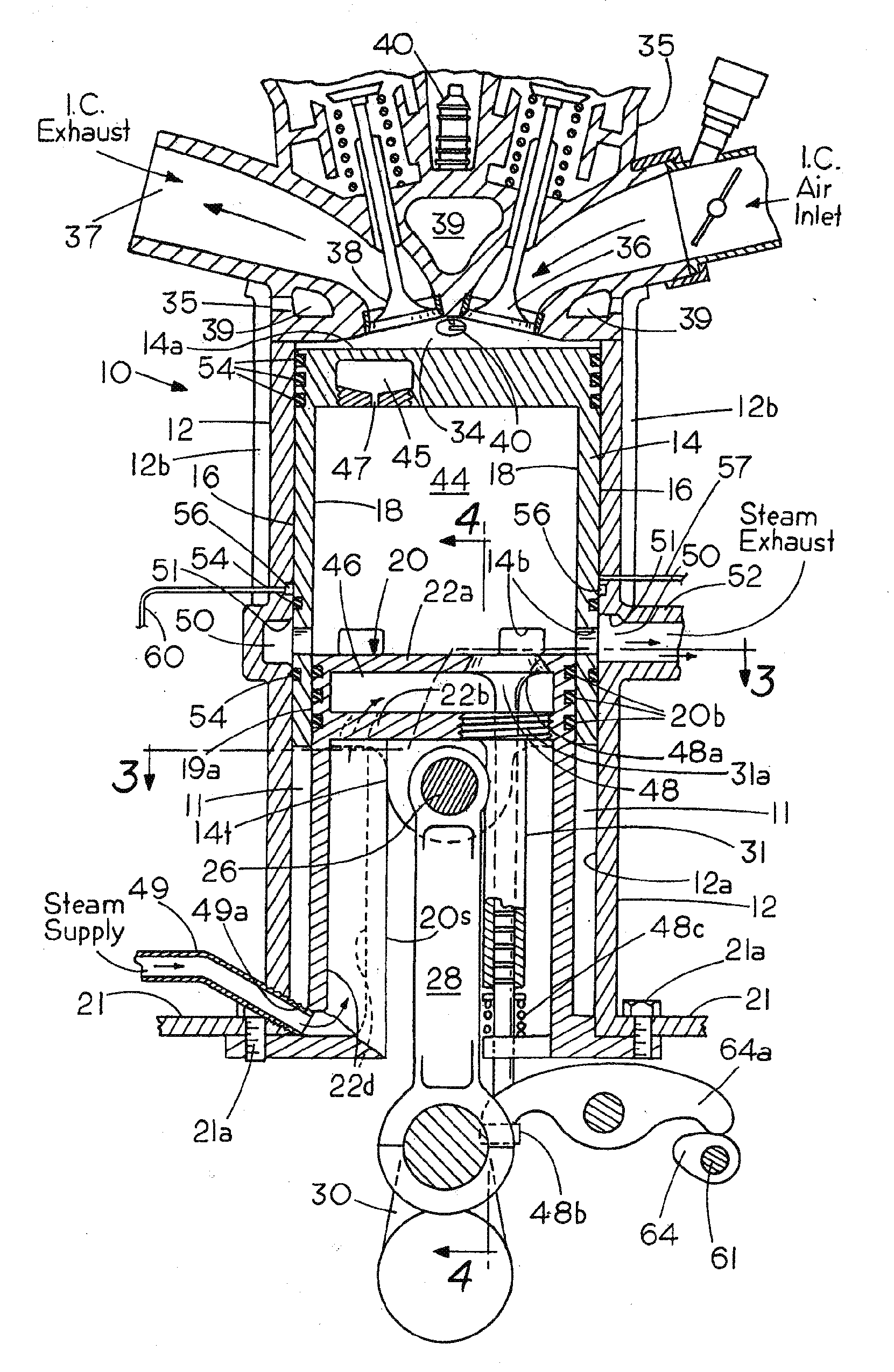
  • Figure 1
    Figure 1
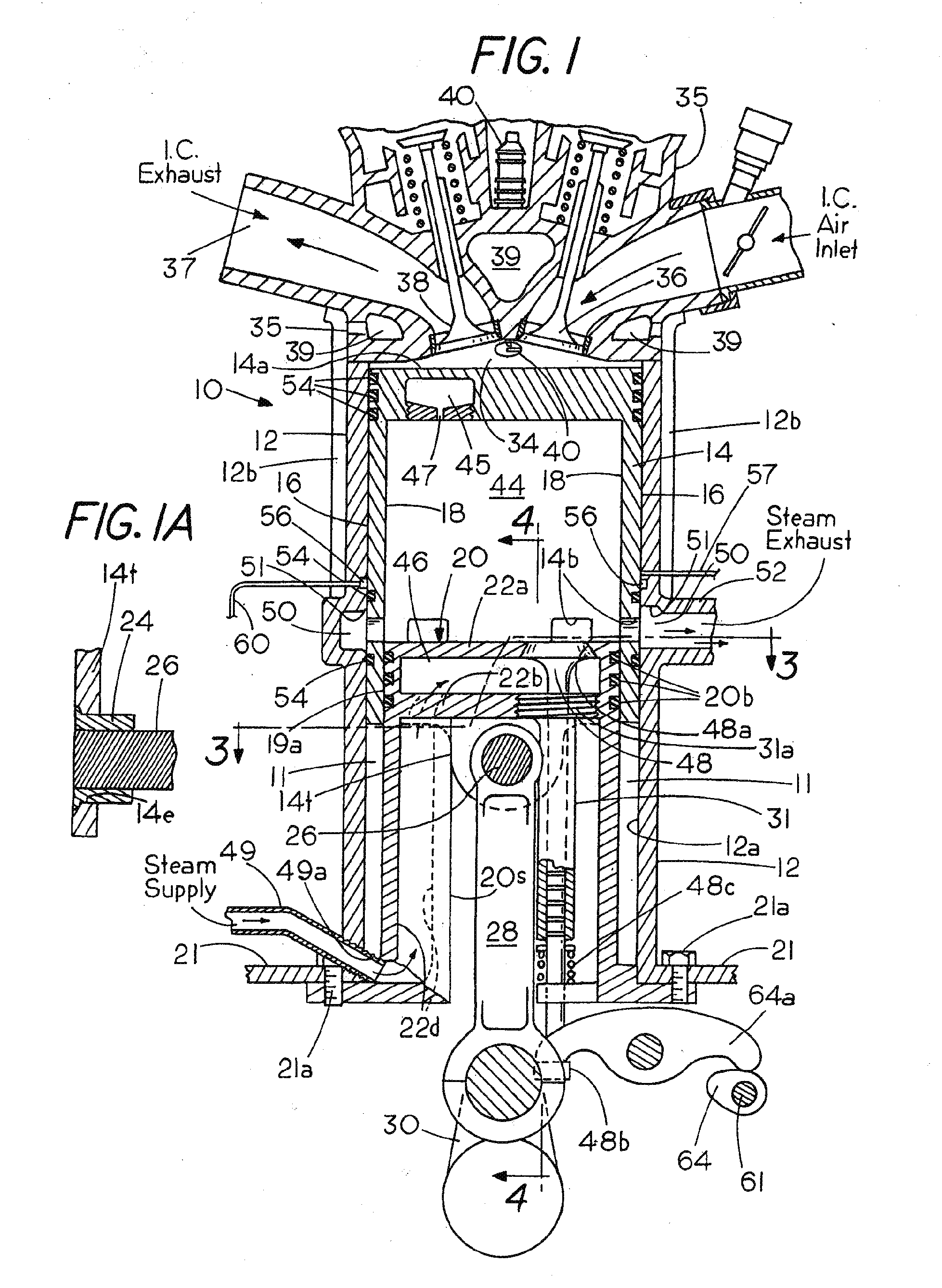
  • Figure 2
    Figure 2
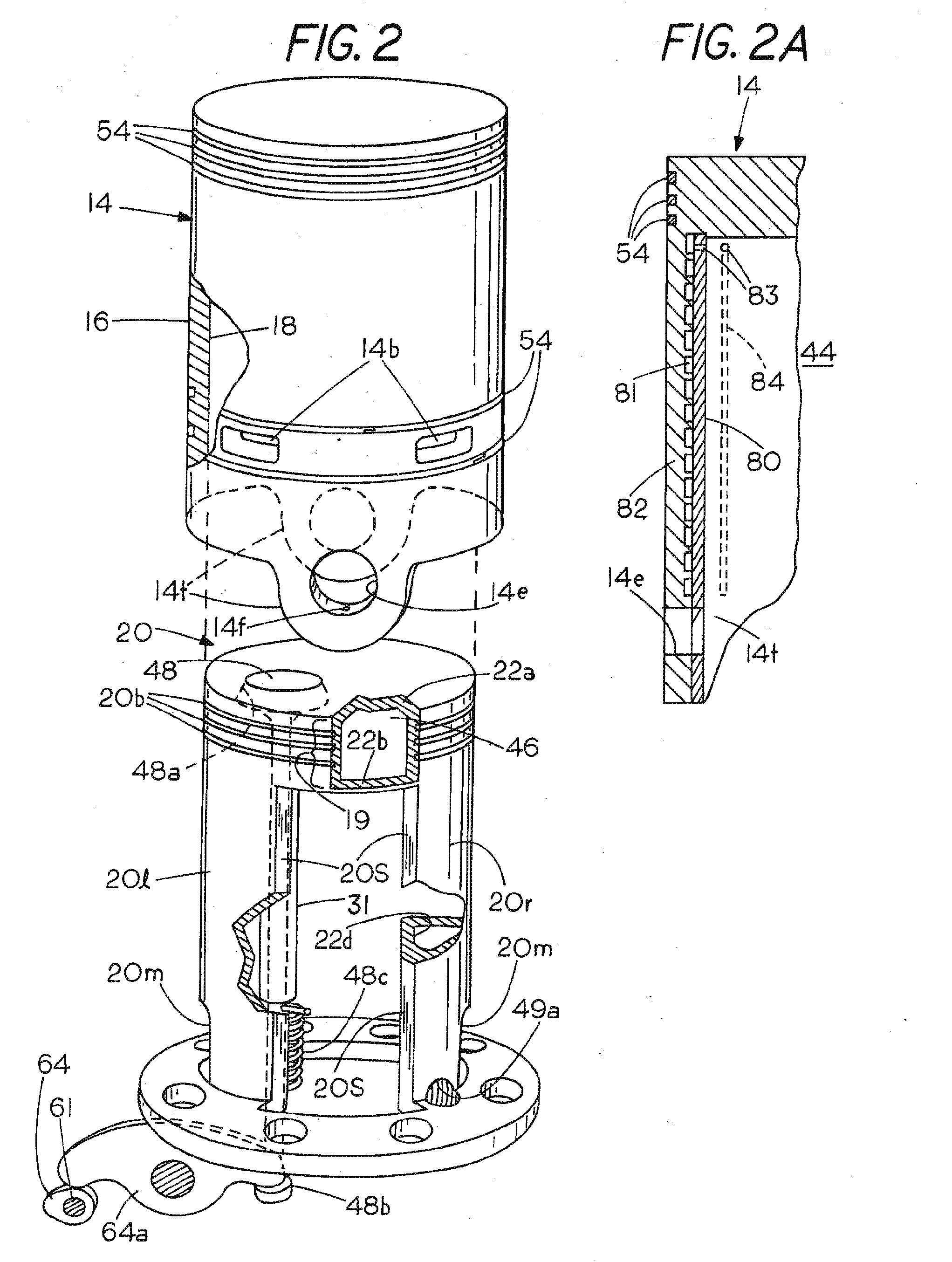
  • Figure 3
    Figure 3
Patent Text Reader

Abstract

A high efficiency combined cycle internal combustion and steam engine includes a cylinder having a piston mounted for reciprocation therein with an internal combustion chamber outward of the piston, a fixed cylinder cap sealingly and slidably mounted within the piston and a steam expansion and recompression chamber inside the piston adjacent the cylinder cap. The cylinder cap can be unheated or heated externally to reduce condensation of steam entering the steam chamber from a steam generator fired by waste combustion heat. After a steam exhaust valve closes at the top center position, residual steam is recompressed during an inward stroke of the piston up to admission pressure prior to admitting the next charge of steam. A wrist pin that is connected to an inner part of the skirt of the piston and located inwardly of the cylinder cap is coupled to a connecting rod that is secured at its inner end to a crankshaft. One valve or a pair of retractable steam inlet valves connected in series within the cylinder cap inside the piston act in cooperation with steam recompression and a variable clearance volume to achieve an effective zero steam chamber clearance and a gain in mean Rankine cycle temperature to maximize efficiency. The amount of steam admitted each outward stroke is continuously regulated to reduce fuel consumption. Engine coolant can be evaporated in an engine cooling jacket to form steam that is superheated in a combustion exhaust manifold.
Need to check novelty before this filing date? Find Prior Art

Description

[0001] This application is a continuation-in-part of Ser. No. 12 / 492,773 filed Jun. 26, 2009. The applicant claims the benefit of the following provisional and non-provisional applications entitled INTERNAL COMBUSTION ENGINE WITH AUXILIARY STEAM POWER RECOVERED FROM WASTE HEAT, Ser. No. 12 / 387,113 filed Apr. 28, 2009; Ser. No. 60 / 905,732 filed Mar. 7, 2007; Ser. No. 12 / 075,042 filed Mar. 7, 2008 (U.S. Pat. Pub. No. 2008 / 0216480A1); Ser. No. 61 / 192,254 filed Sep. 17, 2008, Ser. No. 61 / 194,608 filed Sep. 29, 2008 and Ser. No. 12 / 492,773 filed Jun. 26, 2009 which are incorporated herein by reference.FIELD OF THE INVENTION

[0002] This invention relates to internal combustion engines with supplemental steam power obtained from waste combustion heat and to a combination internal combustion (I.C.) engine and steam engine.BACKGROUND

[0003] Internal combustion piston engines although highly developed, dependable and relied upon for almost all road transportation throughout the world generally los...

Claims

the structure of the environmentally friendly knitted fabric provided by the present invention; figure 2 Flow chart of the yarn wrapping machine for environmentally friendly knitted fabrics and storage devices; image 3 Is the parameter map of the yarn covering machine
Login to View More