[0018]Furthermore, consistent with a strategy of avoiding any
exposure of the tissue at risk to even relatively hyperoxic perfusate, in another specific embodiment a method is provided wherein, during the intervention, an upstream occluding member is attached to a
guide catheter that occludes or blocks the inflow of unmodified blood into the target
artery to facilitate controlled reoxygenation. Such precise
perfusion is then externally managed via a
perfusion device to facilitate precise operator control of the oxygen
partial pressure of the perfusate. During such a procedure, an
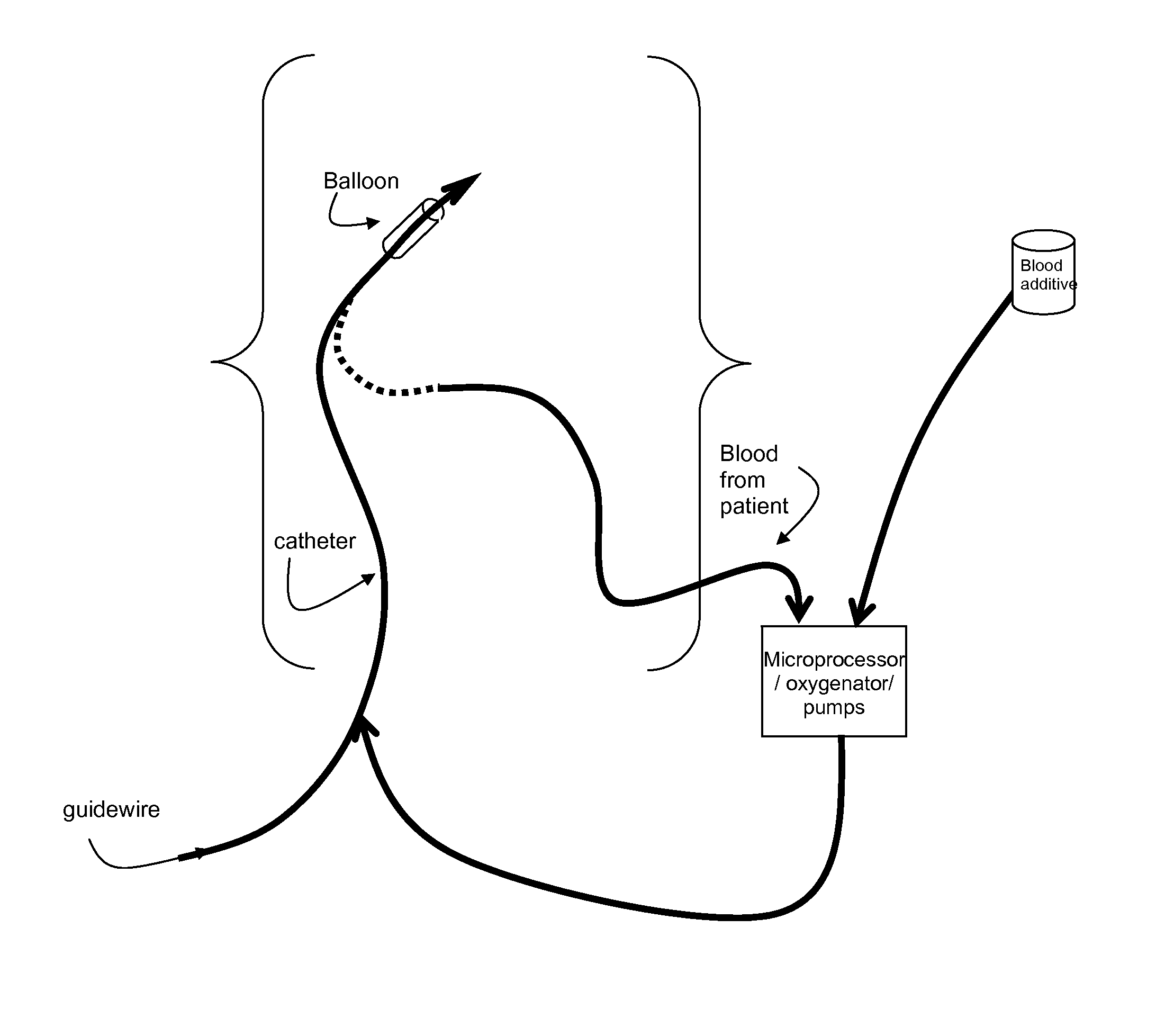
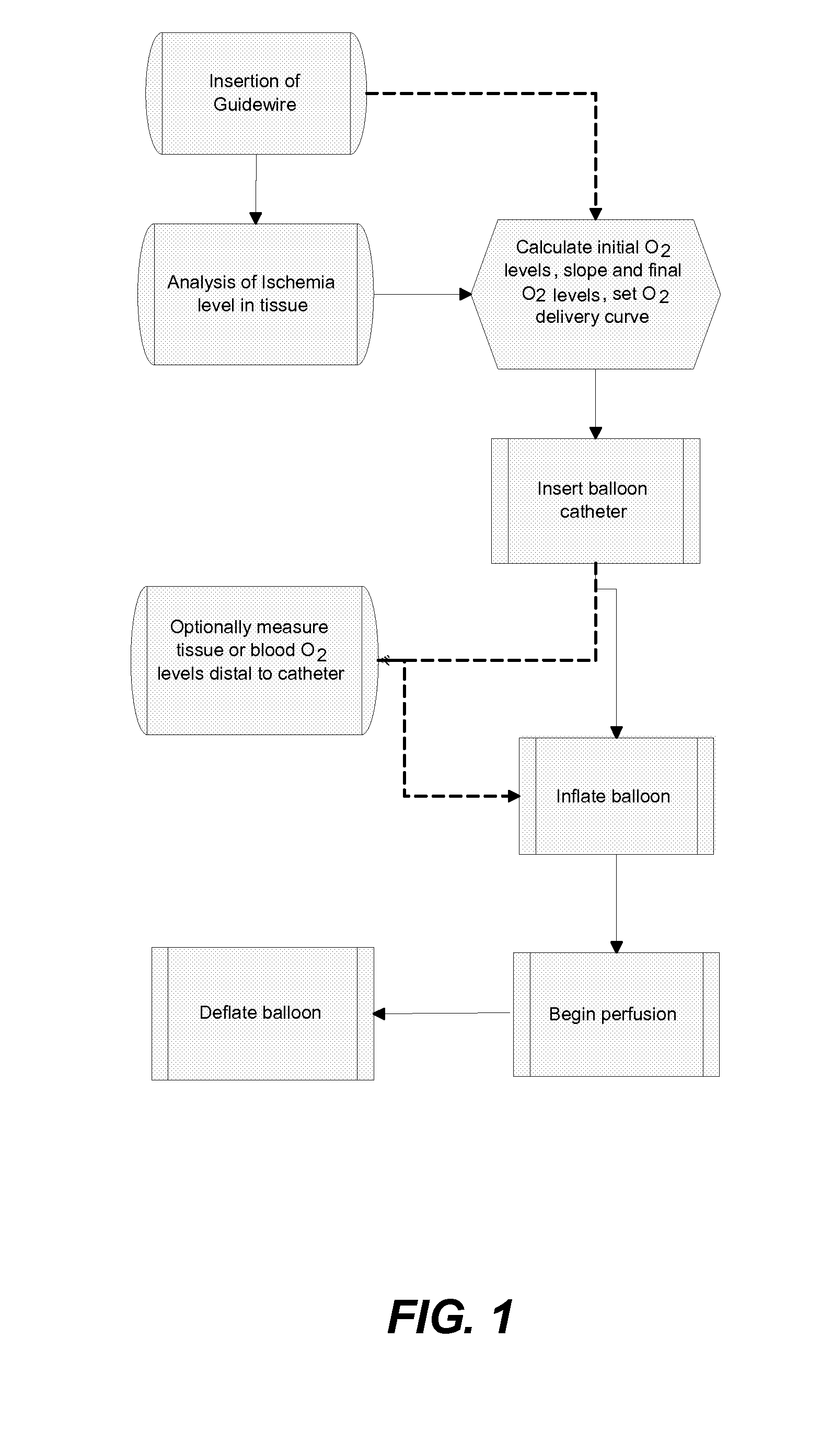
angioplasty catheter including an infusion lumen is threaded into a patient's artery, typically using a guidewire and through the introducing lumen of the previously described
guide catheter. After the
balloon is advanced through the vessel narrowing, the
balloon is inflated against the blockage. Prior to or at the precise moment of inflation of the balloon, the modulated
oxygen content fluid administration begins to the patient. In some embodiments, the balloon is inflated prior to administration of a modulated
oxygen content fluid. In certain other embodiments, a fluid is administered prior to inflation of the balloon, in particular a
low oxygen content fluid that can be more consistent with the pre-existent condition of the tissues in question. In this manner, no highly oxygenated blood is allowed to perfuse the ischemic tissue and initiate reoxygenation injury,
oxidative stress, and explosive oxygen
radical formation, membrane damage in the form of peroxidation of lipid bilayers, deranged
calcium flux,
contracture or the
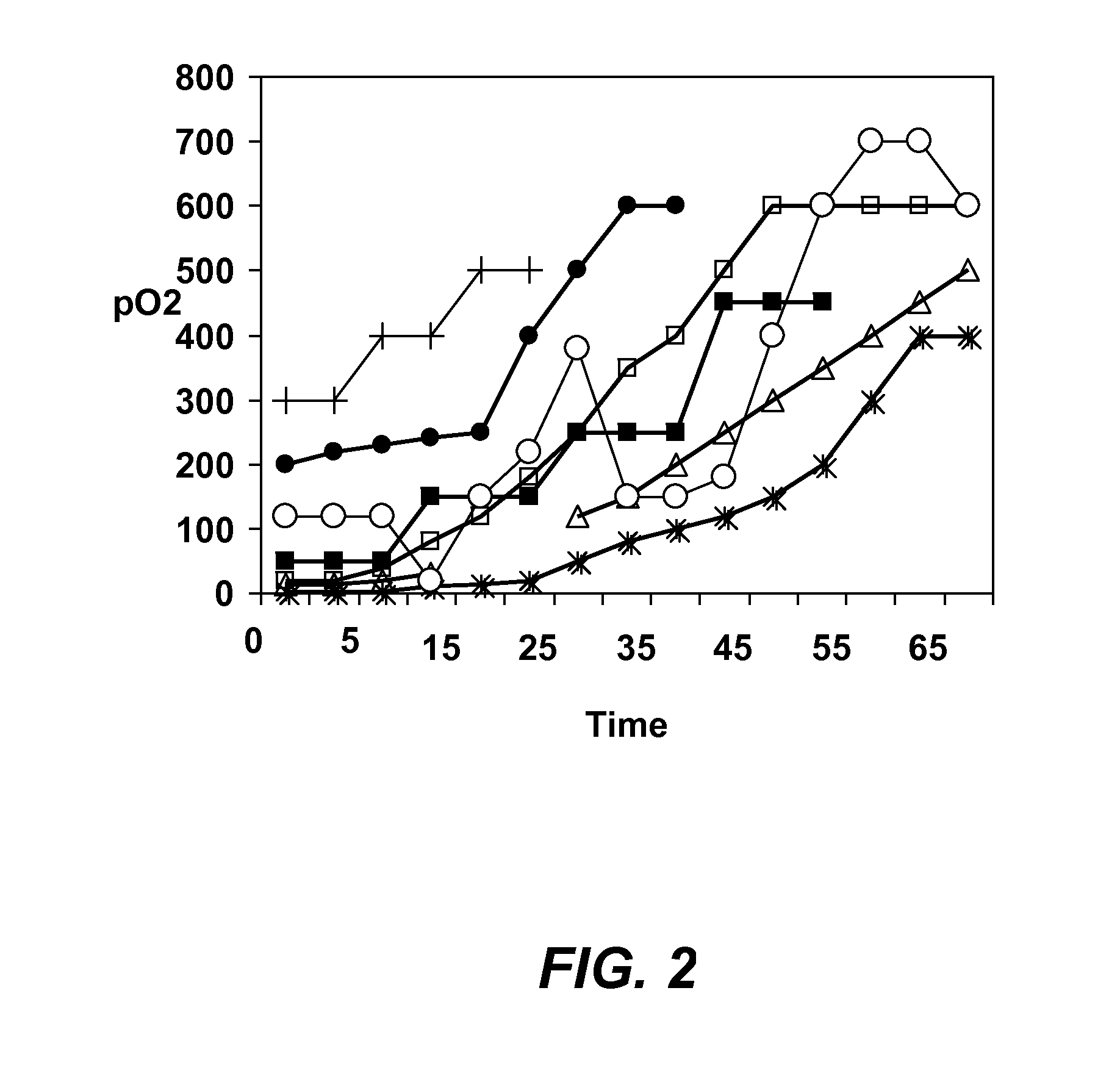
resultant release of inflammatory mediators in response to said injury. As the oxygen gradient is ramped gradually as a function of time, additional time is provided for restoration of more appropriate ionic positioning (at the
cell membrane and / or within the sarcoplasmic reticular membrane).
[0022]In some embodiments, the oxygen content of the fluid is modulated by use of an
oxygenator. In certain embodiments, the fluid is a
low oxygen content fluid such as
venous blood and the content of oxygen is increased, such as through an
oxygenator. In some other embodiments, the oxygen content is regulated by at least one deoxygenator. In certain embodiments, the initial fluid is a
high oxygen content fluid such as
arterial blood and the content of oxygen is reduced.
[0027]In another embodiment a patient's blood may be rerouted to a
heart lung machine, mini-
heart lung machine or
cardiopulmonary bypass circuit either with or without the capacity for an
oxygenator or separate cardioplegia circuit. As such, wherein the heart's
workload is diminished and therefore the minute-to-minute oxygen demand of the heart is limited, these maneuvers may also effect changes in the overall supply-demand balance of oxygen to the heart and may, by itself, limit or eliminate the ischemic conditions.



 Login to View More
  Login to View More