Compositions of activated botulinum holotoxin type B (150 kD)

a technology of activated botulinum toxin and composition, which is applied in the direction of macromolecular non-active ingredients, antibody medical ingredients, peptide/protein ingredients, etc., can solve the problems of obliterating the therapeutic effectiveness of botulinum toxin type-a-based pharmaceuticals, affecting the clinical efficacy, and reducing the therapeutic effect of botulinum toxin type-b. achieve the effect of increasing the level of nicked

a technology of activated botulinum toxin and composition, which is applied in the direction of macromolecular non-active ingredients, antibody medical ingredients, peptide/protein ingredients, etc., can solve the problems of obliterating the therapeutic effectiveness of botulinum toxin type-a-based pharmaceuticals, affecting the clinical efficacy, and reducing the therapeutic effect of botulinum toxin type-b. achieve the effect of increasing the level of nicked

US20100112006A1Inactive Publication Date: 2010-05-06SOLSTICE NEUROSCI

Image

Smart Image Click on the blue labels to locate them in the text.
Viewing Examples
Smart Image
  • Compositions of activated botulinum holotoxin type B (150 kD)
  • Compositions of activated botulinum holotoxin type B (150 kD)
  • Compositions of activated botulinum holotoxin type B (150 kD)

Examples

Experimental program
Comparison scheme
Effect test

example 1

Preparation of an Activated Botulinum Holotoxin Type B (150 kD) Composition

Fermentation (Cell Growth) Stage

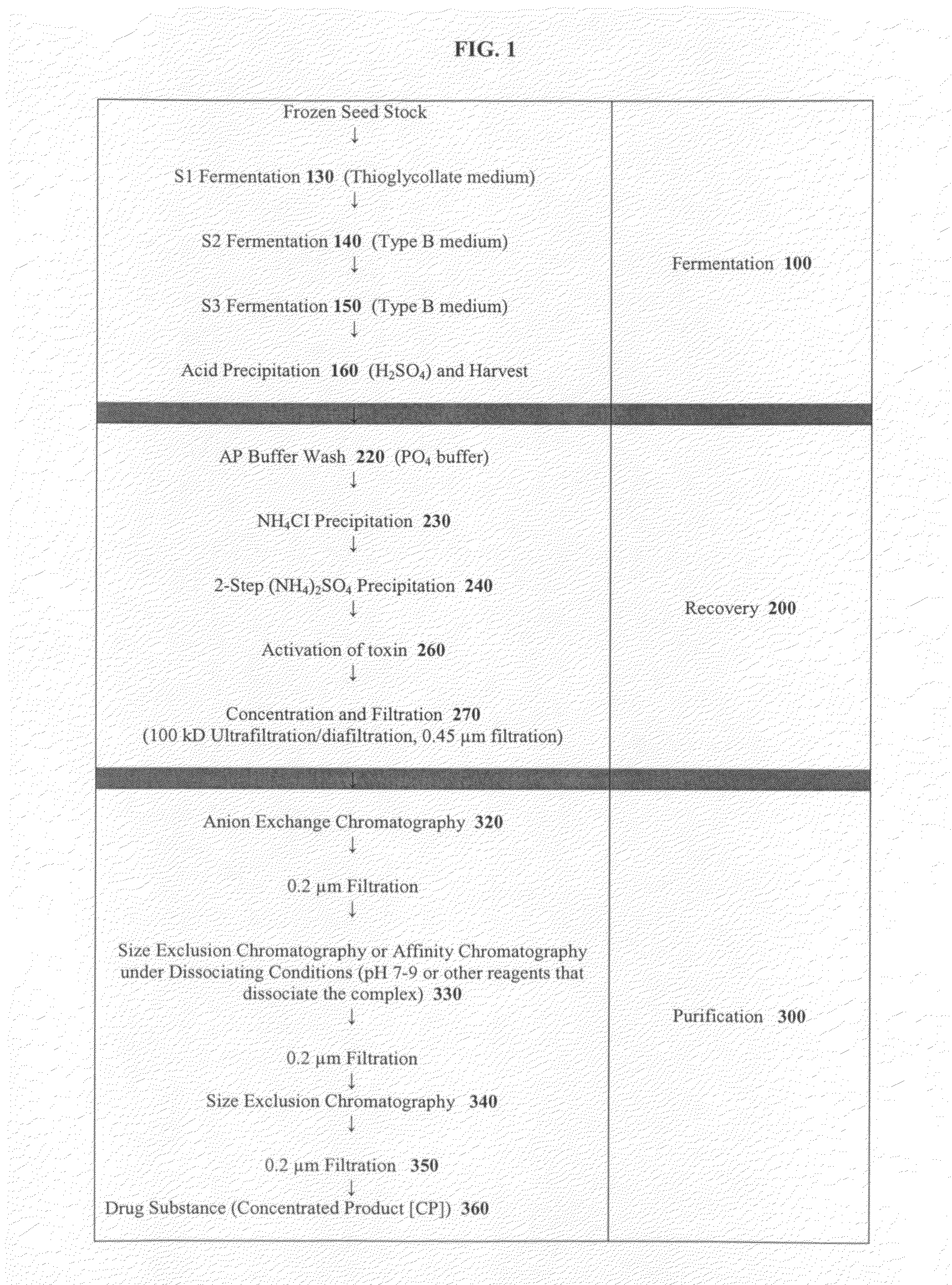
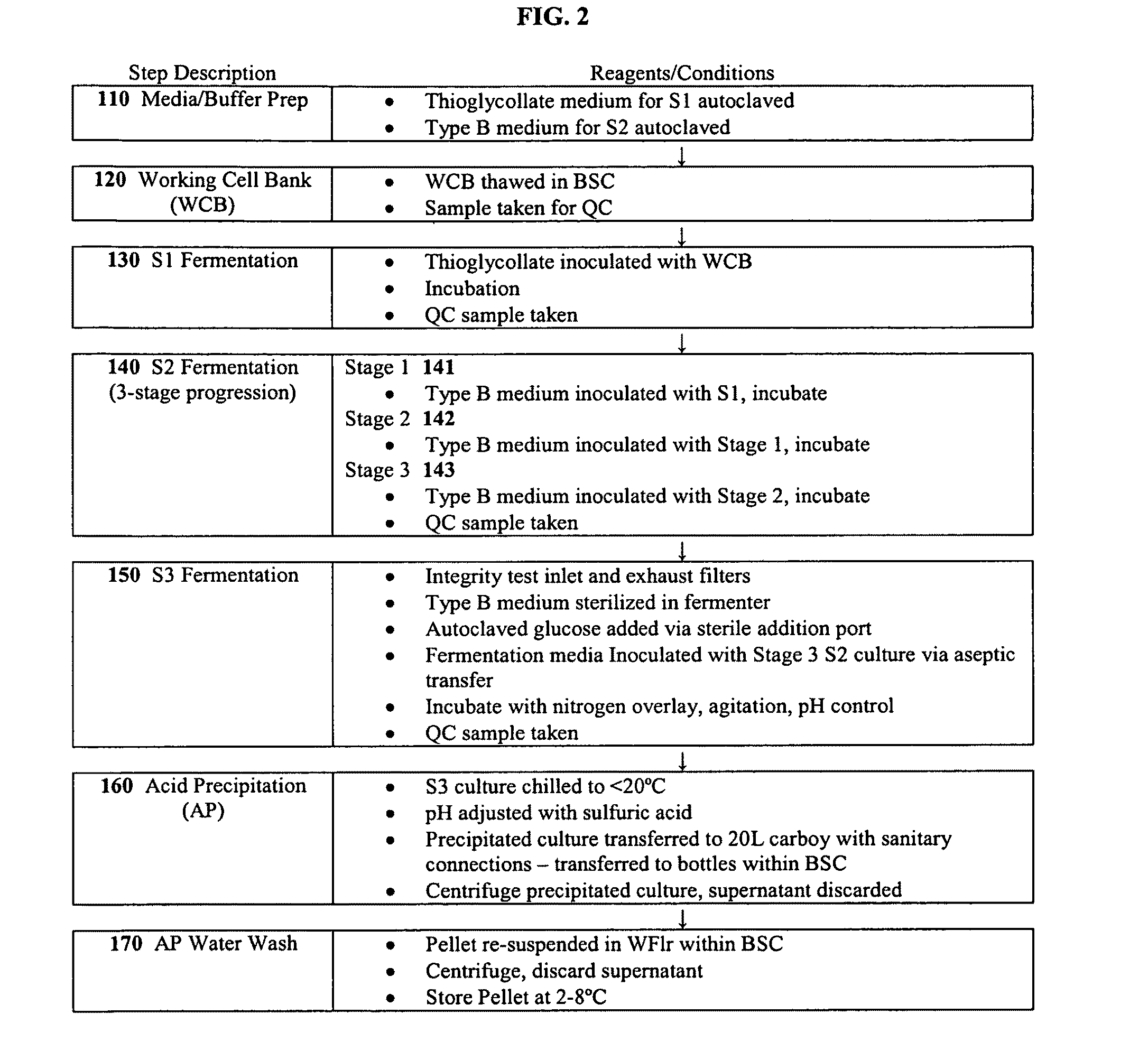
[0098]The drug substance manufacturing process, which utilizes a frozen culture of C. botulinum, Type B Bean strain (working cell bank), proceeds through two successive seed cultures (S1 and S2). The S2 seed culture is used as the inoculum for the production culture (S3). In S3, a fermentor containing liquid medium of casein hydrolysate (trypticase peptone), yeast extract, cysteine hydrochloride, and glucose is inoculated with an S2 culture. After fermentation, the crude toxin complex is precipitated by acidifying the culture.

example 2

Preparation of an Activated Botulinum Holotoxin Type B (150 kD) Composition

Recovery (Activation) Stage

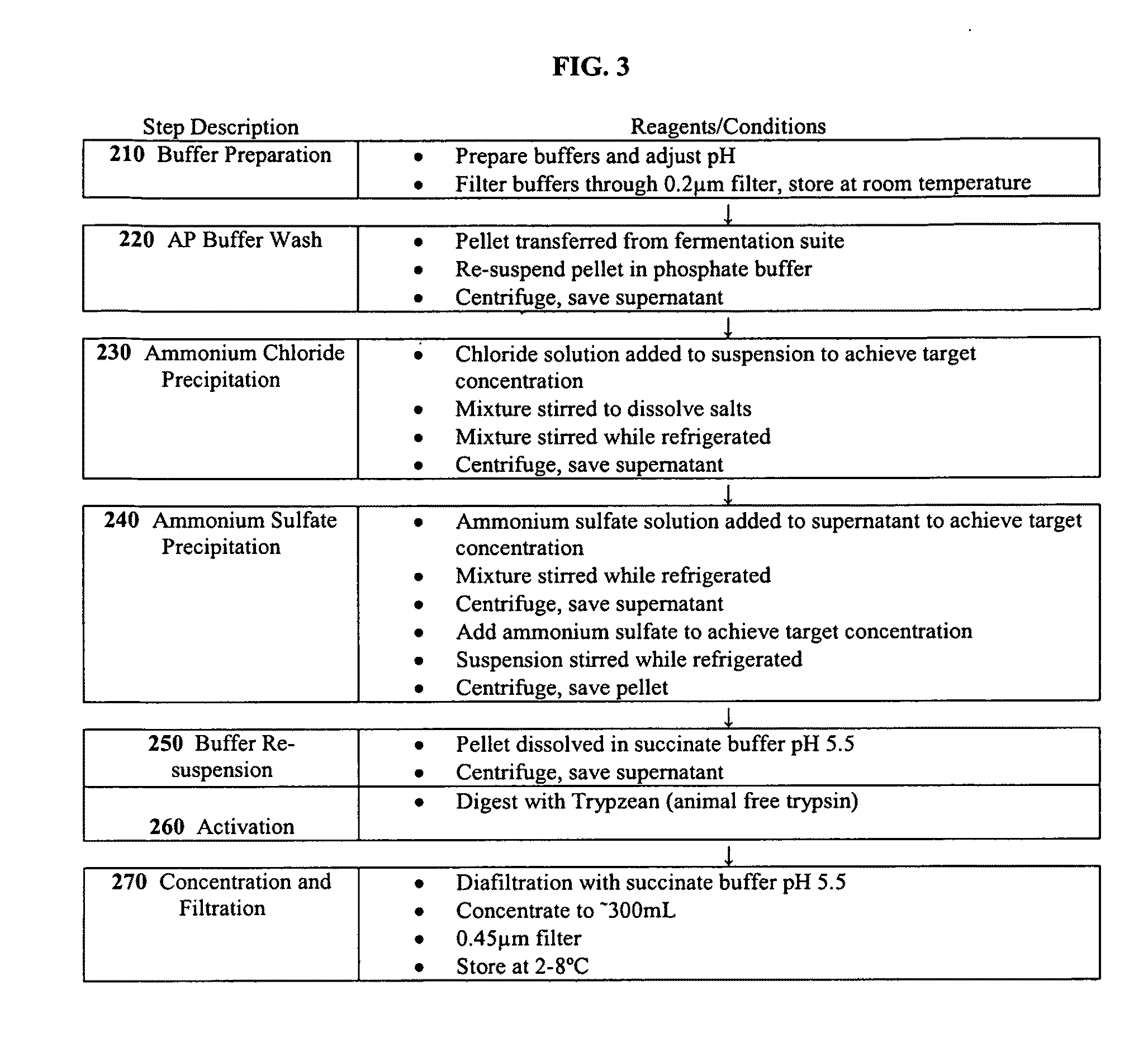
[0099]The precipitated toxin is re-suspended in phosphate buffer and purified by a series of salt precipitations including 2 M ammonium chloride / 0.7 mM magnesium chloride precipitation step, a 15% ammonium sulfate precipitation step and 30% ammonium sulfate precipitation step. The pellet is re-suspended in succinate buffer. The dissolved toxin is digested with TrypZean™ (animal free proteolytic enzyme) to nick and activate the toxin at temperature range of 20° C.-40° C. and pH of 5-6, for a period of 30 min to 120 minute. Upon completion of incubation, the toxin solution is diafiltered to remove solutes and the added proteolytic enzyme, and then filtered (0.45 μm). The activation yields toxin with percentage nicking of >90%.

example 3

Preparation of an Activated Botulinum Holotoxin type B (150 kD) Composition

Purification Stage

[0100]Purification is accomplished using anion exchange, affinity or size exclusion under dissociated conditions (pH 7-9 or other dissociating agents) and size exclusion column (SEC) chromatography as a polishing step at pH 5.5, each followed by 0.2 μm filtration. The concentrated product is produced at the completion of the filtering step from the final SEC column.

the structure of the environmentally friendly knitted fabric provided by the present invention; figure 2 Flow chart of the yarn wrapping machine for environmentally friendly knitted fabrics and storage devices; image 3 Is the parameter map of the yarn covering machine
Login to View More

PUM

PropertyMeasurementUnit
pHaaaaaaaaaa
pHaaaaaaaaaa
incubation timeaaaaaaaaaa
Login to View More

Abstract

The present invention relates to pharmaceutical compositions of activated botulinum holotoxin type B (150 kD). In particular, the present invention relates to botulinum toxin type B pharmaceutical compositions wherein at least 90% of said botulinum toxin type B is activated (i.e., “nicked”), and wherein at least 99% said nicked botulinum toxin type B is a 150 kD holotoxin (i.e., “stripped”). The invention also relates to a process of activating and stripping botulinum toxin type B wherein at least 90% of said botulinum toxin type B is nicked, and wherein at least 99% of said nicked botulinum toxin type B is stripped. The invention further relates to methods for the treatment of a variety of neuromuscular diseases, pain, inflammatory and cutaneous disorders comprising administering a pharmaceutical composition of activated botulinum holotoxin type B (150 kD) wherein at least 90% of said botulinum toxin type B is nicked, and wherein at least 99% of said nicked botulinum toxin type B is stripped.

Description

STATEMENT OF RELATED APPLICATIONS[0001]This application claims the benefit of U.S. Patent Application No. 61 / 198,106 filed on Nov. 3, 2008 which is incorporated herein by reference in its entirety.FIELD OF THE INVENTION[0002]The present invention relates to pharmaceutical compositions of activated botulinum holotoxin type B (150 kD). In particular, the present invention relates to botulinum toxin type B pharmaceutical compositions wherein at least 90% of said botulinum toxin type B is activated (i.e., “nicked”), and wherein at least 99% said nicked botulinum toxin type B is a 150 kD holotoxin (i.e., “stripped”). The invention also relates to a process of activating and stripping botulinum toxin type B wherein at least 90% of said botulinum toxin type B is nicked, and wherein at least 99% of said nicked botulinum toxin type B is stripped. The invention further relates to methods for the treatment of a variety of neuromuscular diseases, pain, inflammatory and cutaneous disorders compr...

Claims

the structure of the environmentally friendly knitted fabric provided by the present invention; figure 2 Flow chart of the yarn wrapping machine for environmentally friendly knitted fabrics and storage devices; image 3 Is the parameter map of the yarn covering machine
Login to View More

Application Information

Patent Timeline
06 May 2010
Publication
US20100112006A1
IPC
A61K39/08; C12P21/06
CPC
A61K9/0019; A61K38/4893; A61K47/42
Inventors
GARCIA, SHERYL ANN; MARIN, BRET