Mucus /
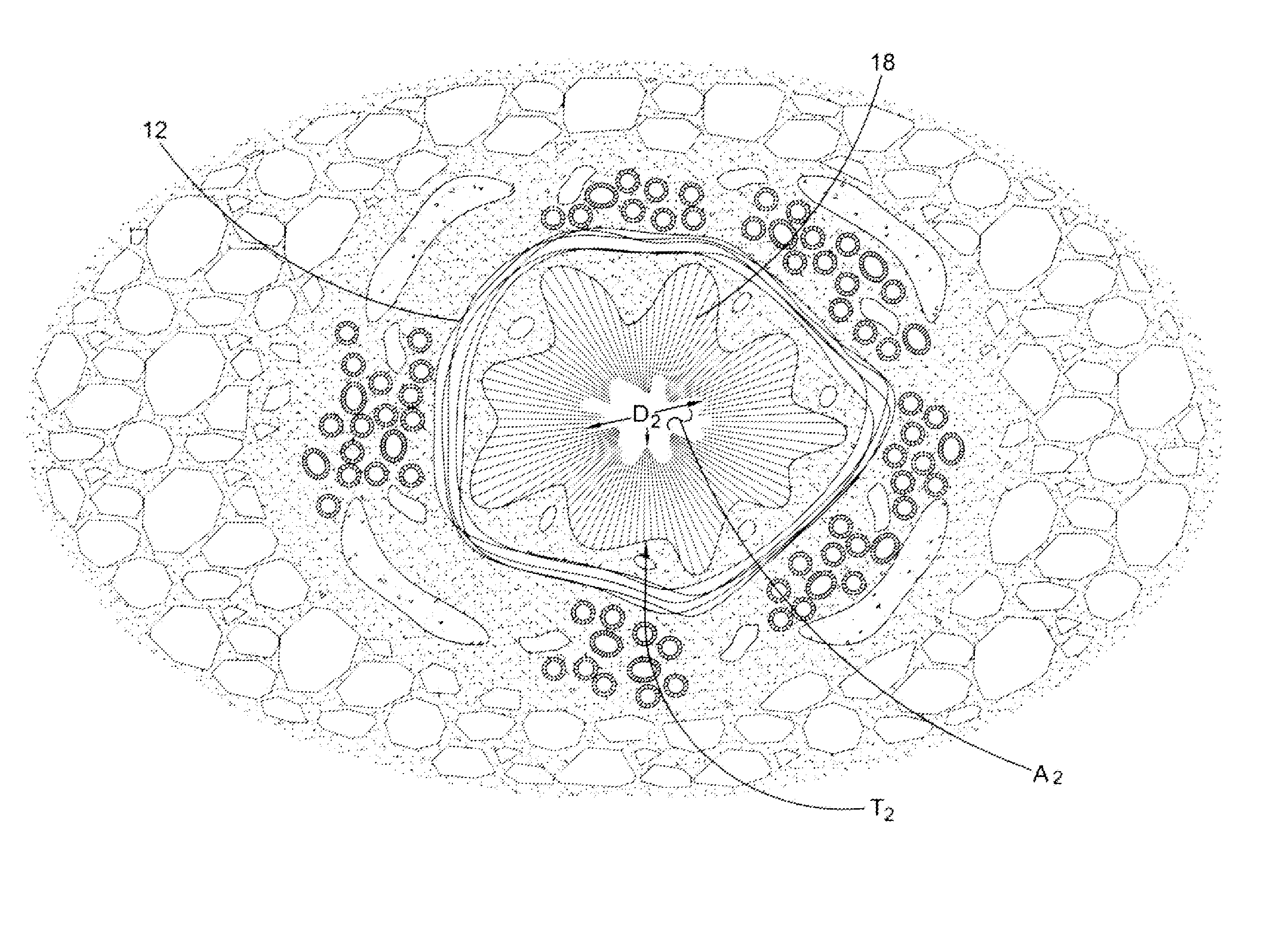
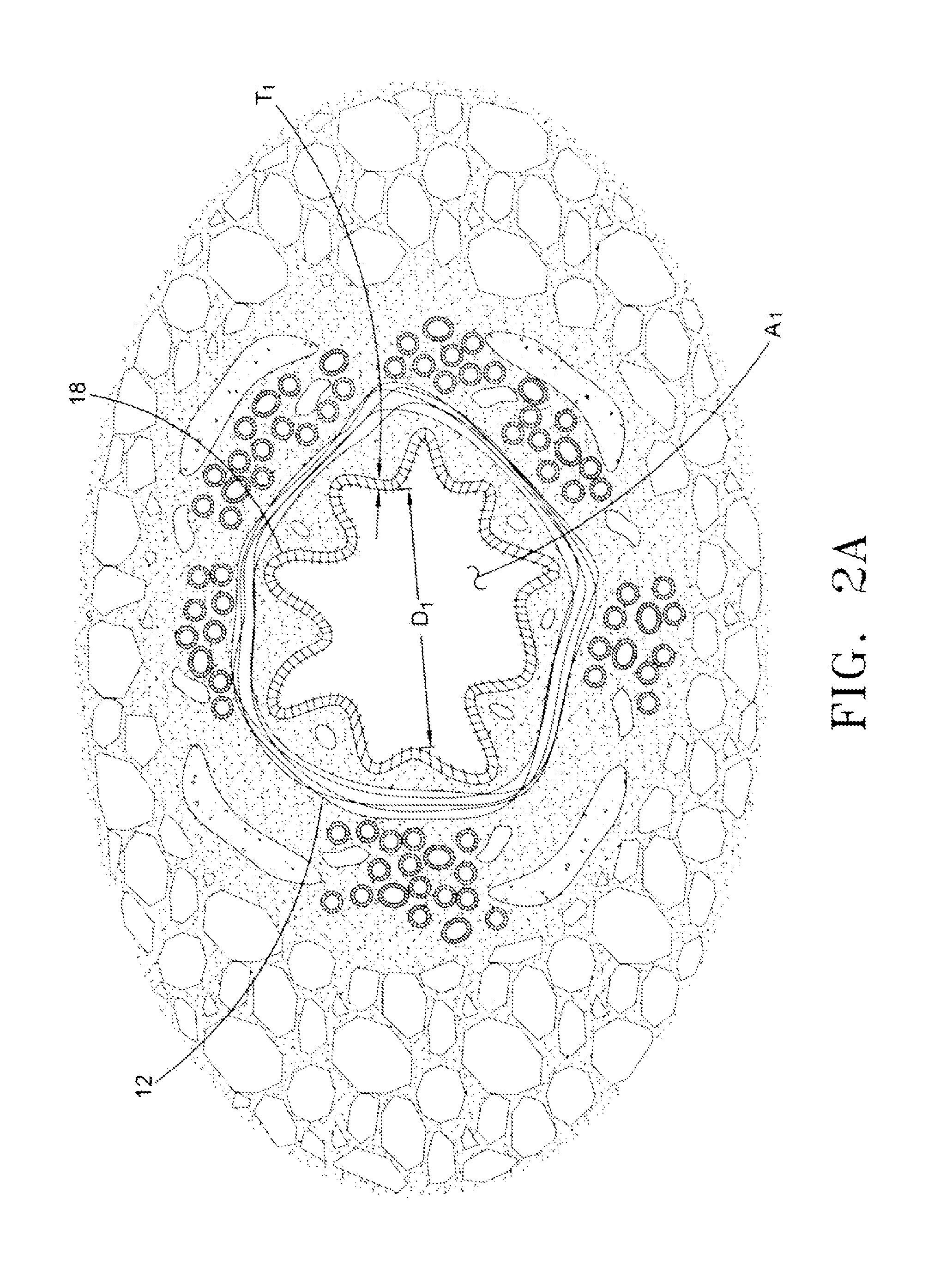
phlegm and the inflamed bronchial lining (18 of FIGS. 2A and 2B) constrict the airways causing them to become smaller and tighter which makes it difficult to get air into and out of the lungs.
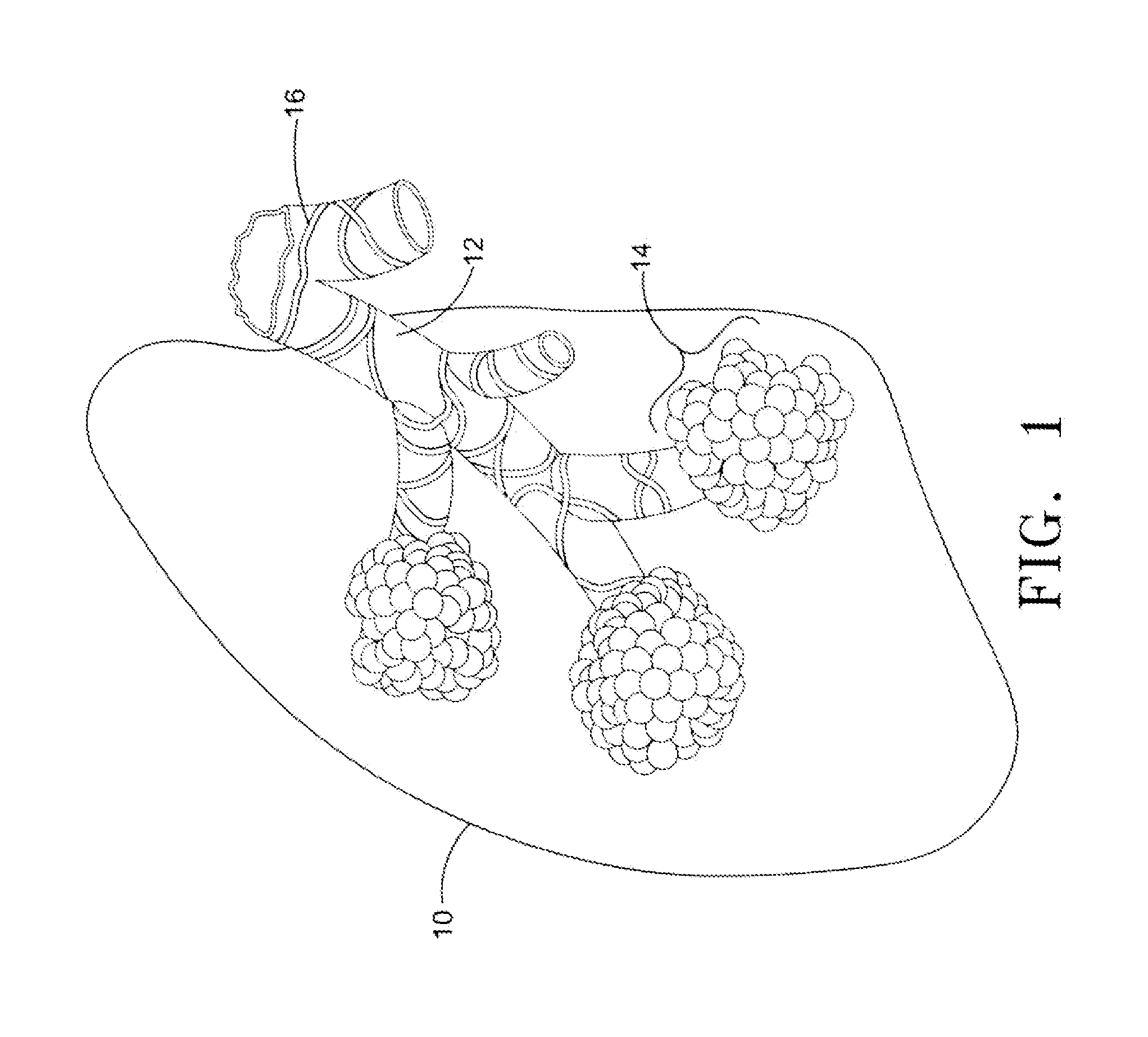
Also, elasticity of the lung (10) itself is decreased leading to the loss of support of the
airway embedded in the lung (10) which often times leads to collapse of the
airway thereby further limiting
airflow.
A person with COPD may not be able to completely finish breathing out before needing to take another breath.
Easy filling and poor emptying of the lungs leads to progressive hyperexpansion or dynamic hyperinflation of the lungs resulting in inefficient breathing
mechanics.
Hyperexpansion / hyperinflation of the lungs, in addition to the poor
oxygenation capability, makes it progressively difficult to breathe.
In order to compensate for the breathing deficiencies, some people with advanced COPD manage to breathe faster; however, as a result, they usually develop dyspnea (chronic shortness of breath).
Currently, there is no cure available for
chronic bronchitis; most treatment is focused on making the symptoms less severe and trying to prevent further damage.
In contrast, thorascopic
laser treatment, although capable of ablating emphysematous tissue only at the lung surface, prohibits simultaneous bilateral lung applications.
Because of the dangers associated with LVRS and despite advances in
medical therapy, a significant number of patients with advanced COPD face a miserable existence and are at an extremely high risk for death.
However, these developments are associated, as well, with a fair amount of surgically related setbacks including complications such as large and difficult to manipulate operating mechanisms and the inability to control therapy to the affected area.
This is due to the fact that
ablation techniques used historically have been non-selective in that they mediate
cell death with methods such as
extreme heat or cold temperatures.
The aforementioned methods of focal destruction of affected areas have been proven to non-selectively and adversely affect blood vessels, nerves, and connective structures adjacent to the
ablation zone.
Disruption of the nerves locally impedes the body's natural ability to sense and regulate homeostatic and
repair processes at and surrounding the
ablation region.
Without the
advantage of a steady introduction of
new materials or natural substances to a damaged area, reconstruction of, the blood vessels and internal linings become retarded as redeployment of cellular materials is inefficient or even impossible.
Therefore historical ablation treatments do not leave tissue in an optimal state for self-repair in regenerating the region.
More precisely, IRE treatment acts by creating defects in the
cell membrane that are nanoscale in size and that lead to a disruption of
homeostasis while sparing connective and scaffolding structure and tissue.



 Login to View More
  Login to View More