
Surface treatment method by using the nh3 plasma treatment to modify the sensing thin-film
a surface treatment and sensing technology, applied in the field of sensing thin film surface treatment, can solve the problems of unfavorable industrial production process, increased production time and cost, and desorption, and achieve the effects of improving biochemical test results, shortening process time, and maintaining chemical immobilization stability
- Summary
- Abstract
- Description
- Claims
- Application Information
AI Technical Summary
Benefits of technology
Problems solved by technology
Method used
Image

Examples
Embodiment Construction
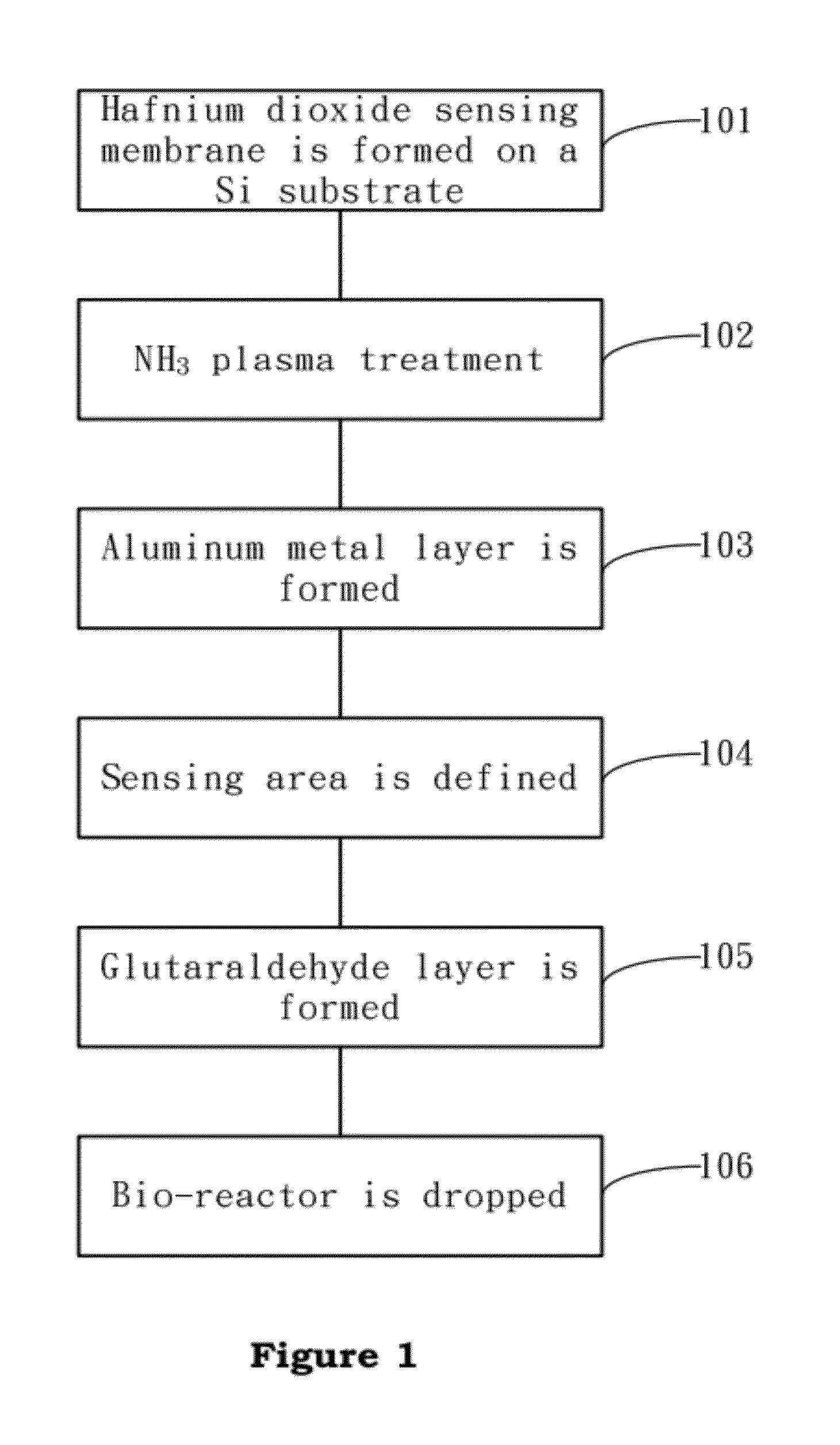
[0020]The present invention provides a surface treatment method by using the NH3 plasma treatment to modify the sensing thin-film. The detailed description of an embodiment is described as follows:
[0021]FIG. 1 is a diagram illustrating the flow chart diagram of the present invention. As shown in Step 101 of FIG. 1, the tetrakis(ethylmethylamino) hafnium (TEMAH) is used as the precursor. The Atomic Layer Deposition (ALD) is used and the argon is used as the carrier. The water steam is introduced to provide the oxygen and 15 nm thick hafnium dioxide sensing membrane is formed on a p-type silicon substrate at 200° C.
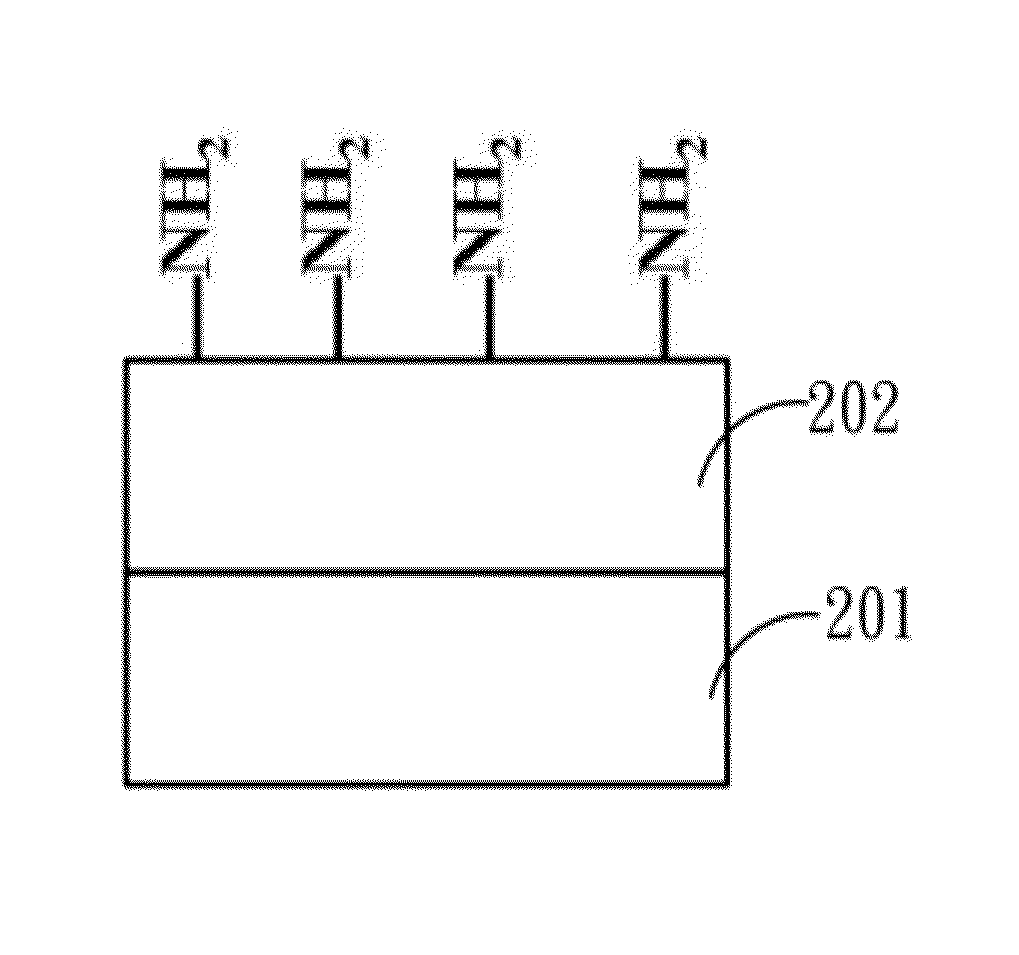
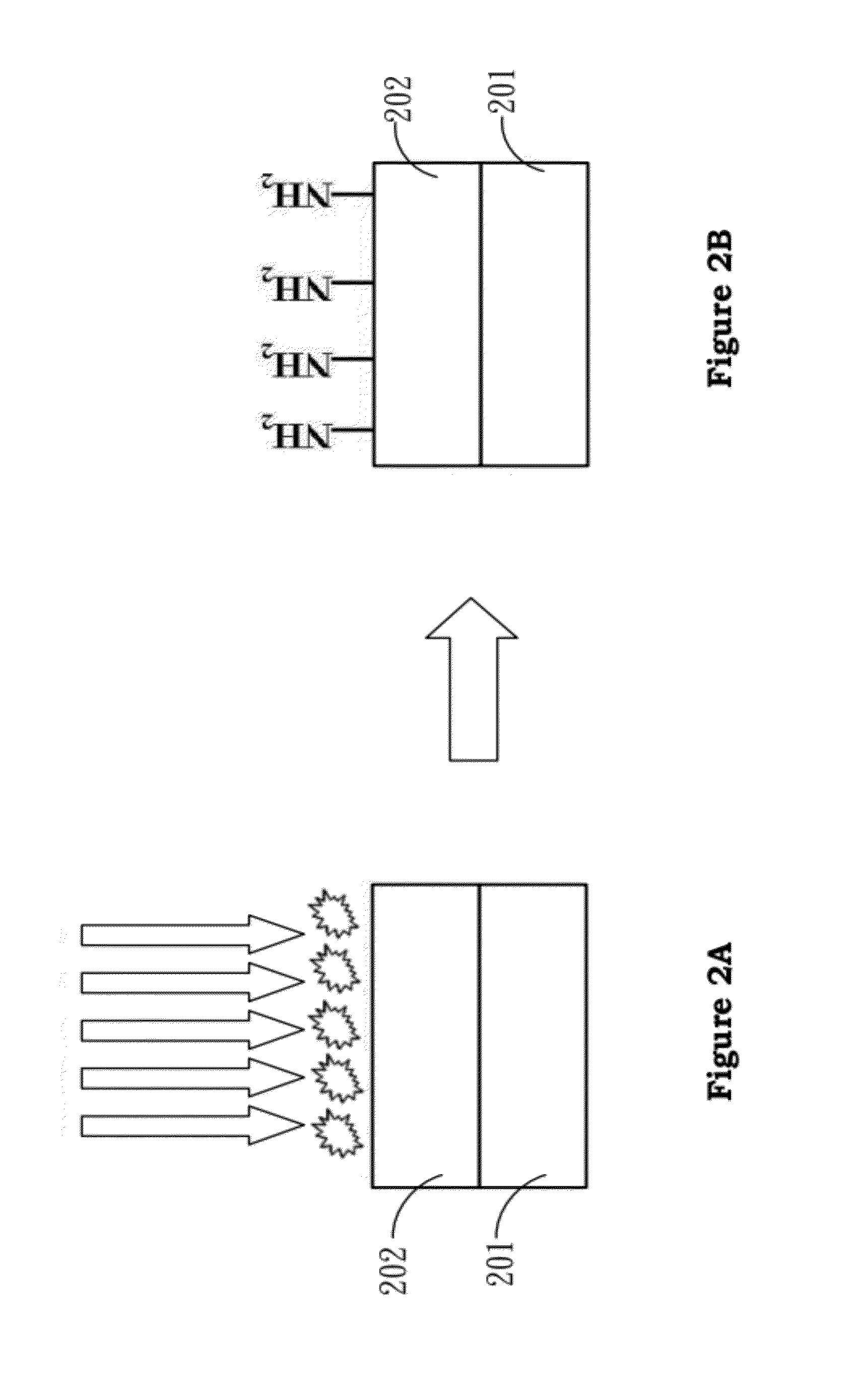
[0022]As shown in Step 102 of FIG. 1, under constant argon and ammonia, the NH3 plasma is used to treat the surface of hafnium dioxide sensing membrane at 50 W to 200 W to form the amino group (—NH2).
[0023]FIG. 2A is a diagram illustrating the NH3 plasma treatment of the present invention. The Si substrate 201 and the hafnium dioxide sensing membrane 202 are shown in the FI...
PUM
| Property | Measurement | Unit |
|---|---|---|
| temperature | aaaaa | aaaaa |
| thickness | aaaaa | aaaaa |
| thick | aaaaa | aaaaa |
Abstract
Description
Claims
Application Information
 Login to View More