
Nanofluidic device with silicon nitride membrane
a silicon nitride and nano-fluidic technology, applied in the field of flow cells, can solve the problems of membrane cracking, spalling, oxidation, etc., and achieve the effect of reducing the number of oxidized particles, and improving the stability of the membran
- Summary
- Abstract
- Description
- Claims
- Application Information
AI Technical Summary
Benefits of technology
Problems solved by technology
Method used
Image

Examples
Embodiment Construction
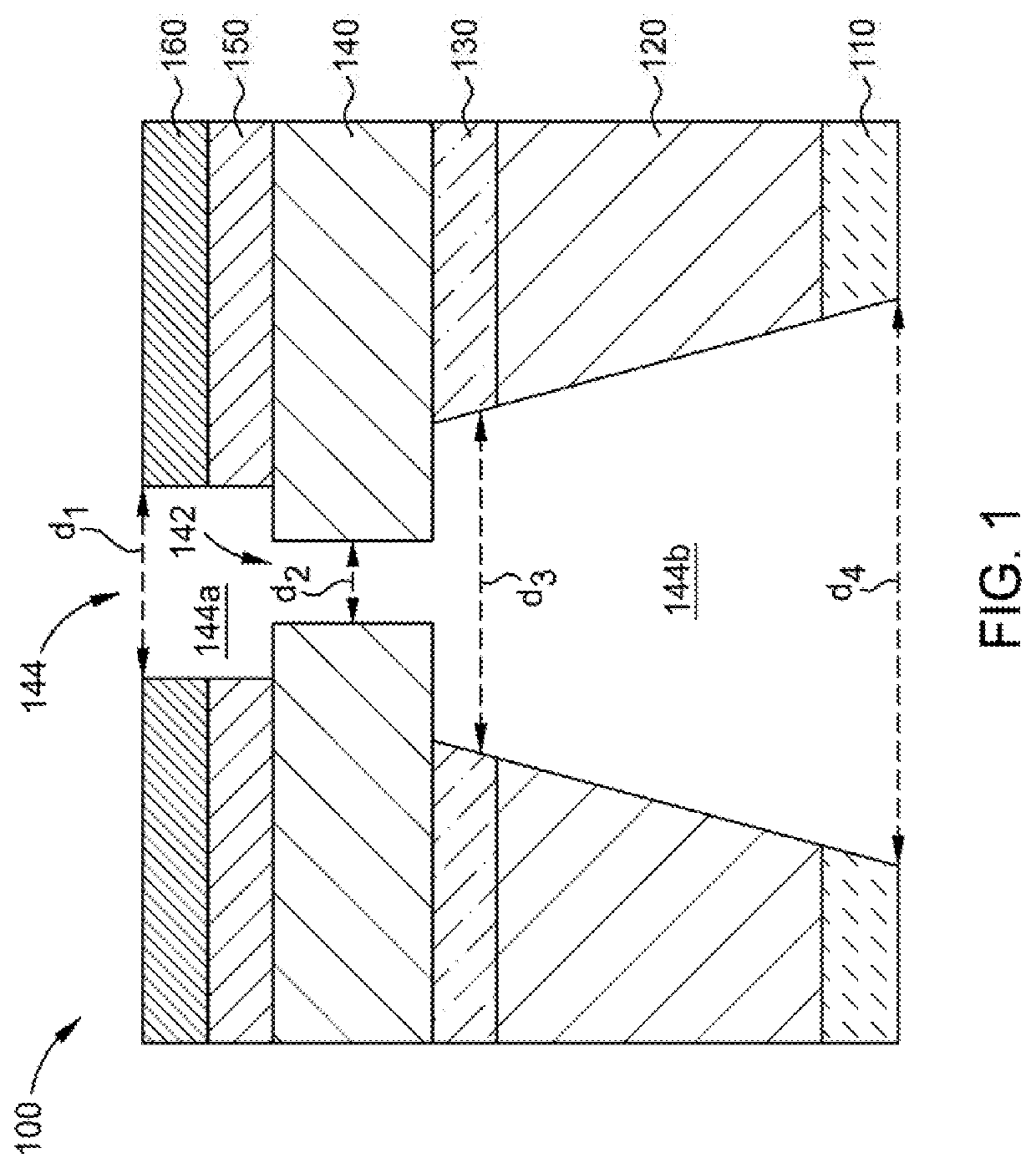
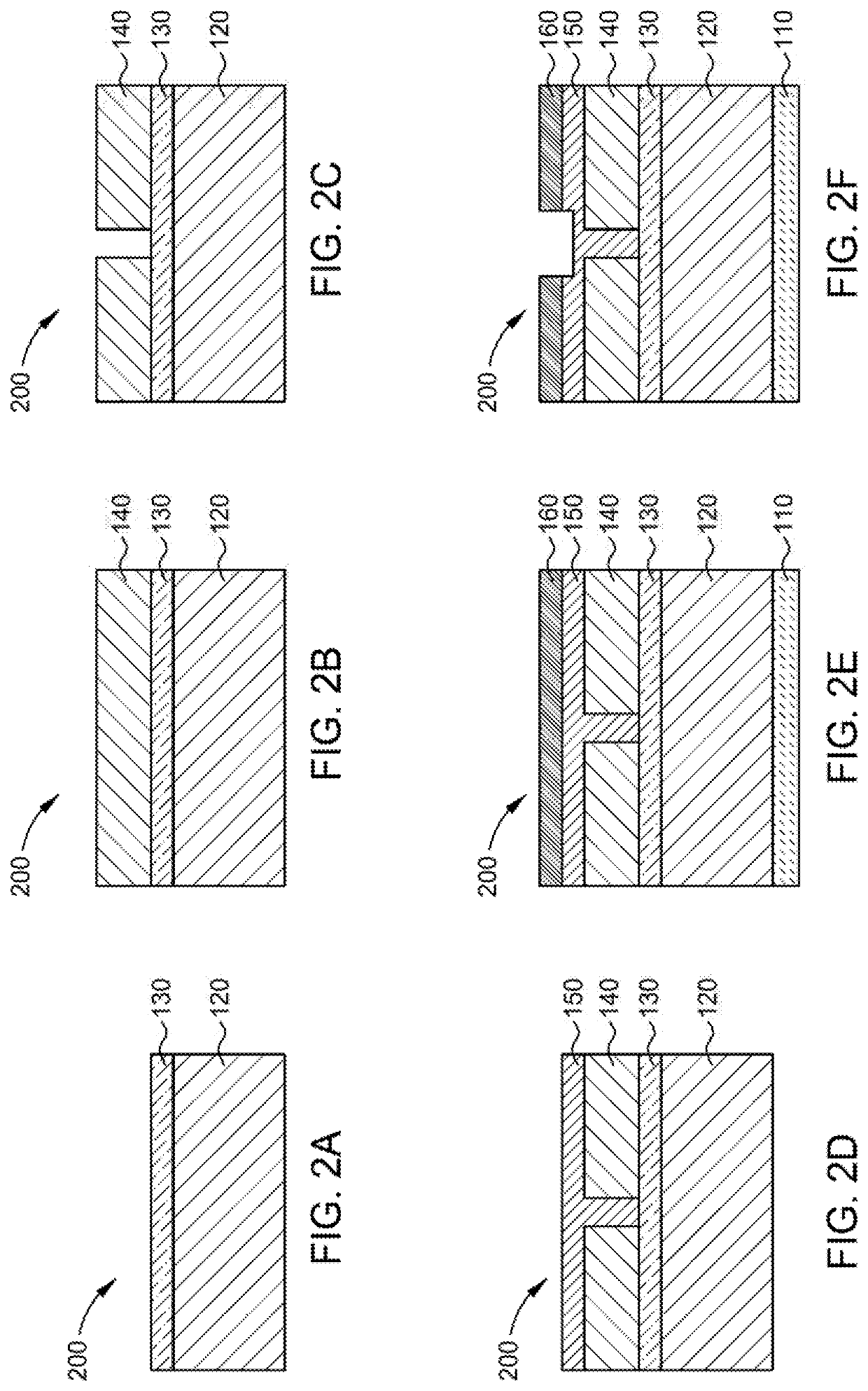
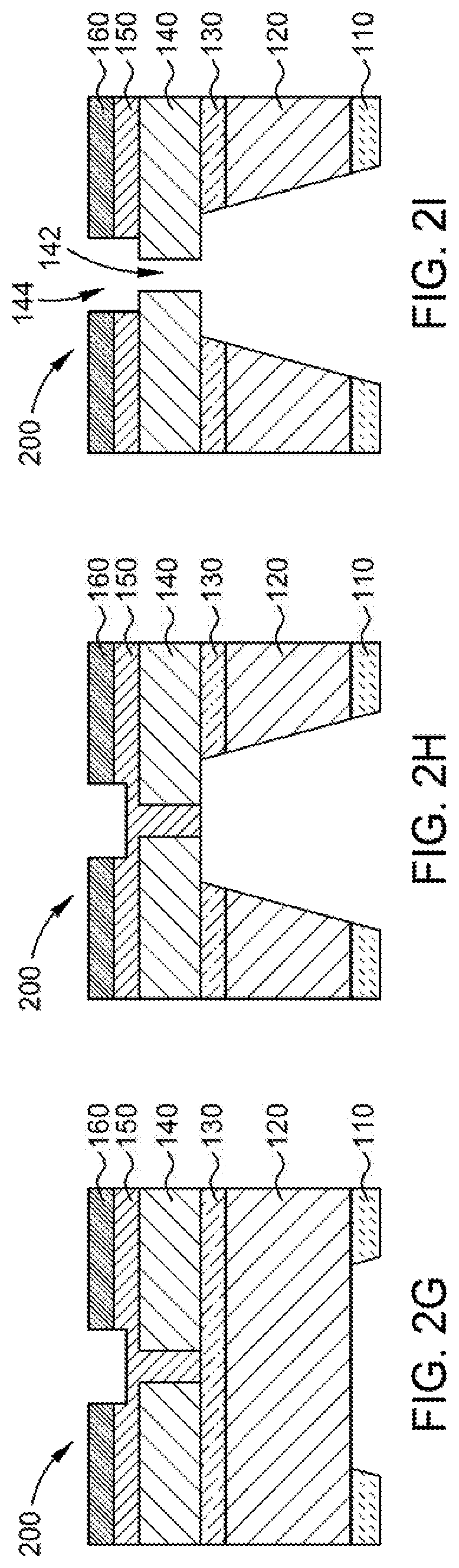
[0015]Embodiments of the present disclosure provide nanopore devices, such as solid state nanopore sensors and / or other nanofluidic devices, which may be used for biopolymer sequencing and / or other related methods. Generally, the nanopore sensors described and discussed herein are formed by electronics manufacturing techniques which include combinations of multiple processes for deposition, lithography, and etching. The nanopore sensors include a membrane which contains a silicon nitride having properties which enhance the use and longevity of the nanopore sensor.
[0016]FIG. 1 depicts a schematic cross-sectional view of a nanofluidic device 100, according to one or more embodiments described and discussed herein. The nanopore device 100 contains a substrate 120, a lower protective silicon nitride layer 110 disposed on a lower surface of the substrate 120, a lower protective oxide layer 130 disposed on an upper surface of the substrate 120, and a membrane 140 disposed on the lower pro...
PUM
| Property | Measurement | Unit |
|---|---|---|
| refractive index | aaaaa | aaaaa |
| thickness | aaaaa | aaaaa |
| thickness | aaaaa | aaaaa |
Abstract
Description
Claims
Application Information
 Login to View More