

Antimicrobial peptides and methods for identifying and using such peptides
a technology of antimicrobial peptides and peptides, which is applied in the field of identifying peptides having antimicrobial activity, can solve the problems of low antimicrobial effectiveness, adverse effects on host cells, cell lysis, etc., and achieves the effect of less toxic and easy isolation of nucleic acid molecules
- Summary
- Abstract
- Description
- Claims
- Application Information
AI Technical Summary
Benefits of technology
Problems solved by technology
Method used
Image

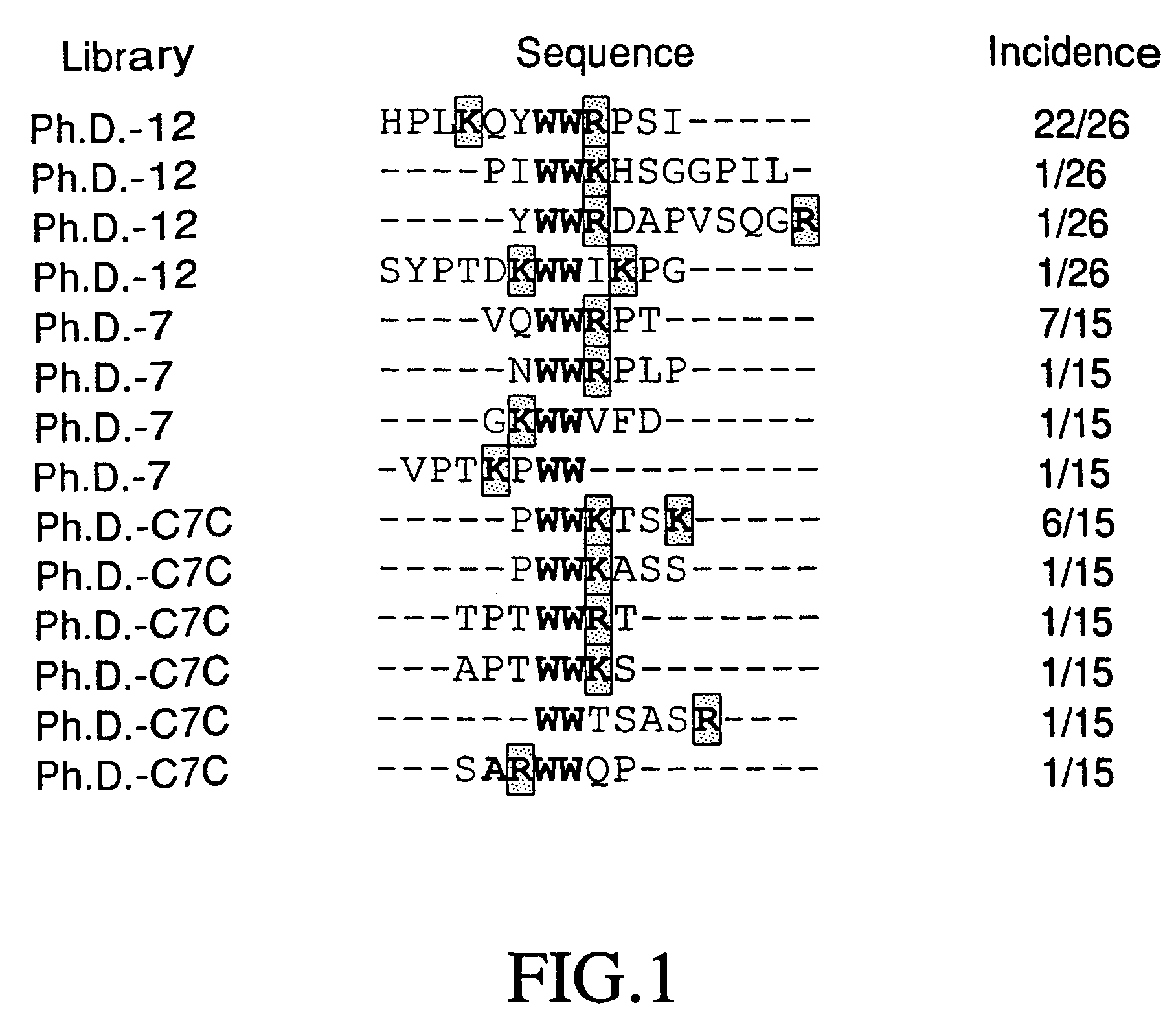
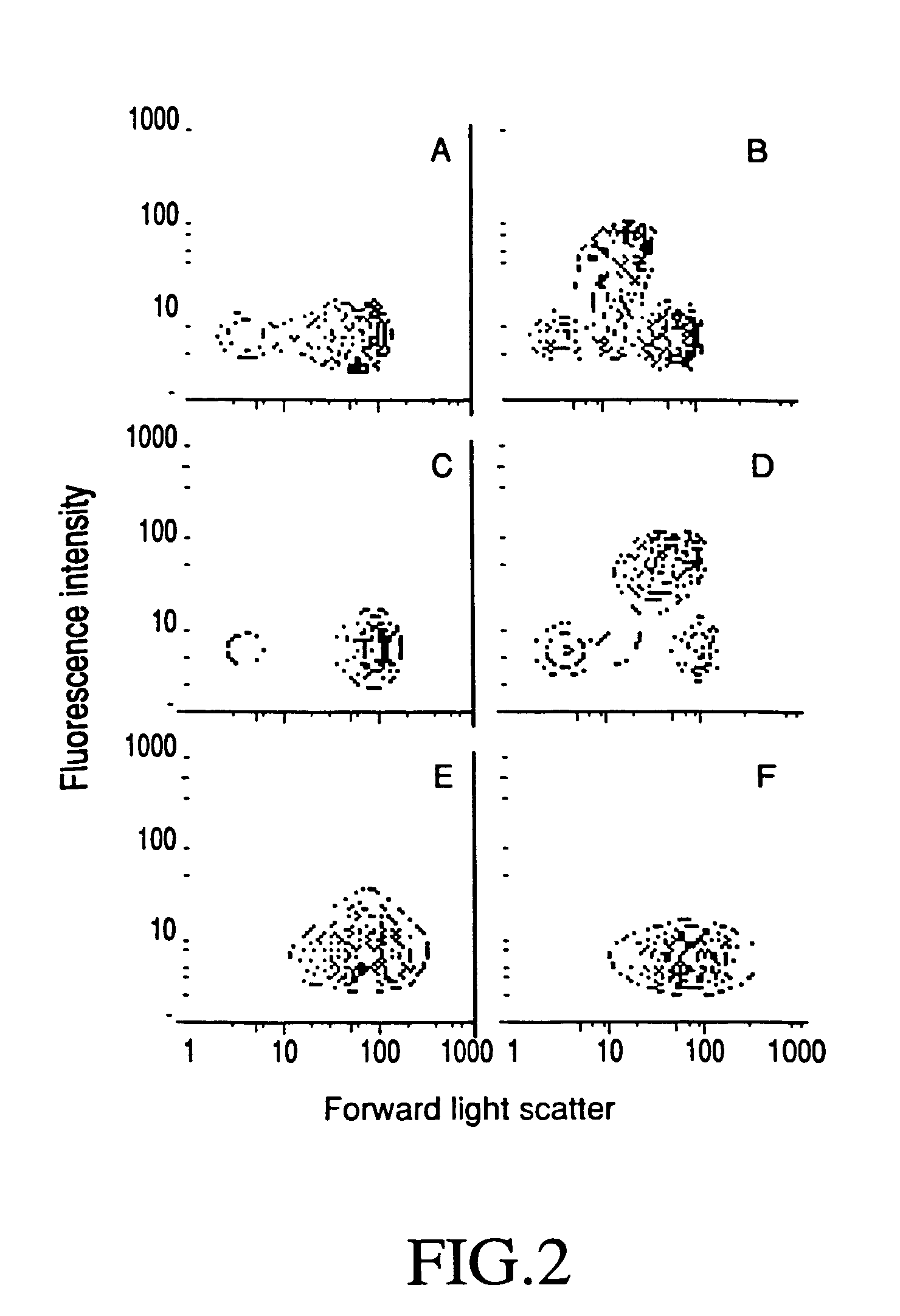
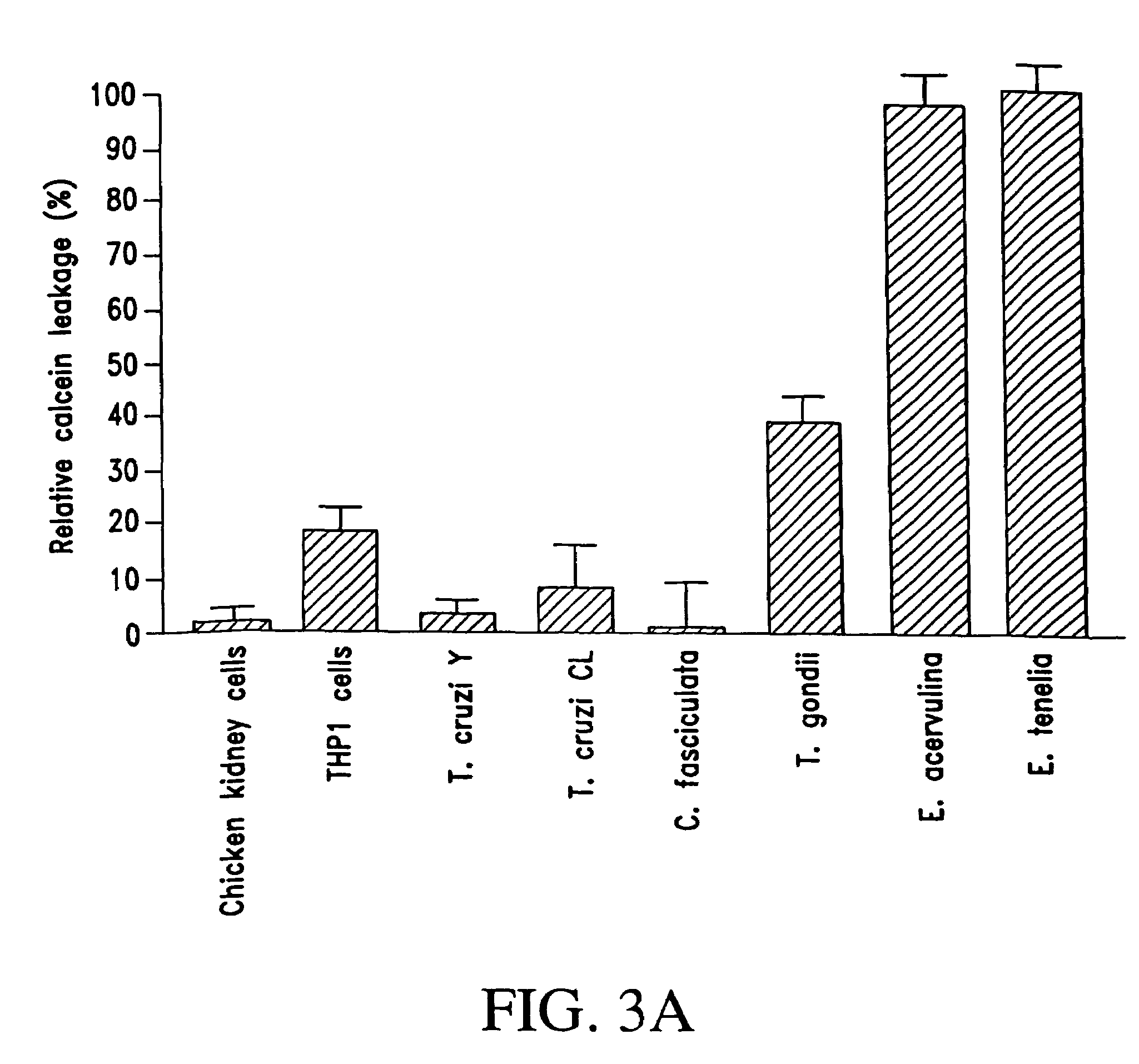
Examples
example 1
A. Microorganism Strains.
[0118]E. acervulina and E. tenella oocysts were obtained by passage in 4-5 week old ‘hy-line’ chickens (Long et al., “A guide to laboratory techniques used in the study and diagnosis of avian coccidiosis”, Fol. Veter. Lat. 6:201-217 (1976) incorporated herein by reference). Sporozoites were purified using anion-exchange chromatography (Schmatz et al., “Purification of Eimeria sporozoites by DE-52 anion exchange chromatography”, J. Protozool. 31:181-183 (1984) incorporated herein by reference). T gondii tachyzoites were obtained from intraperitoneal exudates of infected white mice (Mus musculus) by washing with phosphate buffered solution, pH 7.2 (Robert et al., “Purification of Toxophasma gondii suspensions from mice peritoneal exudate”, Biomed. Pharmacol. 36:98-100 (1982) incorporated herein by reference). C. fasciculata and T. cruzi epimastigotes were cultivated in LIT medium at 30° C. (Camargo, “Growth and differentiation in Trypanosoma cruzi. I Origin of...
example 2
A. Peptide Selection Of The Phage-display Libraries.
[0119]Three different M13-derived phage display peptide libraries were used for the selection of sporozoite-binding phage (Phage-Display Peptide Library Kits Ph.D.-7, Ph.D.-C7C, and Ph.D.-12 (New England BioLabs, Cambridge, Mass.)). Two of these libraries (Ph.D.-7 and Ph.D.-C7C) display 7-mer random peptides fused to the pIII M13 coat protein. In the C7C library the randomized sequence is flanked by a pair of cysteine residues that allow the display of cyclized version of the peptides. The third phage display peptide library, Ph.D.-12 displays 12-mer random peptides.
[0120]E. acervulina sporozoites (1×10⁸ cells) were incubated for 1 hour with 2×10¹¹ phage from each Ph-D library in 1 ml of TBS buffer (50 mM Tris-HCl, 150 mM NaCl, 5 mg / ml BSA, pH 7.5) containing 5 mg / ml of bovine serum albumin (BSA). The unbound phage particles were removed by washing six times with TBS / BSA. The specific bound phage particles were then eluted by incub...
example 3
[0124]A. Sporozoite Membrane Permeabilization Activity of PW2 Peptide.
[0125]The effect of PW2 upon the membrane permeability of Eimeria sporozoites, E. acervulina and E. tenella, and an unrelated parasite, Crithidia fasciculata, were initially studied by means of flow cytometry, specifically, sprorozoites were incubated with 100 ug / ml of PW2 for 15 minutes at 37° C. in 10 mM HEPES, pH 7.2 buffer containing 0.25 M sucrose (HSBS) and Sytox Green diluted 10,000 fold. Sytox Green dye has a strong affinity for nucleic acids, but can only penetrate cells that have a damaged membrane.
[0126]Flow cytometric measurements were performed in a FacStar Plus model (Becton-Dickinson, Franklin Lakes, N.J.) using standard methods. The argon laser excitation was set at 488 nm. Fluorescence emission was determined using a 530 nm (green) band-pass filter, and the results were analyzed with CellQuest software (Becton-Dickinson, Franklin Lakes, N.J.).
[0127]Cell size, measured as forward light scatter, and...
PUM
| Property | Measurement | Unit |
|---|---|---|
| pH | aaaaa | aaaaa |
| pH | aaaaa | aaaaa |
| concentrations | aaaaa | aaaaa |
Abstract
Description
Claims
Application Information
 Login to View More