[0002] Press, the circular knitting machine is a kind of
machine tool that is widely used in the
mass production of knitted fabrics, and the existing circular knitting machine - especially the fine needle knitting machine with a large total number of needles, because of the guide provided on the needle cylinder The number of needle grooves is large and the grooves are narrow, so the forming process of these grooves is extremely difficult, and the finished products are often due to insufficient precision or poor mechanical properties such as
surface roughness and
wear resistance, so that There are many disadvantages when the machine is in operation
[0003] Earlier, the
processing method of the
needle guide groove on the needle cylinder of the circular knitting machine was to directly form the
needle guide groove by deep-
cutting the fine groove. However, this method is not only time-consuming, but also the stress during
processing often makes the The partition walls between the
needle guide grooves produce strain. In addition, the
dimensional precision is difficult to be consistent due to the large number of
cutting guide grooves. It is also very easy to cause deformation of the needle guide groove partitions during heat treatment. Therefore, in order to save
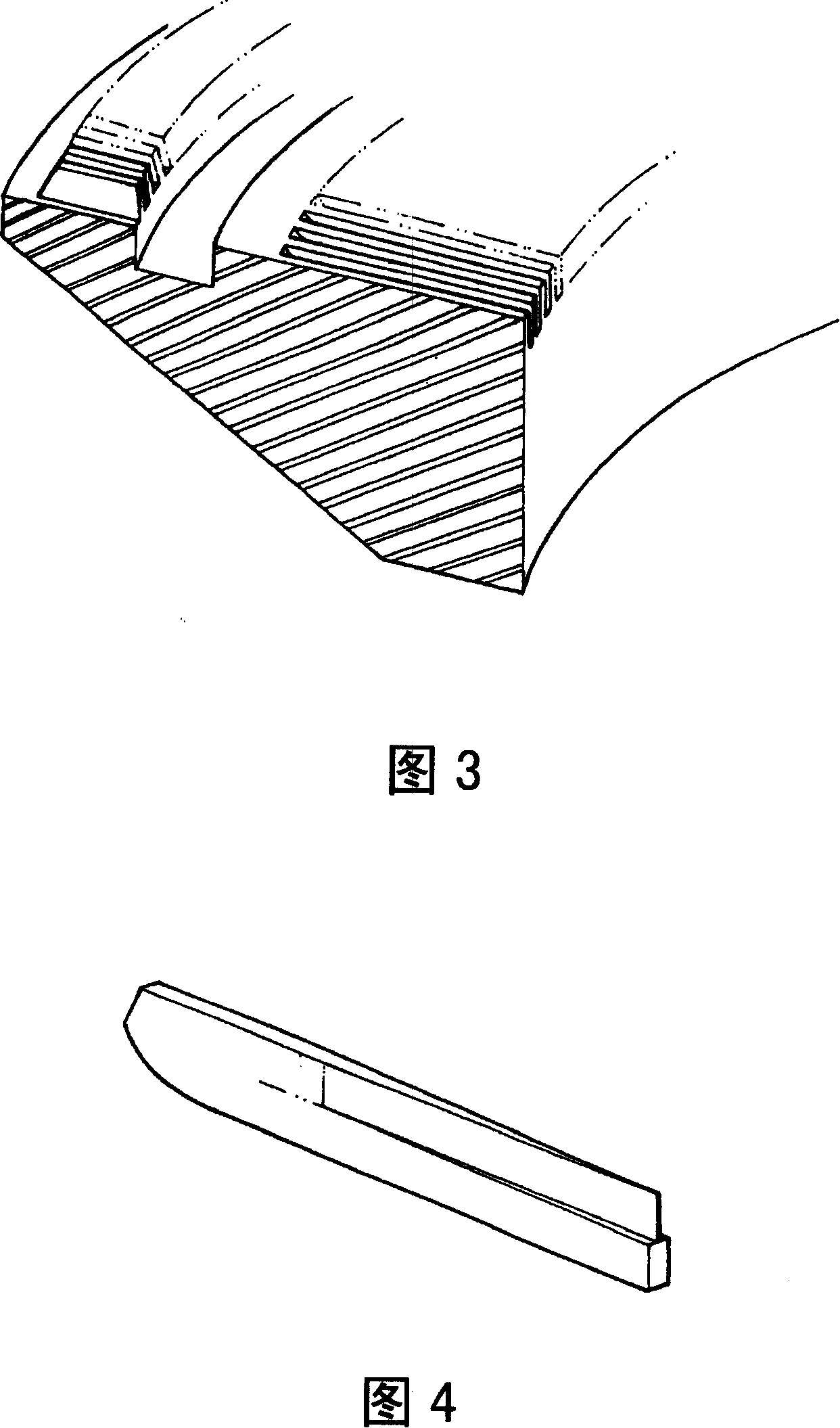
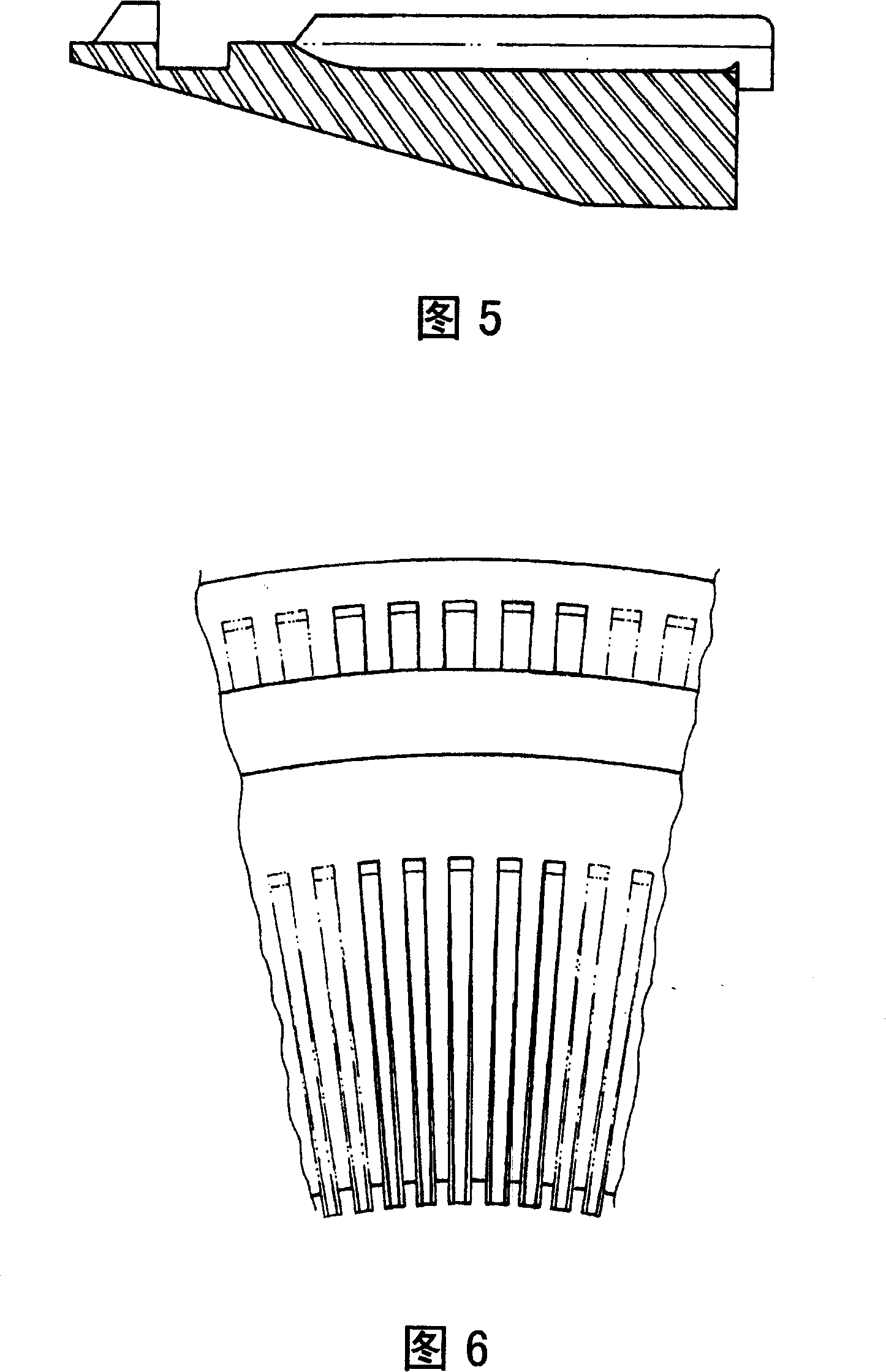
processing costs and To ensure the quality of the finished product, it is generally not processed by directly milling the individual guide grooves. As shown in Figure 3 to Figure 6, the current manufacturing method of the knitting machine needle cylinder used in the industry is to preliminarily process the upper needle cylinder first. Form the desired configuration, and then divide the predetermined number of knitting needles at the predetermined location of the knitting needle guide groove to open several radially required SINKER guide grooves and inserts on both sides of the knitting needle guide groove. Then insert the pre-processed guide groove spacers one by one into the insert grooves, and then
grind the raw
gram guide groove and the guide groove spacer to the required size to complete the
syringe barrel. Manufacture of knitting needle guide grooves; however, in the aforementioned manufacturing process, the raw
gram guide grooves and guide groove spacers on the needle cylinder after milling or
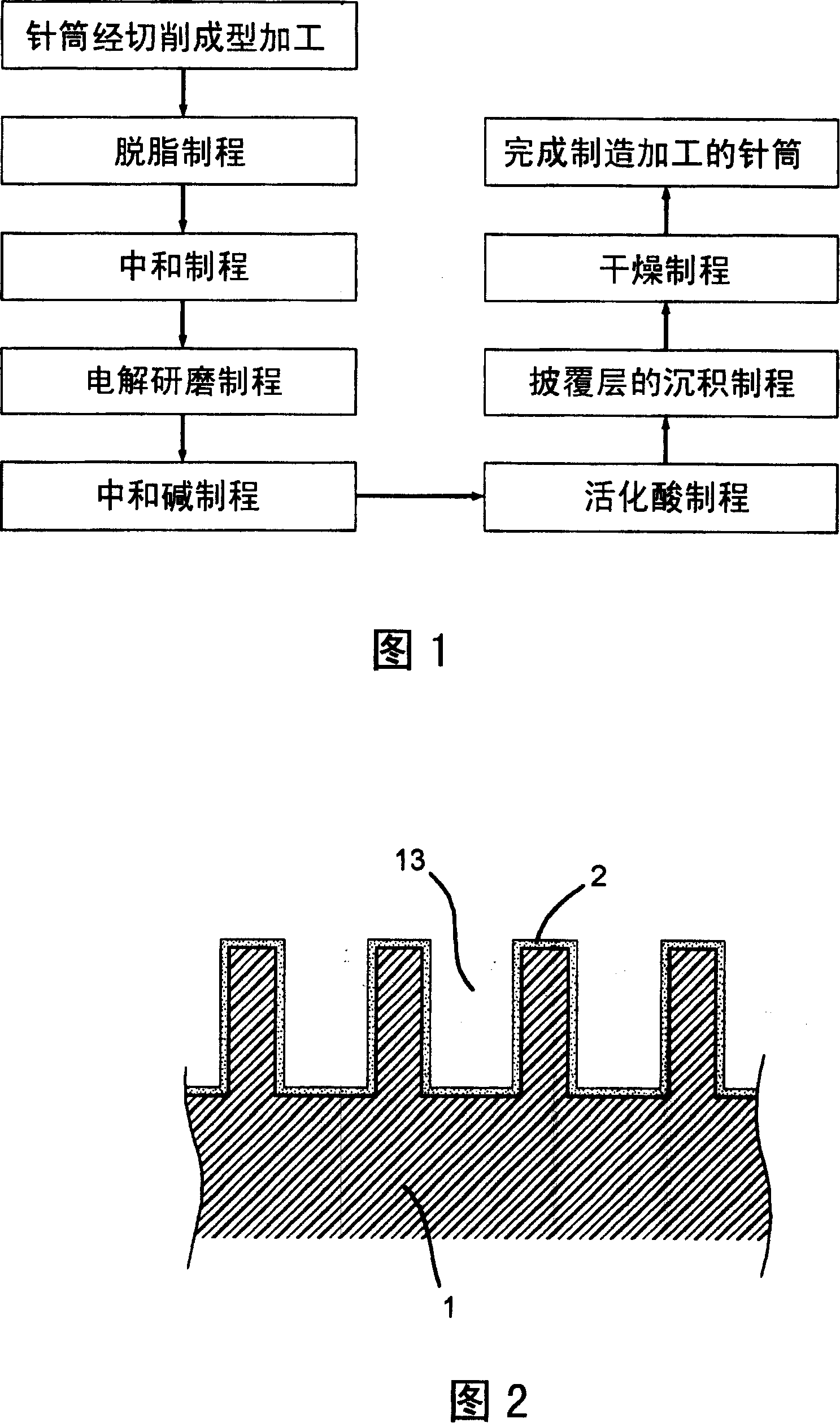
grinding often have burrs or part of the surface roughness (Surface Roughness) is uneven (as shown in Figure 1). In addition, after the heat treatment of the needle cylinder, the deformation of the spacer of the needle guide groove will often be caused. The occurrence of tight needles and needle jamming will not only cause vertical stripes in the
woven fabric, bifurcation, breakage or fluffing of the hooked
yarn, which will seriously reduce the quality of the product, but will also cause related components High
wear and tear will reduce the service life of the
machine tool, and even cause component damage and machine inoperability; and the above-mentioned shortcomings-especially for those ultra-fine needle knitting machines with a high total number of needles, the problem will be more obvious and serious (refer to Figure 7 and Figure 8)
[0004] In order to solve these shortcomings, it is usually necessary to perform a deburring and / or
polishing process on the needle cylinder that has been machined, using a
polishing wheel or jet
grinding to remove the burrs and improve the
surface smoothness of the needle guide groove. However, according to previous processing experience, the use of
polishing wheels (the material is steel wire or
copper wire or emery cloth, etc.) can only
grind the open and flat surface of the workpiece, but cannot go deep into the inner surface of narrow pores such as guide grooves (as shown in Figure 2 shown); and the jet grinding cleaning method uses extremely fine sand as the detergent medium. Although it can jet
grind and clean the inner surface of narrow pores such as guide grooves, there is a problem of fine debris remaining, which is often removed after processing. It must take a lot of time and manpower to clean and check to confirm that there is no residual fine sand, because if the residual fines are not cleaned, the same disadvantages as mentioned above will be derived


 Login to View More
  Login to View More